Reviews
 Almost everyone who listens to country music will not only recognize the song “Carolina,” but they will most likely be able to sing every word from the first note to the last. The song has been filling the airwaves of country music radio stations from coast to coast for several months now, and has climbed into the Top 5 on national charts. The song is by Parmalee, a new country group from North Carolina.
This isn’t the first time we’ve had Parmalee in the Top 40. The debut single for the group barely made it into the Top 40 back in 2012. The song was called “Musta Had A Good Time,” and I was actually surprised that it didn’t get up into at least the Top 20. That is especially surprising considering “Musta Had A Good Time” spent four straight weeks at No. 1 on SiriusXM The Highway’s fan-voted “Hot 30 Live” Countdown. The band has selected that fan-voted favorite the lead track on their debut album, “Feels Like Carolina”, set to release on December 10, 2013.
I listened to the review copy, and while I did like what I was hearing, I had a little trouble considering this ‘country’ music. I’m sure that is because my preference has always been real country music – the kind of music we now refer to as ‘classic country’ or ‘traditional country’ – the kind I still call just country.
“Close Your Eyes for This” sounds like much of what we are getting on today’s Top 40 stations. It is a good song. Probably one of my favorites on the entire CD. Of course, “Carolina” is among the 12 songs on this album, and I think it is the best one. For the most part, I don’t have anything bad to say about any of these songs. My only complaints are that the music really country, and it all sounds a lot like everything else that is on the radio today. The songs seem to lack originality.
Matt Thomas, lead singer for the group, had a hand in writing seven of the songs on the CD. And, he was teamed up with some of Nashville’s best writers. Bobby Pinson, Kyle Jacobs and Chris Janson are a few of my favorite writers, and you will find work by all of them on this new album. Preston Brust, half of the duo LoCash Cowboys, was one of the writers on “Back in the Day", and if it gets released as a single, I believe that one would be a hit for Parmalee. If I could pick for them, I would choose “Already Callin’ You Mine” to be their next single.
Parmalee is a family band comprised of brothers Matt and Scott Thomas (lead vocals/guitar and drums), cousin Barry Knox (bass), and life-long best friend Josh McSwain (guitar). They said their music was heavily influenced by musical heavyweights such as the Allman Brothers, Travis Tritt and Bob Seger. Their name is derived from the small town of Parmele, N.C., which has a population of 262, and is home to a small tin-roofed barn dubbed Studio B, where the band practiced on any given evening.
The songs you’ll hear on the new album are Musta Had a Good Time, Day Drinkin’, Move, Close Your Eyes For This, Dance, Carolina, Think You Oughta Know That, Back in the Day, My Montgomery, Already Calling You Mine, I’ll Bring the Music, and Another Day Gone.
For all the latest news about Parmalee, visit www.parmalee.com, and follow them on Twitter @parmalee. For all of your country music news and reviews, visit our web site at www.countryschatter.com, and follow us on Twitter @countryschatter.
A Music Charts Magazine - MusicChartsMagazine.com - Country Music Album Review by CountrysChatter.com ( Country's Chatter - Your #1 Pit Stop for Everything Country Music )
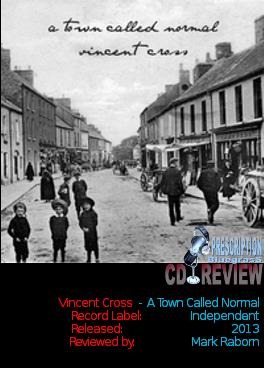 These days the term “Bluegrass” encompasses a broad range of musical expressions. From the down home, gutsy realism of first-generation entertainers like Ralph Stanley, Bill Monroe and Flatt & Scruggs to the more refined sounds of Alison Krauss to the outer fringes of what is technically and musically possible and still retain some semblance of the core sound. It is indeed a broad genre that continues to give birth to new broods.
All that said, “A Town Called Normal,” in my opinion, does not fit into any honest, objective interpretation of Bluegrass music. Does it have a banjo on most cuts? Yes. Is there a mandolin? Sometimes. However, those characteristics alone do not a bluegrass band make.
There is a ton of music here, but not an ounce of genuine Bluegrass. There is absolutely no “drive,” no cohesive “bounce,” no emphasis on the downbeats. Even to the most liberal Bluegrass listener, the vocals have the wrong feel. There are drums on several cuts and that certain “tightness” we’ve come to expect from better Bluegrass groups never comes into focus…it never even comes into view.
These things are not necessarily bad, however. There is some good music here, as well as some excellent writing and Vincent Cross is a fantastic vocalist. He has a talent for choosing material that is well-suited for his vocal range and he knows how to sing with passion. Pieces like “Sometimes” seem like they could easily fit into a Pop/Folk Top 40 scenario. The overall feel on this project is like Bob Dylan meets Jimmy Buffet meets banjo, except Cross has a better voice than either one. It makes me wonder why he chose to use banjo, mandolin, acoustic bass, resonator-guitar, etc. as the instrumentation backdrop for this material. Personally, I’m thinking a string-orchestral sound with lots of bows creating the tension and mood would help establish a more rich presence, along with the gravitas and ambiance to properly accentuate his voice.
To read this Bluegrass Album Review in it's entirety please click the below link and visit our friends at the Prescription Bluegrass website: http://prescriptionbluegrassreviews.blogspot.com/2013/05/prescription-bluegrass-cd-review.html
Music Charts Magazine Bluegrass Album Reviews are done by Prescription Bluegrass - www.prescriptionbluegrassblog.com - ( Your #1 Pit Stop for everything Bluegrass )
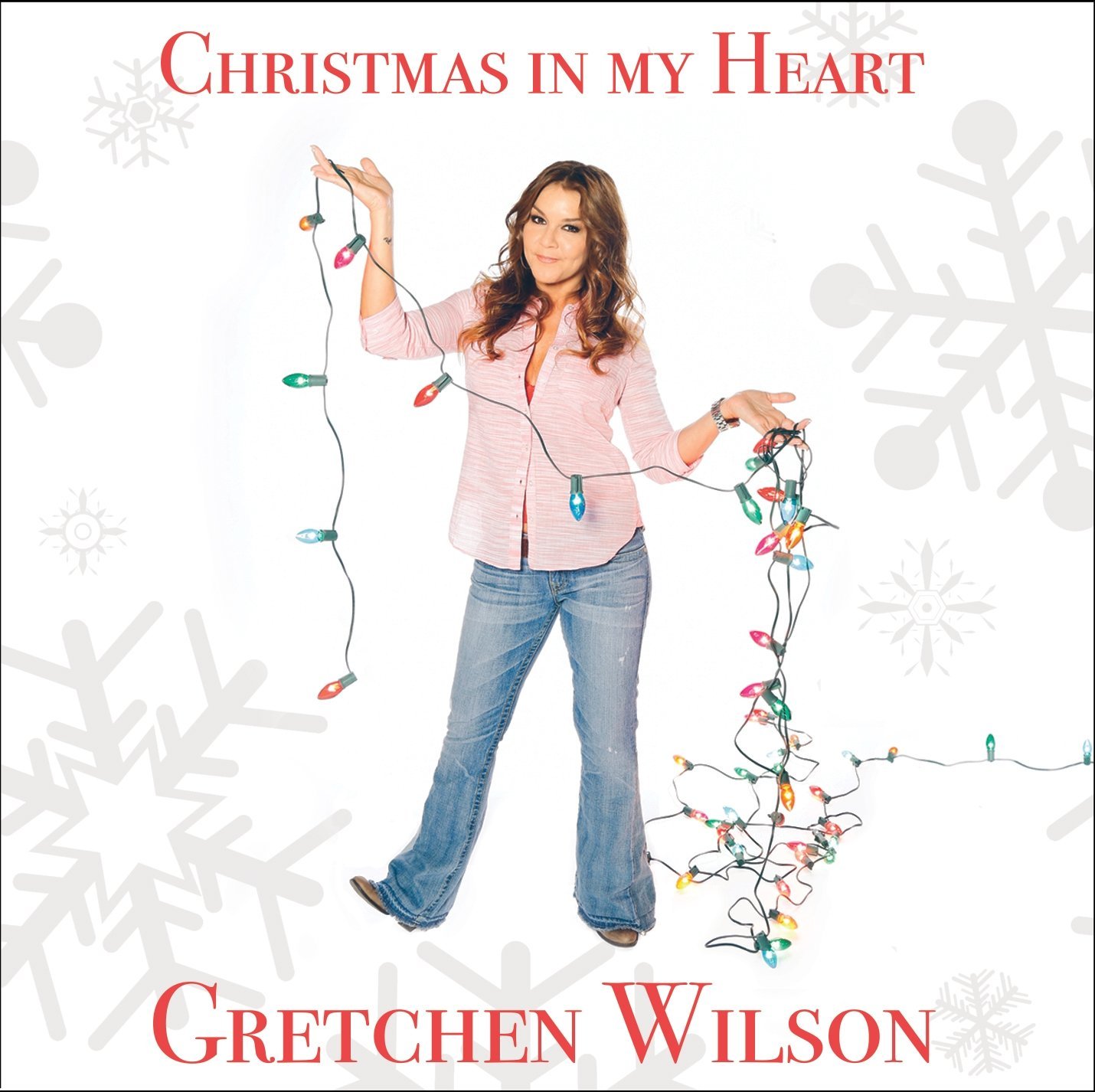 Department stores all over the country have already let us know it is not too early to start thinking about Christmas. For those of you who like listening to Christmas music sooner than the week of Christmas, the new holiday albums started coming out early in October. One of my favorite new albums comes to us from Gretchen Wilson, and is called “Christmas in My Heart”. While the album does contain the Christmas carol “Silent Night”, the other nine are Christmas songs, not traditional carols, and include the title track, “Christmas in My Heart,” “Santa, I’ve Been Naughty,” “Have Yourself a Merry Little Christmas,” “If You See Rudolph,” “Nuttin’ For Christmas,” “Have a Holly Jolly Christmas,” “Christmas Song,” “I Want a Hippopotamus for Christmas,” and “Blue Christmas”. Seriously, how can you not love an album with the ‘hippopotamus’ song on it!
This is the first Christmas album from Gretchen, who introduced the world to her “Redneck Woman” side in 2004. It took a song like “Redneck Woman” for the country music world to notice Gretchen. However, that song did nothing to show us how talented she really is. “Redneck Woman” was a catchy tune with lyrics that seemed to please not only the folks in the south, but everyone who listened to country music, no matter where they lived. Since that time, Gretchen has released four studio albums, one live album, and two compilation albums (Greatest Hits and Playlist: the Very Best of Gretchen Wilson). The 20 singles she has released over the years were slow, fast and mid-tempo, and gave fans an opportunity to listen to her vocals, and discover she was far more talented than her performance of ‘Redneck Woman” might have led them to believe.
On the new album, she turns the Elvis hit, “Blue Christmas,” into a very bluesy number, and probably the only song on the CD that comes close to what could be called country music. “Christmas in My Heart “is the sweet song you might expect it to be with a title like that. She sings “Silent Night” the way it was written, and once again gives us an opportunity to hear that her vocals are not only powerful, but beautiful.
When you listen to her rendition of “The Christmas Song,” it will be very easy to close your eyes and picture the fireplace, over-stuffed furniture, a crowded room, and a very large piano. She does this entire number accompanied only by a piano, and this arrangement includes a nice piano solo in the middle. Mixed in with the traditional holiday tunes, you will find three original songs, written for Gretchen for inclusion in her first Christmas album. Those songs are “If You See Rudolph” written by Trent Willmon, Jenee Fleenor and Rob Byus, “Christmas in My Heart,” written by Greg Barnhill, and “Santa I’ve Been Naughty,” written by Rob Simbeck and Frank Michels. Check out Gretchen’s facebook page, and follow her on Twitter @gw27.
Later! Country
Music Charts Magazine Country Music Album Reviews by Country of www.CountrysChatter.com
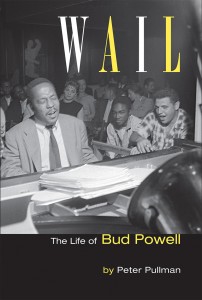 Date = 24 Nov 2013
Author’s Name = Peter Pullman
Genre = Jazz
Title = Wail: The Life of Bud Powell
Publisher = Peter Pullman
Review=
Because Peter Pullman began researching Bud Powell in the early 1990s, he probably knows more about the pianist than anybody, including Guthrie P. Ramsey, Jr., whose recent The Amazing Bud Powell uses Powell primarily as a springboard for musing about genius and the social identity of bebop. Pullman’s knowledge is confirmed by his study of the pianist, an almost 500-page book published in 2012 at the author’s expense. For it, Pullman conducted approximately 800 interviews, listened to all of Powell’s recordings, and consulted seemingly everything relating to his subject. After assimilating this information, he wrote a balanced biography that details highlights as well as unpleasantnesses, of which there were many. He treats his subject’s youth, professional associations, recordings, performances, involvement with women (mostly platonic), alcoholism, occasional heroin use, musical decline, revered status in France, and more. Though Pullman is given to overstatement, a measured tone enhances his narrative, as may be observed when he details the two known times that Powell struck his mother (210, 223). He does so dispassionately, refusing to milk the events for pathos, as some writers might have done.
A schooled pianist influenced by the likes of Bach, Ravel, and Art Tatum, Powell (1924-1966) joined the band of his brother William in 1940, played in his native Harlem at Minton’s Play House and Monroe’s Uptown House when bebop was being developed there, and joined the Sunset Royals before entering the big time with Cootie Williams in 1942. Also with Williams irregularly during this period was Charlie Parker, whose new approach to music Powell embraced. His life changed in 1945, when he was reportedly beaten by police after being arrested for drunkenness. The resulting headaches and strange behavior led to hospitalization and to a diagnosis of manic depressive psychosis. Thus began serious emotional problems that lasted for the remainder of his life.
Yet off and on for approximately a decade beginning in 1947, Powell led impressive trio sessions for such labels as Roost, Clef/Norgran/Verve, Blue Note, Debut, and RCA. His bassists included Ray Brown, Paul Chambers, George Duvivier, Percy Heath, and Curly Russell; Art Blakey, Kenny Clarke, Roy Haynes, Buddy Rich, and Max Roach were among his drummers. An album of Powell’s solo performances was recorded in 1951. Powell’s reputation rests primarily on music from these sessions. From the beginning of his career, however, leaders recognized the pianist’s ability, as the many impressive recordings on which he appeared as sideman illustrate. These include Cootie Williams’s “Round Midnight” (1944), Dexter Gordon’s “Long Tall Dexter” (1945), Sarah Vaughan’s “If You Could See Me Now” (1946), J. J. Johnson’s “Jay Bird” (1946), Fats Navarro’s “Boppin’ a Riff” (1946), Charlie Parker’s “Donna Lee” (1947), Sonny Stitt’s “All God’s Chillun Got Rhythm” (1949), Quintet of the Year’s “Wee” (1953), Coleman Hawkins’s “All the Things You Are” (1960), Oscar Pettiford’s “Blues in the Closet” (1960), Charles Mingus’s “I’ll Remember April” (1960), Don Byas’s “I Remember Clifford” (1963), and Dizzy Gillespie’s “Groovin’ High” (1963). Among the most significant musicians in jazz history, these leaders could have used any available pianist they desired, but they chose Powell. Why? Because of his inventiveness and his expressive, intense style, qualities that made him the preeminent bebop pianist and make his most accomplished music enduring. Still, his recordings and live performances were hardly consistent, and his life was erratic. In Wail, Pullman provides all the details of Powell’s life and career that most people would wish to know, but is most impressive and valuable when discussing the problems that led to the pianist’s decline--mainly his emotional problems, which led to hospitalizations. Pullman had access to medical records, some willingly provided by institutions, but others relinquished only after he won the suit he filed against the New York State Office of Mental Health in the New York Supreme Court. As a result, he bases his comments on the best possible evidence.
That Powell was emotionally unstable is not news; fortunately, Pullman provides many details about this instability that were not previously known. From the medical records he learned, for example, about the pianist’s difficulty with what psychiatrists call ideas of reference (considering ordinary events as of great personal significance). In 1947, drinking exacerbated this problem to the degree that in a club Powell fought a patron over the issue of race, an action that led to his confinement in the state hospital in Creedmoor, NY. Because of his disruptive behavior while still there the next year, he was forced to wear a straightjacket; then, he underwent two series of electroconvulsive therapy (shock treatments). On the topic of the pianist’s emotional state, Pullman notes that Powell was predisposed to a nervous breakdown; he also believes that Powell was disserved by judges who committed him to psychiatric hospitals and that the pianist received inadequate screening during the admission processes. I find his treatment of Powell’s emotional problems sound (I am neither a psychiatrist nor a mental health professional), though I wonder if some of his judgments of medical personnel are too harsh.
Powell’s greatest recordings (including “All God’s Chillun Got Rhythm,” “Parisian Thoroughfare,” and “Un Poco Loco”) rank with the best work of any jazz pianist, which makes Powell’s artistic decline all the sadder. Pullman notes that it began in 1953, the year Powell performed at Massey Hall in Toronto with his trio and with a quintet featuring Charlie Parker and Dizzy Gillespie. (Pullman believes that Powell’s solo on “Salt Peanuts” with the quintet “ranks with his greatest, regardless of context” [185]). The author identifies strong and weak performances from then until the end of the pianist’s career. At his last recording session, as leader in January 1966, Powell played so poorly that Pullman concludes that none of the music “should have been considered for release,” though the session was released, on Mainstream. He further states that the music on this album constitutes Powell’s “last, embarrassing attempt . . . to make music” (376). While I agree, to this statement I would add “sad” between the first two words.
As an examination of Powell’s life—professional and personal--Wail will probably never be surpassed, which is not to say it is perfect. (What is?) Pullman makes claims he cannot support (“Powell gave his performances every drop of sweat that he had” [150]); treats George Shearing contemptuously (152, 183); states what people thought when he has no way of knowing (“Powell had to be thinking of the long, lonely voyage back to New York” [208]); criticizes Powell’s fan Evelyn Glidden gratuitously (237); dismisses people with a single unflattering adjective (“the pedantic Kurt Mohr” [290], “the bourgeois Paudras” [337]); fails to define terms (October Revolution [358, 372]); and treats Leonard Feather’s Blindfold Test unfairly (382). He also seems credulous, as when believing that Thelonious Monk cried because of his supposed pianistic inferiority to Powell (303) and that Powell recited the Gettysburg Address from memory when asked to do so (420). In all likelihood, a copy-editor would have challenged Pullman on some of these points and made stylistic suggestions, such as eliminating “, though,” in most instances. Granted, Pullman published the book himself, so the cost of engaging a copy-editor for his long manuscript probably would have been prohibitive. Ultimately, these and other infelicities are relatively insignificant in the context of the book’s strengths, especially its comprehensiveness and detail.
Had Powell not been a gifted person, his life would hardly warrant comment. Yet because he was an accomplished pianist, it assumes importance. Thus, Pullman’s book is well worth reading by anyone interested in jazz, the creative process, or emotionally impaired artists. Though one would gain a full sense of Powell from it, it might best be read in conjunction with listening to his recordings, most of which are readily available. (A Powell discography would have enhanced the book.) Doing so would permit one to hear his greatness (and not-so-greatness) and understand why Pullman evaluates the pianist’s artistry as he does.
Author=Benjamin Franklin V
 It's not often that I get to review an album and introduce you to a new artist in the same article. But, I have that opportunity with the Chris Lane Band. This group has been around for a little while, putting their first full-length album out in the spring of 2012. They haven't done much on radio, and most people still consider this a new group.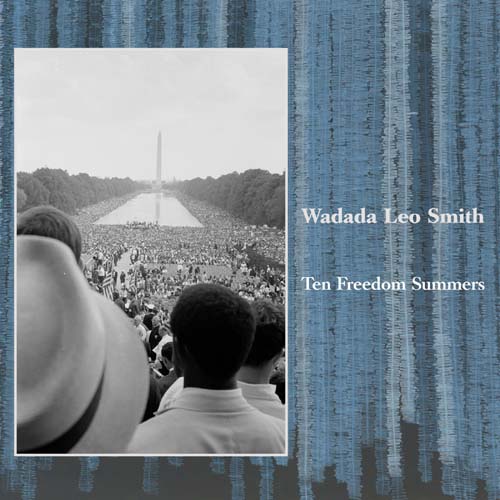
Date = 8 October 2013
Musician’s Name = Wadada Leo Smith
Genre = Jazz/classical
Title = Ten Freedom Summers
Record Company: Cuneiform
Review = Wadada Leo Smith initially recorded in the late 1960s with the likes of the Art Ensemble of Chicago, Muhal Richard Abrams, Anthony Braxton, and other musicians associated with the Association for the Advancement of Creative Music (AACM). He has participated in more than a hundred recording sessions and has released over twenty albums as leader. Yet despite his decades of activity, the number of his recordings, and the awards he has won, including a Guggenheim, Smith is not widely known, possibly because his music is generally considered avant-garde, a mode that attracts few listeners. Ten Freedom Summers (2011) has increased his visibility. A four-CD set, it has been much touted in the jazz press. Largely as a result of this release, Musica Jazz (Milan) designated Smith the 2012 international jazz musician of the year.
Francis Davis has compared Ten Freedom Summers with John Coltrane’s A Love Supreme; Thom Jurek, with Duke Ellington’s Black, Brown, and Beige and Max Roach’s Freedom Now Suite. I think Wynton Marsalis’s Blood on the Field is the best comparison. Usually considered a jazz oratorio, Marsalis’s work, which focuses on the lives of two slaves, lasts for over three hours. Presumably offering musical interpretations or depictions of key events in the history of civil rights in the United States, Smith’s composition requires almost five hours to perform. (Its premiere in Los Angeles was spread over three evenings; recording it took three days.) In both pieces, writing is more important than soloing, though musicians improvise on both. Despite probably being technically ineligible for the award, Blood on the Field won the 1997 Pulitzer Prize for Music; a finalist for the 2013 Pulitzer, Ten Freedom Summers did not win the award. Yet it strikes me as more listenable and possibly more ambitious, though less jazzy, than Marsalis’s work. Divided into nineteen sections—each a discrete piece–Smith’s composition is performed by two groups: Southwest Chamber Music, a nonet conducted by Jeff von der Schmidt, and the Golden Quartet/Quintet (trumpet plus rhythm section, with a second drummer sometimes added), though members of the latter occasionally play with the chamber group.
Smith focuses mainly on events that occurred during the decade following the 1954 Supreme Court decision Brown v. Board of Education, but does not limit himself to this period: He ranges chronologically from Dred Scott v. Sandford (1857) to the 2001 terrorist attacks on the United States. Among the selections are “Emmett Till: Defiant, Fearless,” “Rosa Parks and the Montgomery Bus Boycott, 381 Days,” and “Martin Luther King, Jr.: Memphis, the Prophecy.” Smith advises that “none of these pieces are meant to simply be listened to.” Matthew Sumera, who wrote the notes to the CDs, interprets Smith’s comment as meaning that this music “is not intended for disinterested listening—it is a demand to America to fulfill its democratic promise.” What does this mean? What is America’s democratic promise? “Life, liberty, and the pursuit of happiness”? “Liberty and justice for all”? While these are fine, noble ideals, is attaining them within the realm of possibility? Will we know if the democratic ideal has been attained? And precisely how does Smith’s music demand fulfillment of this promise? What kind of action does it propose? Or does the nature of the action matter? Neither while listening to the music nor when pondering it later did I feel inspired to become a social activist or to assist people less fortunate than I more than I do already. Though I support everyone’s civil rights and at one time belonged to groups that also do, and though I am frequently moved by music, I am unmoved by the supposed call of Ten Freedom Summers for political action, probably because I do not comprehend such a call. Does this mean that Smith’s music has failed? Does it mean that I have not listened to it as I should? Both? Does Sumera interpret Smith’s words correctly?
 Smith explains his goal in other terms: “In composing Ten Freedom Summers, I tried to achieve a creative expression through music of the psychological impact of the Civil Rights movement on American society.” This statement—as much aesthetic as political–is different from demanding fulfillment of the democratic ideal. Though Smith correctly observes that the civil rights movement affected the America psyche profoundly—could anyone disagree?–I cannot say that this music reminds me of the civil rights movement generally or of any of its events, even though I recall many of the events vividly because I was sympathetic to the cause as an adult the 1960s. Yet the composer characterizes his ultimate goal as “creative expression.” Without question, he expresses himself creatively; but after listening to this music I perceive no connection between it and the civil rights movement or the movement’s impact on American society. Two selections illustrate the nature of his work.
“Black Church” surprises. I would characterize this piece played entirely by the Southwest Chamber Music string section as intellectual rather than emotional, though it is not without feeling. It is, as the name of the group indicates, chamber music. Totally absent from it is even a hint of raucousness, of foot stomping, of passion, of letting loose. The church depicted here is not sanctified. Instead, this selection apparently portrays a church that is subdued, reflective, and dignified, a place where a tambourine is not played. In popular culture, this schism between the unrestrained and the sedate black church is central to the plot of the movie St. Louis Blues(1958), for example. So what does Smith intend to suggest about the black church? Might he mean that there are many kinds of churches patronized by blacks and that in “Black Church” he characterizes one that values somberness and quiet reverence, one that is more passive than active? Does he imply that, to him, at least some black churches favor, say, Thomas A. Dorsey’s “Take My Hand, Precious Lord” or even Samuel Coleridge-Taylor’s cantata “The Atonement” rather than Edwin Hawkins’s “Oh, Happy Day”? I do not understand how this piece constitutes a call to political action, nor do I see how it reflects “the psychological impact of the Civil Rights movement.” Attractive music? Yes. Political music inspired by an institution or a historical event? Not that I can tell.
“The Freedom Riders Ride” also surprises, but not to the degree that “Black Church” does. Knowing the title and that freedom riders, black and white, rode interstate buses in 1961 to challenge Jim Crow laws in the South, one can imagine historical events while listening to it. About half this piece performed by the Golden Quartet is tranquil, especially for four minutes at the beginning. Does this seeming serenity suggest the activists’ mood at the start of the ride? I would expect these people to have been tense, even afraid. Do the somewhat hectic final four minutes represent confrontations between the riders and their adversaries, including beatings? How is one to know? Does knowing matter? As with “Black Church,” “The Freedom Riders Ride” does not move me to political action; without knowing what this piece is about, I would not have been able to identify the event the composer intended to commemorate, to sense that it concerns any aspect of civil rights, or to think that it has to do with anything at all.
If one listened to Ten Freedom Summers ignorant of its political context, it would please on a strictly musical level. It may be enjoyed in the same manner as A Love Supreme and Black, Brown, and Beige when the listener is unaware that Coltrane’s performance reflects his spiritual questing and that Ellington intended his composition to suggest aspects of blacks’ history in the United States. Response to Freedom Now Suite is necessarily different from that to these two pieces, though, because its beauty and meaning are inextricable, and the message is obvious because of the screaming of Abbey Lincoln and the words she sings. On a strictly musical level, I, unlike the Pulitzer committee, find Blood on the Field ponderous, all but unlistenable; it strikes me as an example of a political message explaining and conceivably redeeming uninspired music, of politics trumping aesthetics. Despite Smith’s comments about Ten Freedom Summers and Matthew Sumera’s explanation of them, this work may be enjoyed, as I appreciate it, as a composition of various parts mainly in the classical mode. If listeners find a correlation between it and extra-musical events, fine; if not, then also fine. Smith writes attractive music that at least in this case does not warrant the term avant-garde. It might not even warrant the term jazz, as traditionally defined, because it lacks such elements as a driving rhythm section, backbeats, soloists’ interplay, blues feeling, and so forth. What matters is the music, not the label attached to it. The music speaks for itself. Trust it, not the words of its creator or his interpreter.
Author = Benjamin Franklin V
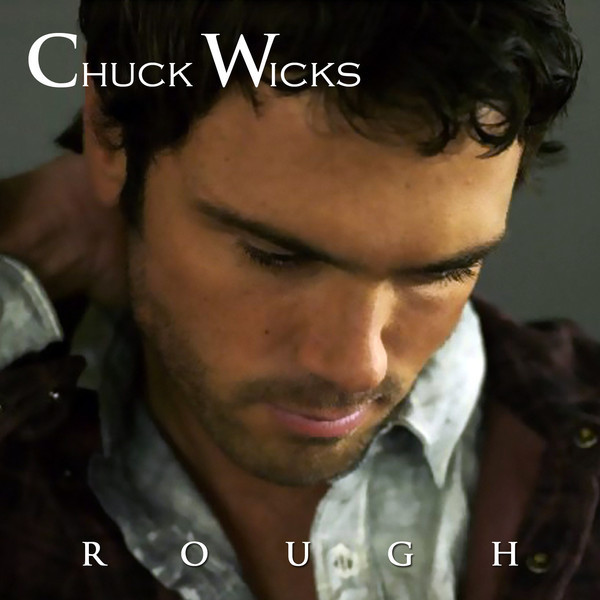 Things have not been easy for Chuck Wicks. The artist quickly rose to instant stardom with the release of his debut single, “Stealing Cinderella”, back in 2007. The song peaked at No. 5 on country charts, and the album it was from, “Starting Now”, rose to No. 7 on the Billboard Country chart back in 2008.
  Kim Robins project, “40 Years Late”, is a breath of fresh air.
It appears that Kim has spent her time not only honing her craft, but also finding her voice and knowing exactly who she is as a singer.
You will not hear someone trying to imitate other female singers, or singing in the rafters, on this recording. Instead, you will hear a woman with a mid-range, bluesy, voice that puts you in the mood for some good traditional bluegrass and classic country.
Kim has surrounded herself with an ensemble of, to say the least, solid musicians. Appearing on the project are Don Brummett, Michael Cleveland, Mike Curtis, Jeff Guernsey, Nathan Livers, Lynn Manzenberger, Seth Mulder, Butch Robins, Mark Stonecipher, and Richard Torstrick. Providing harmony vocals throughout the project are fellow Indiana residents Misty Stevens, singer, songwriter, and leader of her own band, and Kent Todd, singer and fiddle player with Blue Mafia.
The title cut of this project, written by Kim, is so well penned that many listeners will easily relate to the song. The lyrics of this song are honest and will hit home with, not only singers that are chasing the dream of success later in life, but also everyone that has had to put their dreams on hold for other choices.
While I cannot pick one song to call my favorite, because I actually have quite a few on this project, I enjoy Kim’s upbeat tribute to Connie Smith with “I’ve Got My Baby On My Mind”. Kim states that she spent many hours trying to imitate Smith’s voice until her Dad told her to “sing like yourself”. Advice many singers should follow and advice I am glad Kim took.
Another song on the project that caught my attention is the duet “The Last Thing On My Mind” that Kim performs with Jeff Guernsey. While many artists have recorded this song, Kim and Jeff’s voices complement each other so well, that I found myself replaying this tune numerous times and just enjoying the harmony.
Read the rest of this CD review at Music Charts Magazine’s favorite Bluegrass website here: http://prescriptionbluegrassreviews.blogspot.com/2013/05/prescription-bluegrass-reviews-kim.html#more
 Mark Raborn reviews Rebecca Frazier’s bluegrass album “WHEN WE FALL“
Rebecca Frazier’s new CD “When We Fall” features twelve tracks, of which ten are original compositions including three instrumentals.
The project is superbly supported throughout by a strong producer and by a stellar cast of musicians that largely need little introduction, including Ron Block and Scott Vestal on banjo, Barry Bales on bass, Shad Cobb on fiddle, Andy Hall on resonator guitar and husband John Frazier on mandolin. Rebecca plays guitar on all cuts.
My initial observation was to simply admire and enjoy the fidelity of the recording, followed closely by the quality of the arrangements and the overall maturity of the presentation and musicianship. However, after hearing a few cuts I was convinced that Rebecca, in addition to being a superb vocalist and lyricist, is a masterful flat-pick guitar player, playing with a level of imagination, taste and authority that will awe many of her listeners, as well as her peers.
I found the overall tone of this project to have a ‘modern,’ post-Monroe acoustic Bluegrass texture with the occasional influence of cross-cultural Bluegrass genres like Blues and Country interwoven. Without transgressing the artistic boundaries that define modern Bluegrass, Rebecca’s title cut, “When We Fall” sounds like it could easily be transformed to Top 40 Country material. That’s not to say that she should seek Country “hit” status for this composition, but rather an acknowledgement that it is ‘that good’. The overall arrangement, insightful lyrics and the smooth timbre of her voice bring this piece to life and nurture it to maturity. The result is a track that most any female Country music superstar might envy.
Likewise, the more up-tempo “Morning and Night” and “Darken Your Doorway” possess the artsy magic that many listeners identify with and look forward to hearing again and again. Both are richly “musical” and interesting, without being overly predictable or exotic. Rebecca’s seemingly-effortless lead vocal work combined with subtle, but beautiful harmony placements, catchy lyrics and tasteful accompaniment make these songs among those that her fans will look forward to hearing over and over.
“Love, Go Away From This House” underscores Rebecca’s songwriting prowess, as well as her vocal range as she ventures into more bluesy fare. The feel is tastefully accented with fills by John Frazier on mandolin, Andy Hall on resonator guitar, Shadd Cobb on fiddle, as well as her impeccable guitar work.
If you enjoyed and would like to read the rest of this review please click this link and get your daily Prescription Bluegrass: http://prescriptionbluegrassreviews.blogspot.com/2013/05/mark-raborn-reviews-rebecca-fraziers.html
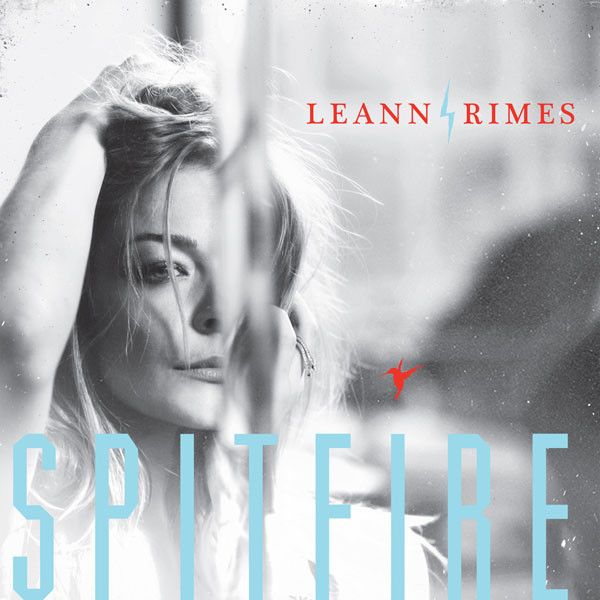 LeAnn Rimes, who rose to stardom at age 13 when her single “Blue” hit country radio, has recently released her 15th studio album, Spitfire. She was named Academy of Country Music Top New Female Vocalist in 1996, and also won the ACM Single of the Year award for “Blue.” In addition to her ACM awards, LeAnn has eight Grammy Awards. Her last Grammy win was in 2008. She is hoping her latest album, Spitfire, will get her back on the radio, and back on the country music charts. Country music fans know that LeAnn Rimes has had more than a bit of turmoil in her life. For a time the media didn’t seem to want to leave her alone. Her fans have watched her grow up, marry, divorce, become involved in a scandal and remarry. From the song titles on this CD, it would appear LeAnn has decided to use a little of her troubled past to her advantage. A lot of what she has lived through can be heard in the songs she is now singing. Listed with the writers, here are the songs that you will hear on the new album: “Spitfire”, LeAnn Rimes, Darrell Brown and David Baerwald; “What Have I Done” with Alison Krauss and Dan Tyminski, Rimes, Brown, Baerwald; “Gasoline & Matches” with Rob Thomas and Jeff Beck, Buddy Miller, Julie Miller; “Borrowed,” Rimes, Brown, Dan Wilson; “You Ain’t Right,” Liz Rose, Chris Stapleton, Morgane Hayes; “I Do Now,” Rimes, Brown, Wilson; “Where I Stood,” Missy Higgins; “You’ve Ruined Me,” Rimes, Brown, John Shanks; “Bottle,” Gary Burr, Christina Aldendifer; “A Waste Is a Terrible Thing to Mind,” Rimes, Brown, Baerwald; “Just A Girl Like You,” Rimes, Brown, Nathan Chapman; “God Takes Care of Your Kind,” Rimes, Brown, Dean Sheremet, and “Who We Really Are,” Brown, Sarah Buxton. LeAnn has a lot of diversity in her vocals. When going from one song to the next, she has the ability to change from a raspy and rowdy voice to a sweet and melodious tone. Listeners really don’t know what to expect when one song ends and the next begins. Finding a favorite song on this album was a little difficult for me. That was because the lyrics I liked the best were to the song “Bottle.” That song gives us lines like ‘My heart is like a bottle with the world inside, I couldn’t fit more happy in it if I tried’. However, the melody I liked the best belonged to the song “What Have I Done”. It has a slow, quiet, calming melody and is very easy to listen to. The whole album is good, and I’m sure it will be receiving the highest ratings from any of country music’s reviewers. LeAnn still keeps a packed schedule, with concerts throughout the U.S., and shows scheduled for September in Switzerland and the United Kingdom, and a show in Taipei City, Taiwan, planned for November. You can keep up with LeAnn’s tour dates, news, and upcoming single releases by visiting her website www.leannrimesworld.com. She has a Twitter account, too, and you can follow her @leannrimes.
Music Charts Magazine Country Music Reviews by Country at www.CountrysChatter.com “Your Country Music News Source“