Reviews
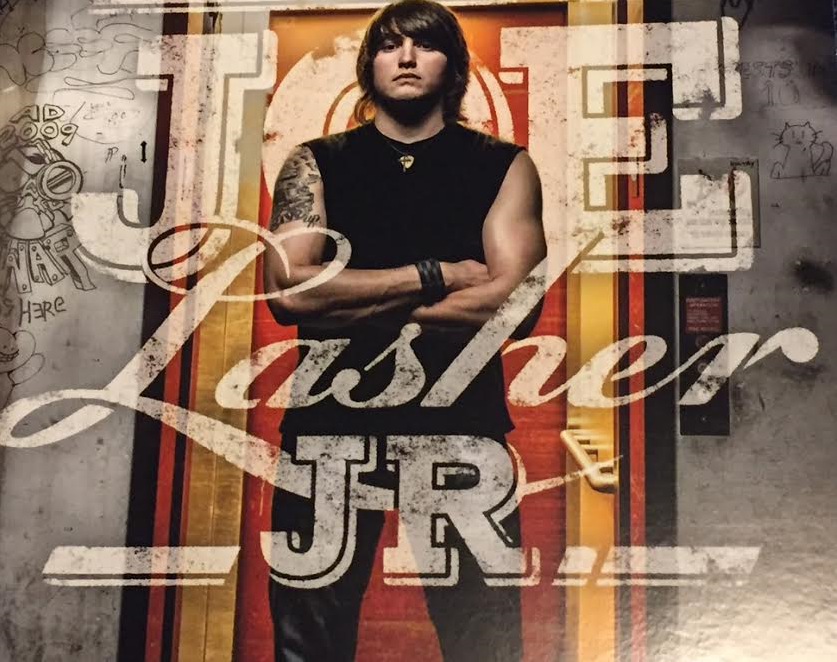 When I first was introduced to Joe’s work, about eight months ago, I remember saying to myself “It doesn’t get any better than this.” I was wrong! It got better! I spent most of yesterday, and all of today listening to his new EP, “Jack to Jesus”. I have only one complaint about this 5-track EP. And, that is – it’s a 5-track EP. It isn’t enough. When it’s over, you have to play it again, because one thing Joe does better than most of our seasoned artists is this … He always leaves you wanting more!
There is not a song on this entire EP that isn’t radio-ready–NOW. It’s enough country to keep the older country fans (like me) happy; and, it’s enough of today’s country sound that it should be not only what our younger listeners what, but exactly what our program directors all across the nation want to give their listeners.
Did you ever listen to an EP that has a ‘little bit of everything’? Well, that’s what you are going to get with this one. There is a lot of country ballad, a little country/southern rock, and a tiny touch of country/rap. Enough of that to keep our fans of The Lacs and Colt Ford happy, but not so much that it made me dislike the song.
“Whiskey Nights” sits in the lead-off position. What a great start to what ends up being one of the best debut country releases to come along in a years! ‘Some nights are whiskey nights, you’d rather drink yourself blind than see the mess you’ve made…..some days are for getting it right, but some nights are whiskey nights.’ Memorable lyrics set to a slow-to mid tempo melody – you can’t help but fall in love with this song.
The second song you are going to hear is “Tap a Little Tail Light”. Whenever radio wants to start playing this one – I think there is an audience out there just waiting to listen to it. This is so much ‘today’, as far as our country music goes. You listen, you are immediately put in mind of some of our top male artists. And, Joe manages to do that without losing his own individuality.
Joe Lasher Jr. is a name all country music fans are going to want to remember. He is an up and coming singer/songwriter who has undoubtedly found his place in the world of country music. He’s right where he belongs. “Somebody Up There Must Like Me” is the third song on the new EP. The story might remind you a little bit of Tracy Byrd’s “Keeper of the Stars,” just the idea that ‘someone had a hand in it, long before we knew’. But, the lyrics and the song Joe sings are definitely not the old Tracy Byrd song. They are all new, all uniquely Joe, and again – all today’s country. ‘Somebody up there must like me, to lead me to you’. Enough said about this one! It’s more of a ballad than the others. I can just picture people wanting to get out on the dance floor when he starts this one.
Now, while it would be impossible for me to pick a favorite out of the five songs here – I have a least favorite. That would be the fourth song, “Kickin’ Ass and Takin’ Names”. Now, it’s not the title, or or even the lyrics that turned me off a little. It was that small amount of rap at the opening of the song; and that more rockish sound that this one has. This is definitely a ‘pull this one out at the party’ song. And, I don’t doubt he will get one request after the next for this one at his live shows. I like it. I didn’t love it. But, I can definitely see a crowd dancing to it, singing with it, and just kickin’ up their heels to one heck of a good time. I know I have some readers who are going to run straight to track 4 when they get their copy of this CD. And, they are going to play this one more than once.
The last song you are going to hear is “Jack to Jesus”. This is what country music is all about, folks. This is a story. This one, more than the others, takes me back to MY era of country music. Back when it was really all about the story, and in many cases – all about the message. This song is about what happens ‘on the road from Jack to Jesus’. Wow, it’s a sad story. And yet, it’s a story that says “someone out there needs to hear this, so pay attention!’.
To learn more about Joe Lasher Jr., please visit his website, joelasherjr.com. He has links there to his other social media as well, so be sure to check out his Facebook page, and follow him on Twitter.
Music Charts Magazine® Country Album Review by Donna Rea of CountrysChatter.com

Copyright © 2012 – 2016 Music Charts Magazine, INC – All Rights Reserved. Contents of this site including text and media may not be reproduced without prior written consent. Audio and video elements of this site are property of their respective owners and are used with permission.
|
This weeks #1 on the IndieWorld Country Record Report … This weeks #1 on the IndieWorld Country Record Report … I enjoyed Uncle Earl’s world and I’ve kept… This weeks #1 on the IndieWorld Country Record Report … Music Charts Magazine® History – Song for the month of… |

 “There’s Still a Little Country Left” is the first album Daryle Singletary has released since 2009. I consider myself the world’s biggest fan of traditional country music! It seems Daryle is, too, He remains true to his roots, and describes himself as a “hardcore country traditionalist.”
If you are looking for something totally different from what you are hearing on today’s Top 40 Country radio stations, then you are looking for “There’s Still a Little Country Left”. This is not the country/rock, country/rap, and country/pop stuff we are hearing on the radio these days. You’re going to get the music that we all remember from when it really was country. And, Daryle definitely knows what that music is supposed to sound like.
With an album name like “There’s Still A Little Country Left”, you get some idea what you are going to hear when you hit the play button on this one! There are fun songs, thought-provoking songs, songs that bring back a lot of memories, fast songs, slow songs, and a few mid-tempo. But, there is one thing every one of these songs has in common. They are all great, and they are all country.
I’ve spent a lot of time listening to this album since it was released few months ago. Every song is easy to listen to. Every song tells a story. And, every song has that very distinctive Daryle Singletary vocal. “Say Hello To Heaven” is telling a story about losing someone he loved, someone a whole family loved. And, that person was obviously killed in an auto accident…and, the lyrics are beautiful.
“Sunday Mornin’ Kind of Town” is the kind of Sunday I had growing up. A lot of our younger generation may not remember that kind of Sunday , but this song paints a great picture of what kind of day it was. And, the kind of Sunday I would like to have again! Right after that great Sunday Mornin’ song, we get “Spilled Whiskey”. This is one of those song you can picture Daryle singing in front of a dancing crowd at a honky-tonk or a Texas dance hall. Well, these days, most of us would call that place a ‘club’ or even just a ‘bar with a dance floor’. It doesn’t matter what you call it. We all know that kind of place, and this is the kind of music that you would want to dance to when you get there. It’s also the kind you are going to want to listen to, just because you can!
I believe the song “Like Family” might be my favorite. Like all of Daryle’s songs. There is a story here. It’s a story that a lot of today’s career people may have forgotten about. That is how important family is. This one is slow – it’s one of those ‘close your eyes, lean back in your chair, listen to the music, and remember’. But at the same time, the song is packed full of things that will make you realize, more than you did before, that your family is the most important thing you have.
“So Much Different Than Before” is really as much about growing up as it is about change. This is such a great melody. It’s a happy melody. Which kind of goes along with the story he’s telling. How things aren’t just different than before, they are better. He slows it back down a little with the next song. “Enough to Lie To Me” is wonderful. Remember when we used to tell people how pretty their dress was, when was really awful. Or, we might tell them that they really did a great job decorating their living room, when we actually thought it looked terrible. And of course, there was the reference Daryle made to his parents telling him about Santa and flying reindeer. He remembers those times. The whole point of this song is “Wouldn’t it be nice if someone still cared enough to lie to me”.
There’s Still A Little Country Left
TRACK LISTING
- Get Out Of My Country
- Say Hello To Heaven
- Sunday Mornin’ Kind of Town
- Spilled Whiskey
- Like Family
- So Much Different Than Before
- Enough To Lie To Me
- Wanna Be That Feeling
- Too Late To Save the World
- There’s Still A Little Country Left
- America (Bonus Track)
- The Only Hell My Mama Ever Raised – Feat. Johnny Paycheck (Bonus Track)
Daryle Singletary is definitely still around. And, he is still singing real country music. You can get all his news and tour information by visiting his web site: http://www.darylesingletary.net/
Music Charts Magazine® Country Album Review by Donna Rea of CountrysChatter.com
Copyright © 2012 – 2015 Music Charts Magazine, INC – All Rights Reserved. Contents of this site including text and media may not be reproduced without prior written consent. Audio and video elements of this site are property of their respective owners and are used with permission.
|
This weeks #1 on the IndieWorld Country Record Report … I enjoyed Uncle Earl’s world and I’ve kept… This weeks #1 on the IndieWorld Country Record Report … This weeks #1 on the IndieWorld Country Record Report … Music Charts Magazine® History – Song for the month of… |

Date = 19 October 2015
Author name = Amanda Petrusich
Title = Do Not Sell at Any Price: The Wild, Obsessive Hunt for the World’s Rarest 78 rpm Records
Publisher = Scribner
Review =
Until the advent of digital technology, people born after approximately 1950 bought music pressed on vinyl. Before mid-century, though, music was released on shellac, usually ten-inch brittle records that rotate at 78 revolutions per minute—give or take a revolution—and that contain about three minutes of performance per side. The time limitation was both negative and positive. Unless records were stacked on a spindle, listeners needed to tend to a record after each playing, which was cumbersome and time consuming. Yet the time constraint forced one to focus on the music and become familiar with it, a reality that does not exist when listening at one sitting to a complete LP or CD; attention wanes. In some circles, 78s have nostalgic appeal, as evidenced by the occasional DJ playing only 78s on vintage equipment at parties. In 2010 Tom Waits and the Preservation Hall Jazz Band recorded two tunes that were released on a 78, though its material was vinyl, not shellac.
Because shellac is fragile and because 78s were last mass produced in the mid-1950s, they are increasingly rare. This might not much matter in one sense because a substantial amount of the music initially released on 78 is available on-line, and, in truth, some of it, especially the mediocre popular music from the 1950s, was so ordinary that its preservation hardly matters. (With some embarrassment I admit to buying, during my teenaged years, 78s by the likes of Teresa Brewer [“Music, Music, Music”] and Eddie Fisher [“Oh! My Papa”].) Blues recordings made primarily during the 1920s and 1930s, as well as Cajun and country musics and recordings from Greece, Albania, and a few other countries from this same period—all 78s—are a different matter, as Amanda Petrusich explains in Do Not Sell at Any Price, published in hard cover in 2014 but recently released as a paperback.
Yes, used 78s can still be found at estate and garage sales as well as in thrift stores, and can be purchased inexpensively because there is a limited market for them. Rare and valuable 78s—such as those about which Petrusich writes—are not found in such places because the market for them has been cornered by a handful of passionate, voracious collectors. By focusing on these men and their pursuits—adventures is probably a better word—and what they taught her, Petrusich crafts a narrative that, while it discusses recording realities, focuses on what happened to records after they were released and their effect on this handful of dedicated men. (The author investigates why men dominate this activity.) Along the way, she becomes enamored of and transported by much of this old music that is new to her.
Petrusich lauds collectors as preservationists without whose efforts a significant segment of (mostly American) music might have been lost. One of them, John Tefteller, not only located and bought the only known photograph of Charley Patton, but he also discovered and purchased the only known copy of King Solomon Hill’s 1932 recording of “My Buddy Blind Papa Lemon.” Tefteller relates that in making these purchases “the hundred dollar bills came spilling out of my wallet,” to which Petrusich wryly responds, “It’s the sort of thing that makes you want to buy a man a cheeseburger, or at least tell him thanks” (103). Now, because of the willingness of Tefteller and others to share even their rarest items (though not by lending them), almost every recording Petrusich discusses is available at youtube.com, including “My Buddy Blind Papa Lemon.” As a result, when reading about her response to a recording, one can, after a few keystrokes, listen to it on a computer and compare one’s own reaction with hers. Granted, listening to the music this way is aesthetically inferior to hearing it on a 78 played on appropriate equipment, but there it is, ready to be enjoyed at no cost, courtesy, ultimately, of the collectors.
With one exception, the collectors Petrusich describes were previously unknown to me. The exception is Harry Smith, an odd-ball collector (most of the collectors are odd to one degree or another, though he seems odder than most) known for Anthology of American Folk Music, which he prepared for Folkways Records. Released in 1952, this idiosyncratic and influential collection—it helped inspire the folk revival of the late 1950s and early 1960s–presents music from the period 1927-1932, all drawn from Smith’s collection. Long available on CDs, the anthology influenced numerous musicians, including, according to Smith’s friend Allen Ginsburg, Bob Dylan, Ramblin’ Jack Elliott, Jerry Garcia, and Peter, Paul, and Mary. Following Smith’s death in 1991, his collection of over 13,000 78s disappeared, despite his having left most of his recordings to the New York Public Library.
Less eccentric than Smith but eccentric nonetheless, Joe Bussard is another of the collectors—perhaps the greatest collector—Petrusich presents. She did not know Smith; she knows Bussard, who owns twice as many records as Smith did. A gruff man of strong opinions (real jazz ended in 1933; country music, in 1955; bluegrass, in the late 1950s), he made one of the most impressive purchases of all time. This occurred when, on a 1966 record hunting expedition, he picked up a man walking along a road who told him that he had many old records. Bussard drove him home, where the man produced, among other things, fifteen Black Patti 78s. No known original Black Patti recording exists in more than five copies. Bussard bought all the records for $10. When word of this purchase got out, for just one of the Black Pattis—possibly the only known copy of “Original Stack O’Lee Blues,” by the Down Home Boys—Bussard received offers of up to $50,000, which he declined. Petrusich tells several fascinating, even gripping stories such as this, though none is quite so dramatic.
None, that is, except for an exploit of her own, which concerns the innocuously named Wisconsin Chair Company, located in Port Washington. In the second decade of the twentieth century it began selling phonograph cabinets, which consumers considered furniture. Soon, the company began making phonograph machines to place in the cabinets, and then, in 1917, started producing records, sold in furniture stores, to be played on the machines. They were pressed at a plant in Grafton, WI, the town where the company established a recording studio in the late 1920s. Music was released on several labels, the main one being Paramount. After the company struggled for a few years while selling popular music, in 1922 executives decided to focus on race music, as it was called—music, mainly blues, that was performed by and that appealed to blacks—though it also released other kinds of music, including country by the likes of the Dixie String Band and the Kentucky Thorobreds. Blues performers who recorded for Paramount include Son House, Skip James, Blind Lemon Jefferson, Charley Patton, and Ma Rainey. Made cheaply with inferior material, the records were released in small numbers, typically around 1,200 for each 78. Over time, the combination of poor material and few copies caused Paramounts to become scarce. Petrusich wonders—as others have wondered—what happened to the unsold records and the metal masters from which they were pressed. One rumor: they were thrown into the Milwaukee River, which flows past what was the Grafton plant. In an action that at least shows her commitment to her project, the author took scuba-diving lessons so she could search the river for something—anything—related to Paramount. She tried but failed, which could also be said of collectors’ occasional attempts to find and buy records. Her effort shows dedication, or foolhardiness, or both.
The author writes deftly about Tefteller, Smith, Bussard, and others, including herself. An outsider pleased to be introduced to and more-or-less respected by a small group of obsessive men, she marvels at what she learns and grows fond of her new acquaintances. With one collector in particular, Christopher King, she develops a genuine friendship, one that goes beyond their professional relationship. King, who introduced her to Bussard, is so committed to understanding the music he loves that, in order to write accurate liner notes for a collection of performances by the Greek violinist and murderer Alexis Zoumbas, he traveled with his family to Greece to research the musician’s life. Spending considerable money to feed his passion seems not to bother him, as may also be deduced from his willingness to pay Bussard at least $5,000 for two recordings of Cajun music—recordings he already has—because Bussard’s copies are in slightly better condition than his own. And by playing Zoumbas’s music for the author, King inspired her to write this: “And I understood, for a moment, what collectors meant when they moaned about what was lacking in contemporary music: that pure communion, that unself-consciousness, that sense that art could still save us, absolve us of our sins” (197). This statement might also partly explain the fanatical dedication to collecting by King and his associates. Yes, there is excitement in the chase, in the pursuit, and it doubtless becomes addictive. Still, there is an aesthetic reality underlying the quest, perhaps most vividly presented here in the actions of Bussard as he listens to his records in the company of King and Petrusich. He cannot sit still; he must move: “At times it was as if he could not physically stand how beautiful music was. It set him on fire, animated every cell in his body” (206).
Not only does Petrusich master an arcane topic, but she presents her material engagingly. The narrative is enhanced by an agreeable first-person voice. The reader—this reader, anyway—would like being in the company of the woman who created it. Her prose sparkles, especially when creating similes. When “like” or “as” introduces a comparison, a cliché often follows. Not so with Petrusich. Here are a few examples of her inventiveness. Listening to an analog recording on a good stereo—as opposed to hearing music on MP3–is “like delicately consuming a fancy French chocolate when you’ve only ever gnawed on Hershey bars in the parking lot of a Piggly Wiggly” (17). Accompanying Chris King as he looks for records at a flea market “is oddly thrilling, like getting tied to the back of a heat-seeking missile” (47). On seeing the Charley Patton photograph that John Tefteller discovered: “It was like looking up from a campfire, tugging a marshmallow off a stick, and spotting Bigfoot casually leaning on a pine tree outside your tent, waiting for a s’more” (101). On listening to two recordings by Alexis Zoumbas: they “sounded like someone being turned inside out, with every single one of his organs suddenly exposed to cold air” (197). A terrific writer, Petrusich has produced a masterful book.
Author = Benjamin Franklin V
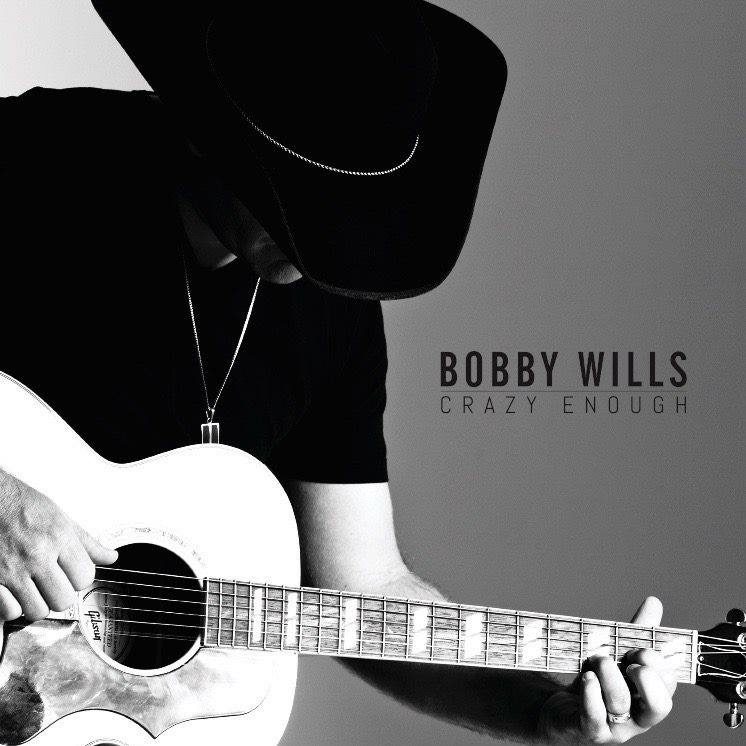 Making his U.S. debut, Bobby Wills recently released CRAZY ENOUGH, his five-song EP on newly launched label Willing Nashville. If it sounds crazy to plant one foot deep in the bedrock of country tradition while carving out a sound as personal and powerful as anything you can hear on country radio or pretty much any radio today, well, then Bobby Wills is as crazy as they come. Collaborating with Nashville hit-makers, Bobby co-wrote each of the five tracks on the new EP with top tunesmiths Walt Aldridge (Barbara Mandrell, Reba McEntire and Tim McGraw) and Mike Pyle (Blake Shelton, Lee Ann Womack, and Mark Wills) including Top 30 hit “Never Didn’t Love You” and title track “Crazy Enough.” Infectious new single “Crazy Enough” hit Country radio this summer and was featured as new music on iTunes. The up-tempo track was also listed as the “Pick of the Week,” at RadioInfo.com and spotlighted by Music Row as the No. 2 most added song on Music Row’s Country Breakout Chart and as a song ‘infused with personality and raucous energy.’ Stacking up 112,000 views on YouTube, the music video, directed by award-winning Stephano Barberis, incorporates the daring sport of Parkour and is currently airing on Great American Country. Bobby was nominated for the 2015 Canadian Country Music Association Awards (CCMA®) Songwriter of the Year award and was named the 2013 Canadian Country Music Association Awards (CCMA®) Rising Star winner. He has received consecutive (CCMA®) Male Artist of the Year nominations in addition to taking home the Alberta Country Music Association (ACMA) Male Artist of the Year award (2012/2013). The Gibson-sponsored artist made the first of many trips to Nashville in 2007; he is currently residing in Canada and will move to Music City this year.
The EP is titled “Crazy Enough”, and that is the lead single. It wasn’t my favorite song on this album. For me, “Crazy Enough” is  more country/rock than I like. But, we did tell you that Bobby is planting “one foot deep in the bedrock of country tradition while carving out a personal/powerful sound.” My first thought when I listened to “Crazy Enough” was that, Bobby Willis is better than that song. And, I was really glad that the other four songs on the EP proved me right. “Never Didn’t Love You,” “Still Something there,” “So Much for Taking It Slow” and “With You” are all a little slower than “Crazy Enough” – they are definitely all more country than “Crazy Enough” – and they are all the kind of music I want to hear from country artists these days. Vocally Bobby is without question one of the best male vocalists out there right now. And, he seems to have found a winning combination, having co-written all of the songs on the EP with Mike Pyle and Walt Aldridge.
I know there are people out there who are not only going to like “Crazy Enough,” they are going to love it. I know that because of the kind of music we are hearing on country radio these days; and, I know that because I hear what is ending up at the top of the charts every week. “Crazy Enough” has that kind of tempo that will make you want do do a little toe-tapping, and maybe even a little singing along. But for me, it didn’t tell the story we heard in songs like “Still Something There” and “So Much for Taking it Slow.”
Readers can find out more about this up-and-coming artist by visiting his web site: http://www.bobbywills.com/
Music Charts Magazine® Country Album Review by Donna Rea of CountrysChatter.com
Copyright © 2012 – 2015 Music Charts Magazine, INC – All Rights Reserved. Contents of this site including text and media may not be reproduced without prior written consent. Audio and video elements of this site are property of their respective owners and are used with permission.
 Date = 7 October 2015
Author’s name = Alfred Green
Genre = Jazz
Title = Rhythm Is My Beat: Jazz Guitar Great Freddie Green and the Count Basie Sound
Publisher = Rowman & Littlefield
Review =
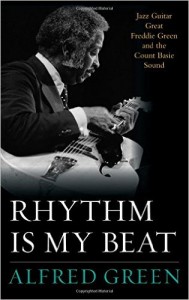
Published in the series Studies in Jazz overseen by the Institute of Jazz Studies at Rutgers University, Rhythm Is My Beat documents the career of Freddie Green, seemingly universally acknowledged as the greatest rhythm guitarist ever, in any genre. His genre was jazz. Because the author is the musician’s son, readers might expect mawkishness, but the text is neither sentimental nor particularly emotional. It provides biographical details in a straightforward manner, never milking them for effect. Once Alfred Green begins discussing the guitarist’s career, however, details about his father’s private life decrease significantly.
In focusing on music, not biography, Alfred Green presents a good overview of his father’s career, almost all of which—half a century–was spent with the band of Count Basie (thus, the book’s subtitle). He begins strongly by using photographic evidence to prove that in early 1937 his father played at the Black Cat Club in New York City with a group led by saxophonist Lonnie Simmons, a friend from South Carolina. (Green was from Charleston.) Because Green left relative anonymity with Simmons for the big time with Basie, details about the Black Cat engagement are important; they are also sometimes misunderstood. In the autobiography John Hammond on Record (1977), impresario Hammond states that Green worked at the Black Cat with the group of Skeets Tolbert, not Simmons, a claim repeated by some jazz writers because Hammond was in a position to know: he discovered Green at the club, thought him a good fit for Basie’s rhythm section, and introduced him to Basie. In other words, he was instrumental to the careers of both Green and Basie. Yet in identifying the group with which Green played at the Black Cat, Hammond is demonstrably wrong, as Alfred Green proves. He sets the record straight.
Anyone familiar with Basie’s band from 1937 until the leader’s death in 1984 and beyond it to Green’s death in 1987 will necessarily know the contour of Green’s career because of Green’s long, almost unbroken tenure with the leader, beginning in 1937. “Almost,” because of occasional illness, but also because Basie bowed to economic and musical realities (accommodating the new music known as bebop) by reducing his band to a small group in 1950, one that initially excluded Green. About two months later, though, the guitarist joined it, apparently by insisting that Basie employ him. At the urging of Billy Eckstine and Basie’s manager Willard Alexander, Basie discontinued the small group and by 1951 reconstituted a big band, which included Green. This organization relied more heavily on written arrangements (by the likes of Neal Hefti and Ernie Wilkins) than had previous versions of the band, which often played head arrangements (those that are spontaneous, or played from memory). Yet whether Basie led a relatively unrestrained band or one controlled by formal arrangements—or fronted no more than ten musicians—Green was, with a few brief exceptions, a constant, providing a dependable 4/4 beat that, with the remainder of the rhythm section, made the band swing. Not only did he create the beat, but when a musician violated it or was less than decorous on stage, he expressed dissatisfaction by glaring at the offending party with a gaze known as “the ray.” In so doing, he served as an enforcer, as the person who insisted that the band’s musicianship and integrity be maintained.
Despite being known primarily for his association with Basie, Green had a musical career apart from him, as the author documents in a discography of thirty-four unnumbered pages. Green was attractive to other musicians for the same reason Basie valued him: his ability to provide a steady beat. As a result, he performed on hundreds of recordings as sideman, beginning with Teddy Wilson and Billie Holiday in 1937 and concluding with Diane Schuur three days before his death at age seventy-five. He played at numerous sessions led by Basie’s instrumentalists, such as Buck Clayton, Paul Quinichette, and Lester Young, but also at ones led by musicians who had not been regulars with Basie, including Mildred Bailey, Ruby Braff, Bob Brookmeyer, Ray Brown, Benny Carter, Al Cohn, Nat Cole, Roy Eldridge, Coleman Hawkins, Woody Herman, Illinois Jacquet, Gerry Mulligan, Buddy Rich, Tony Scott, Sonny Stitt, Sir Charles Thompson, and Sarah Vaughan. With some of these and other leaders he participated in recordings that have proved enduring, including “This Year’s Kisses,” with Wilson and Holiday (1937); “A Sailboat in the Moonlight,” with Holiday (1937); “Ad-Lib Blues,” credited to Benny Goodman, though the clarinetist does not play on it (1940); Charlie Parker’s album Night and Day (1952); Sing a Song of Basie, by Lambert, Hendricks, and Ross (1957); and Ray Charles’s Genius + Soul = Jazz (1960).
Most important for his playing, Green also composed tunes, two of which are popular in jazz circles: “Down for Double” and “Corner Pocket”; the latter has been recorded over a hundred times, sometimes as a vocal titled “Until I Met You.” Alfred Green relates an engaging anecdote about what inspired Manhattan Transfer to record this piece, its version of which won a Grammy (130-31). The book includes an apparent contradiction about the number of tunes Green wrote. The author states that his father composed “in excess of thirty tunes” (132), but Mark Allen, who compiled the list of Green’s compositions that appears in appendix K, records only twenty (239-41). One wonders why, if Green wrote at least thirty, Allen fails to account for the other ten or more. Alternatively, Allen could be accurate and the author is mistaken. Alfred Green should have resolved this issue.
Green’s narrative constitutes a little over half of this 325-page book. Fourteen appendices compose most of the other pages. The appendices consist mainly of essays—mostly (all?) by authors other than Green—about the guitarist’s technique and style that will likely interest musicians, not ordinary readers. Photographs enhance the book. Candid shots, which are especially appealing, show Green in a street scene looking dapper, seated at a club with Billie Holiday and Lester Young, pretending to fight the boxer Sugar Ray Robinson, golfing separately with Billy Eckstine and Joe Williams, and, in a beautiful picture, shaking hands with President Reagan at the White House. There are many others.
Though Green adequately chronicles the career of an important musician, his text has problems. When using the word “always,” for example, he does not allow for exceptions when exceptions clearly exist, as when stating that “John Hammond was always on the prowl” (47) and that Lester Young played “to a meter that was always a fraction-of-a-beat ahead of him” (58). Hammond never slept? Young never played on the beat, even in ensemble passages? Green offers opinions as facts, as when claiming that Jimmy Rushing was “the best blues singer around” (74) and that saxophonist Frank Wess was “incomparable” (77). Though the author documents many of his statements, he sometimes fails to do so when proof is needed, as when stating that “Lester Young struggled to keep his emotions intact” following the death of saxophonist Herschel Evans and that, as a result, saxophonist Jack Washington “often had to help the distraught [Young] to the stage and his seat” (59). Green is sometimes credulous. Does he really believe that bandsmen “peed from the moving bus with the door partially open” (78)? (Try imagining it.) Or that, despite the claims of Frank Wess and Benny Powell, an opened can of sardines fell from an overhead bus rack and landed on singer Joe Williams’s head, where it remained for the remainder of the trip (81)? On the topic of music, one wonders why Green characterizes Dizzy Gillespie, Fats Navarro, and Charlie Parker as hard-bop players (98) and why, other than listing it in what is termed a “selected discography,” he ignores The Atomic Basie (1957), arguably the most impressive post-war Basie big band album. Identifying Ruby Braff as a “neo-Dixieland trumpeter” disserves the musician (246). Most disconcerting, though, are constructions such as these that, first, use the wrong case and, second, feature a dangling modifier: a “tiff between he and Hammond” (68) and “In interviewing John Williams . . . , the twenty-five-year Basieite once asked me . . .” (91). Because Green was unaware of these problems, his editor should have corrected them.
In sum, Alfred Green adequately summarizes his father’s career without getting bogged down in details or becoming technical when discussing music. That is, general readers can enjoy the book, though they will be distracted by writing lapses such as those mentioned here.
Author = Benjamin Franklin V
 I think the tourism folks in Texas use the slogan, “it’s not just country music, it’s music country”. And, they are right. There is so much really good country music coming out of Texas these days, and Jon Wolfe is just one more example of that. For anyone who loves country music, and has not had the pleasure of listening to Jon Wolfe, the best place to start is to point you to his web site (www.jonwolfecountry.com). The bio on that site will tell you all you need to know about Jon, and there is even a music section where you can listen to some of his songs.
The best introduction to Jon Wolfe is the basic yet not so simple fact that he’s a Country singer and songwriter who’s Country to the core. With an array of influences including George Strait, Clint Black, Alan Jackson, Garth Brooks and Merle Haggard, the Oklahoma native turned Texan has been burning up the Texas Charts where he garnered six consecutive Top Ten singles (“Let A Country Boy Love You,” “That Girl In Texas,” “I Don’t Dance,” “It All Happened In A Honky Tonk,” “The Only Time You Call” and “What Are You Doin’ Right Now”). Wolfe has opened for some of the platform’s biggest stars and has played more than 400 shows in the past four years. A storyteller at heart, Wolfe’s traditional Country sound has led him from his small hometown of Miami, Oklahoma to the dancehalls and honky-tonks of Texas, and now to Music Row.
I am excited to tell you about Jon’s new album, called Natural Man. The album can be pre-ordered on his web site now, with an official release date of March 31, 2015. It gives us 13 great country songs! The album was produced by Jon, Lex Lipsitz and Billy Decker, and the music is a well-laid out combination of today’s country and real traditional country.
The 13 songs you will get on the album are, If You’re Lonely Too, That’s What I’m Talkin’ About, Smile on Mine, It Just Feels Right, Outrun Her Memory, Don’t It Feel Good, She Beats All I’ve Ever Seen, Singin’ Thing, Natural Man, What Are You Doin’ Right Now, I’m Doin’ Alright, Married to Nothin’ and When I Get to Heaven. Every song on this CD became my favorite. I believe everyone who likes country music will feel the same way.
This is an album full of good country music. You get everything from ‘upbeat tempo’ and memorable lyrics, to great instrumentation and really good story-telling. You get ballads, love songs, and the ones that will make you want to get up and dance. Jon Wolfe pulls all that together with his strong vocals, and very likeable country style.
Like any album that makes me lean back in my chair and say, “this is country music,” I have nothing but great things to say about this album. The last song, “When I Get to Heaven,” is outstanding! With lyrics like ‘when I get to heaven, will I ever hear a country song again’…there’s a beautiful story in this one. It’s about how much he loves the sound of a steel guitar, and fiddles – and it talks about all the awesome things that we’ll find in heaven – and his hope that there will also be the country music he love.
For those of you who really enjoy social media, you can follow Jon on Twitter @jonwolfe. In addition to reading Country’s Chatter (www.countryschatter.com), we hope you are following us on Twitter, too. You will find us @countryschatter.
Copyright © 2012 – 2015 Music Charts Magazine, INC – All Rights Reserved. Contents of this site including text and media may not be reproduced without prior written consent. Audio and video elements of this site are property of their respective owners and are used with permission.
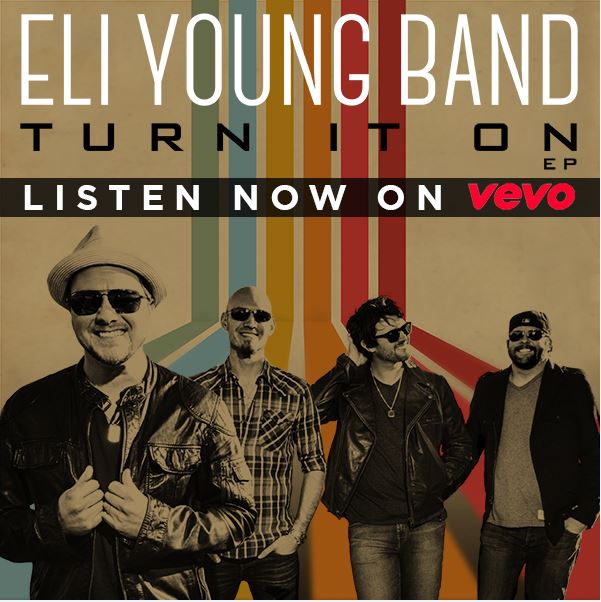 Fans of Eli Young Band know what kind of music this band puts out. Since their first album, lead vocalist Mike Eli captured listeners with his unique voice. The Texas band has been releasing albums since 2002, when they put out their debut self-titled CD. It wasn’t until 2006 when they released the CD Jet Black & Jealous that the band got a national following, and produced hit records on Top 40 country stations.
That album, and the ones that followed, gave us many hits, including When It Rains, Always the Love Songs, Radio Waves, Crazy Girl, and Even If It Breaks Your Heart.
On March 10, Eli Young Band will release a new EP. This one is made up of four songs, any one of them could be a hit. I listened to all four songs this evening, and I finished wishing there had been more. The four songs you will find on the EP are Turn It On, Plastic, Your Place or Mine, and Drink You Up.
The title track, Turn It On, will be released to radio on March 9. I hope every station will add it to their play list the first day. It is everything you expect from this great group.
As good as the title track is, I personally liked the second song, Plastic, even more. The song has well thought-out lyrics, good melody, and great music. I’ll suggest now that the group ship this one off to radio, as soon as Turn It On makes it to the top of the charts.
The third song, Your Place or Mine, is lyrically predictable. You know where it’s going when you read the title. A lot of people have had a ‘your place or mine’ person in their life. However, it takes someone like Eli Young Band to put that situation to music.
The last song, is Drink You Up. The song is fast, the lyrics are catchy. I’ve never tried to compare alcohol to anyone, but this song does a good job of doing just that.
To keep up with all the news about Eli Young Band, visit their web site http://www.eliyoungband.com/. For more country music news, visit countryschatter.com.
 Date = 6 March 2015
Author = Arlene Corsano
Genre = Rhythm and Blues
Title = Thought We Were Writing the Blues but They Called It Rock and Roll
Publisher = ArleneChristine
Review =
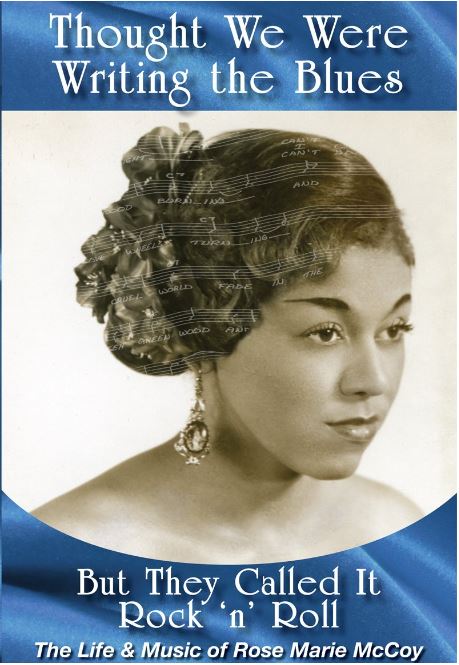
Thought We Were Writing the Blues but They Called It Rock and Roll chronicles the career of Rose Marie McCoy (1922-2015), about whom one could be excused for asking, “Rose Marie who?” Though she considered herself primarily a singer and secondarily a composer, her legacy rests with the hundreds of songs—over 800–she wrote, though none became a substantial hit. This reality resulted not from her lack of talent but from the fact that she mainly wrote blues that were performed in the rhythm-and-blues mode by blacks for black audiences at a time when mainstream culture, including music, was dominated by whites because of social realities. Yet with her intended audience, McCoy succeeded. A veritable who’s who of rhythm-and-blues performers recorded her tunes (though adept at writing both music and lyrics, she collaborated on most of her creations), including Faye Adams (“It Hurts Me to My Heart,” which reached number one on the rhythm-and-blues charts), Big Maybelle (“Gabbin’ Blues,” featuring McCoy’s speaking), Nappy Brown (“Don’t Be Angry”), Ruth Brown (“Mambo Baby”), the Du Droppers (“Talk That Talk”), the Five Keys (“Don’t You Know I Love You”), Little Willie John (“Letter from My Darling”), Louis Jordan (“If I Had Any Sense”), Joe Medlin (“No One but You”), Little Jimmy Scott (“I’ll Be All Right”), Shirley and Lee (“Keep On”), the Thrillers (“Lizabeth”), and Big Joe Turner (“Well All Right”). All these songs were recorded in the mid 1950s, her most creative period. Subsequently, her compositions were recorded by such singers as Maxine Brown (“See and Don’t See”), Jerry Butler (“Got to See If I Can’t Get Mommy [to Come Back Home]”), Nat Cole (“My Personal Possession”), Al Hibbler (“Stranger”), Liz McCall (“Double Determination”), Ike and Tina Turner (“It’s Gonna Work out Fine”), Sarah Vaughan (“I Need You More Than Ever Now”), Lenny Welch (“Hundred Pounds of Pain”), and Jean Wells (“Ease Away a Little at a Time”). Her most recent compositions to be recorded were written with Billy Joe Conor for his debut CD (2013).
“Trying to Get to You” deserves special comment because of its historic importance. Composed with Charlie Singleton (to whom Corsano’s book is dedicated) and recorded initially in 1954 by the Eagles (not the current group of this name), Elvis Presley covered it the next year on his first album, Elvis Presley. Because this release includes songs written by blacks (such as “I Got a Woman” [by Ray Charles and Renald Richard], “Money Honey” [by Jesse Stone], and “Tutti Frutti” [by Little Richard and Dorothy LaBostrie]) and because many people thought Presley sounded black, this popular album was instrumental in bringing black music, such as that written by McCoy, to white listeners, and especially to teenagers, many of whom responded to it as an antidote to and liberation from the largely insipid music to which they were exposed on white radio stations and, increasingly, television, such as that performed on Your Hit Parade. Presley also recorded McCoy’s “I Beg of You” (1957), written with Kelly Owens.
In her native Arkansas, Marie Hinton absorbed the blues, committed herself to music upon hearing the International Sweethearts of Rhythm while in high school, and added Rose to her name at eighteen. After working for a family in the Catskill Mountains during the summer of 1942, she moved to New York City, where she held menial jobs (housecleaning, ironing shirts at a Chinese laundry) and began singing in small clubs. The next year she married James McCoy. Her first composition to be recorded was “After All,” by the Dixieaires in the mid 1940s. She recorded for the initial time in 1952 (“Cheating Blues” and “Georgia Boy Blues,” both of which she wrote). Soon thereafter, she and Charlie Singleton formed a songwriting team, the success of which led to her becoming wealthy enough to buy a house (in Teaneck, NJ), a Cadillac, and a yacht; her husband bought a nightclub. Soon, though, she became financially overextended to the degree that she almost lost her home. Because around this time the demand for songwriters began to decline (following the lead of such singer-writers as Chuck Berry, Fats Domino, and Little Richard, an increasing number of vocalists started performing their own material), she made money writing jingles, producing recording sessions, and managing the singer Craig Hansford. The last significant performer to record a new McCoy composition was Shirley Caesar in 1977 (“How Many Will Be Remembered”). McCoy’s later creations constitute a career denouement.
McCoy was fortunate to have had Corsano as a friend. When they met at a party in 2001, they discovered that they lived within ten minutes of each other; soon, Corsano drove McCoy places, became captivated by stories the composer told, and in time decided to document the career of this accomplished woman who was not widely known. Corsano’s ultimate goal was political: to encourage the Songwriters Hall of Fame to induct McCoy into its organization.
In her book, Corsano is primarily interested in McCoy’s songs and recordings of them, though she is not particularly concerned about what makes the compositions appealing. She emphasizes her focus on compositions by titling each chapter (chapters are unnumbered) with the name of one of McCoy’s tunes. For example, “I’ll Be All Right” (recorded in 1956 by Little Jimmy Scott, one of McCoy’s favorite singers) is the title of the chapter about the breakup of the McCoy-Singleton partnership. Yet this chapter is less about the song or even McCoy or Singleton than about collateral issues. Here is its structure: Corsano explains why McCoy wrote the piece, identifies singers who recorded it (Scott and Joe Medlin), specifies other McCoy-Singleton songs that Scott sang, names numerous jazz musicians who recorded for the label that recorded him (Savoy), notes that McCoy and Scott performed at the same New Jersey club, indicates that others also admired him, says that he recorded for Ray Charles’s Tangerine label, notes that he was the subject of a film documentary, and concludes by saying that McCoy had collaborators after Singleton. That is, the chapter is mostly about Scott and incidentals. The only insight the author offers about the song is that McCoy wrote it to express a feeling that attends the end of a romantic relationship, even though her association with Singleton was professional and platonic. Other chapters similarly keep McCoy in the background.
Yet in her narrative Corsano often permits McCoy’s voice to dominate. For example, “Hey Look World,” “If I Had Any Sense (I’d Go Back Home),” and “My Personal Possession” are among the chapters containing more of the composer’s words than the author’s. When, where, and to whom did McCoy speak, and how were her words recorded? The author does not say. Though quoting one’s subject can be valuable, doing so excessively is often irritating, as is the case in this book. The author would have been well advised to assimilate the information the composer provided and incorporate it, when appropriate, into her story in her own words, acknowledging McCoy when necessary and quoting her only to emphasize a point or add flavor to the text.
Though I am in no position to challenge McCoy’s assertions, the author seems to accept them all without question, even when some invite skepticism. McCoy tells of fighting a female pianist, a nightclub patron, and the composer Dorian Burton. Is she credible? Does Corsano believe that McCoy held the hand of nervous Savannah Churchill when the latter recorded McCoy’s “Last Night I Cried over You”? That McCoy did not know the words to “Mambo Baby” when singing it with Lionel Hampton? That someone stole bolts from McCoy’s yacht? That an executive of Commonwealth United, an entertainment company, was so moved by McCoy’s rendering of a song that he cried? That James Brown made his brass players practice so much that their lips bled? Perhaps all these claims are accurate. Without confirmation, how is one to know?
Corsano deals primarily with McCoy’s professional life, which, given her goal, is appropriate. Yet she avoids asking questions that arise from personal information she provides about McCoy. This is especially the case with issues relating to the composer’s marriage, which endured from the couple’s 1943 nuptials until James McCoy’s death in 2000. Because the author establishes Rose Marie’s dedication to James (desiring to be with him, Rose Marie declined an offer to tour with Big Maybelle), one wishes to know how she responded to his leaving her several times in order to live with other women. In mentioning but not identifying Rose Marie’s “personal heartache” (153), does the author allude to James’s waywardness? She does not say. Further, Corsano states that “it’s not likely [Rose Marie] spent all those years [when James deserted her] alone” (171). Did she have lovers? Corsano does not say. During one of Rose Marie’s brief periods on the road while the couple lived together, James bought Mitzi’s Cocktail Lounge in Passaic, NJ. This impetuous purchase led to serious financial difficulties that caused Rose Marie to cover expenses by borrowing money, yet she stood by him, as she always did, including when, late in life, he developed Alzheimer’s disease. She tended to him until his death. Explaining her dedication to this philandering, financially naive man by saying only that “no one could replace James” (171) is inadequate. Might Rose Marie have had reasons for devoting herself to him? The author does not say.
The shortcomings mentioned here lessen the value of Corsano’s book. Yet the author correctly identified McCoy as a worthy subject and surely wrote the composer’s story to the best of her ability. She succeeded to the degree that the book will appeal to readers interested in female songwriters or rhythm and blues. Especially because she published it herself, her dedication to McCoy—in time, in money–merits praise. Whether the book will lead to McCoy’s being enshrined in the Songwriters Hall of Fame remains to be seen.
Author = Benjamin Franklin V
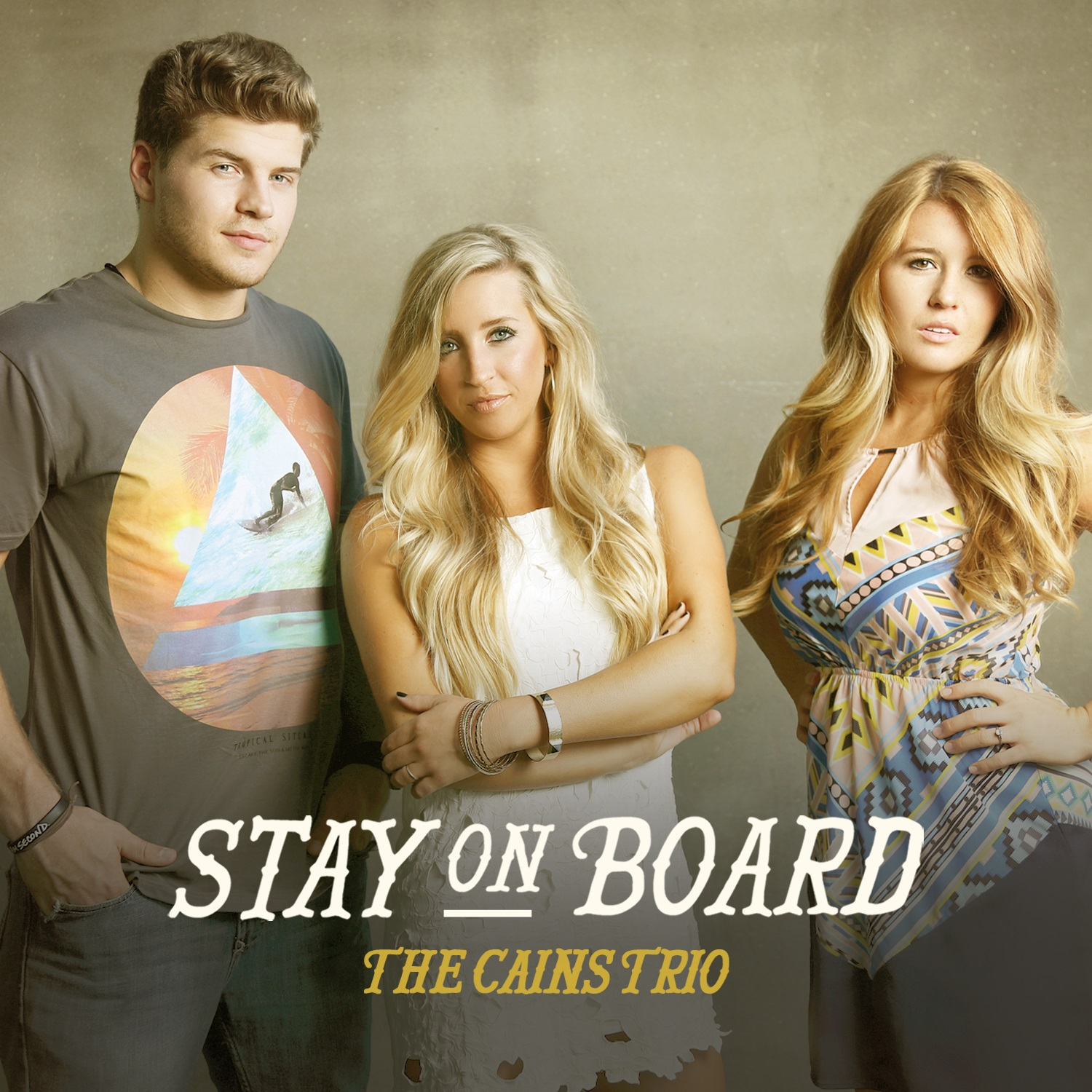 The Cains Trio, a sibling group from Hartselle, Ala., will be releasing their debut CD on Oct. 28. The album is called “Stay On Board”. I didn’t refer to it as their debut ‘country’ CD, because I’m not really sure in which genre’ this trio belongs. What I do know, is that they have put out some great music. The best way to describe the sound to you, is to use their words. They said they are a “combination of country, soul and pop to Americana, folk and contemporary Christian”. What I know, is that it is a good combination, and a refreshing new sound. Taylor, Madison and Logan Cain produce a quiet, mellow, soft sound. And, they use that sound to give us some great music!
Their bio tells us that they are much more than singer/songwriters – they are also multifaceted entertainers and musicians who play guitar, piano, bass, harmonica and more. It all started when eldest sibling, Taylor, learned her first song on the piano at 5-years-old, and a few years later began teaching her young siblings to sing harmony with her. Now, all Troy University graduates, the siblings are ready to show the world those harmonies and pursue their dream.
Most of the songs on the album are slow to mid-tempo. I think “Traveling Kind” was really the fastest song on the CD, and it’s not fast… not like some of the music out there today. But, it’s all good. Each song is different from the one before it, and every song is relaxing, yet thought-provoking. My favorites are “Say Less, Love More”, “Stay on Board,” and “Be Yourself With Me”. These are great lyrics, great melodies, without a doubt great harmonies – and everything needed to make a great album.
Here are the 10 songs you’ll hear on the new album: Be Yourself With Me, Smoke on the Hill, I’ll Take That Any Day, Someone Loves You, She’s My Girl, Fighting For Love, Beautiful Life, Traveling Kind, Say Less, Love More, and Stay on Board. Below is the press release about this new trip, and their new CD.
To learn more about The Cains, visit their web site, www.cainstrio.com. You can follow them on Twitter @TheCainsTrio. If you aren’t already following Country’s Chatter on Twitter, we’d love to have you, too! You will find us @countryschatter.
 They aren’t just lyrics to one of his songs. When Colt Ford says, “Time to give thanks where thanks are due, You all more than fans you’re my friends too” – he means it. Those lines are from the song, “Thanks For Listening”. He genuinely appreciates each and every one of us who buy his albums, request his music on the radio, and sit in those chairs at his shows.
I have had the pleasure of seeing Colt on stage three times now. I was completely, totally, thoroughly entertained from the minute I sat down in that chair, until the minute I stood up to leave. It isn’t just Colt who is entertaining. I know he was the star of the show. But he has a group of remarkably talented musicians/vocalists on stage with him. And, each one of them has a job to do. They are all individuals who combine their talents in such a way that you cannot help but enjoy every minute of the performance. It’s a production. It’s a stage show. And, all that combined with everything Colt brings to the stage gives us one of the best concerts I have been to this summer.
I would imagine, at this point, there are a lot of you sitting back in your chair with your mouths hanging open. Those would be the 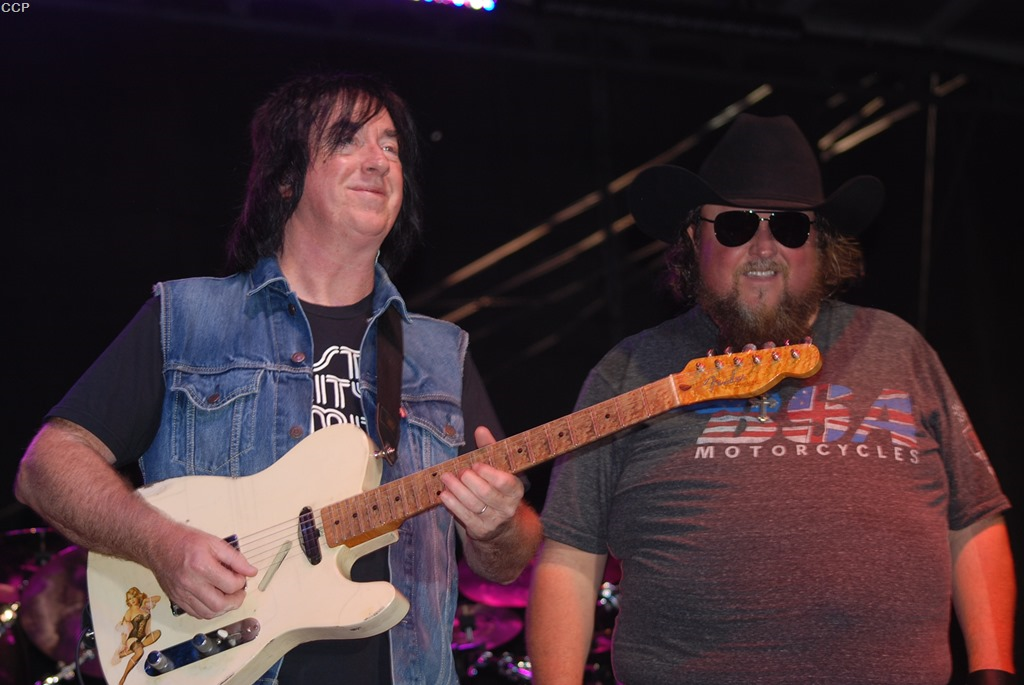 people who have been reading Country’s Chatter for the past six and one-half years. Those would be the people who know that I am a humongous fan of old country music. The stuff we now call ‘classic country,’ or ‘traditional country’ music. And, yes, I am that person who just doesn’t think there is a real place for rap music in the country music world. But, it’s here. Though the new ‘country/rap’ music is really not what I love, I have to applaud Colt Ford for doing what he does so well that you don’t walk away from his show disappointed. More than that, you walk away wanting to go back – as evidenced in the fact that last night I saw his show for the third time – but not the last time!
It’s been a long time since I’ve seen anyone work as hard as Colt does. He, sings, dances, jokes, talks, interacts with his musicians, connects with his audience and painstakingly entertains every person in that audience.
From Adam Hale at the merchandise table, and Sarge taking on the roll of road manager, to Colt and all of the guys in the band, this was a great group of people. I can’t go on without taking just a minute to identify those band members for you. Tim Haines, drums; Paul Chapman, bass; Spencer Bassett, guitar; Mark Easterling, guitar; and Justin David, fiddle. I could probably write an entire article about each of these gentlemen. Tim, I wish you had stood up every now and then. I never did get a clear shot at him (always a cymbal or two in the way); Justin – you are nothing but personality! Paul, Spencer and Mark – thank you guys, for not only putting on a great show, but for being so generous with those guitar picks! I got one! And, I’m not alone! It was like you all wanted everyone to go home with a little memento.
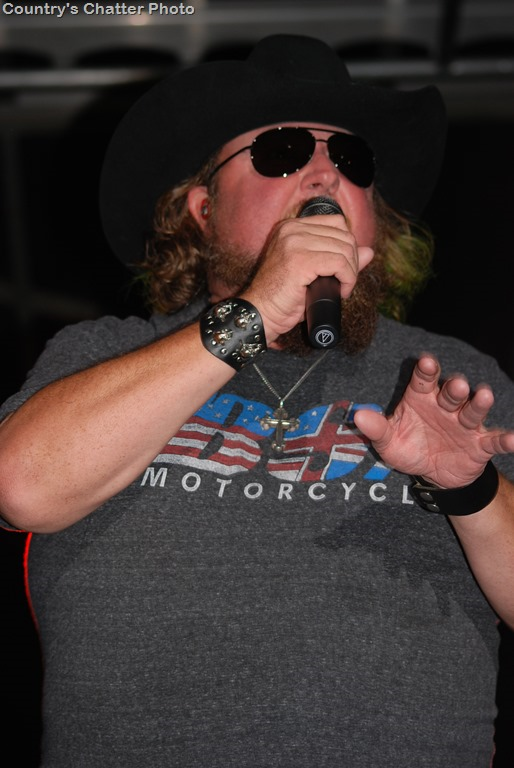 Colt is an entertainer. He’s a patriotic man, who doesn’t mind talking about his love of this country and his gratefulness to the men and women who serve in our military. He’s flag-waving, country boy from Georgia, who will stand in front of anyone and acknowledge what he feels about this country. You can’t help but like him! I had an opportunity to talk to him, before the meet and greet, and at the meet and greet. And, he wasn’t in a big hurry to get rid of us. Even in a normally fast-moving meet and greet line, Colt didn’t seem that anxious to send any of us on our way, without having at least some kind of small conversation with us. And unlike many meet and greets I went through this summer, it wasn’t a ‘get your picture snapped with him and get out of here’ situation. He was more than happy to put his name on whatever we had for him to autograph.
Those of you who have never gone to a Colt Ford show, because rap music just isn’t your thing – hey, it’s not my thing either! Yet, I can’t tell you when I’ve had more fun at a concert. For all of you who are fans of Colt’s music – if you’ve never been to a show, you don’t know what you are missing.
Colt on Twitter @coltford. If you aren’t already following Country’s Chatter on Twitter, we’d love to have you! You will find us @countryschatter. Visit our web site, too, at CountrysChatter.com.