Reviews
 If you are trying to break into country music, and your last name is Cyrus, you have some very big footsteps to follow. Bobby Cyrus, cousin to Billy Ray Cyrus, will be releasing his debut country album on May 21. Now that all know who his cousin is, I have this to say… Billy Ray and his Achy Breaky Heart may be the better known Cyrus, but Bobby is definitely the more ‘country’ of the two!
The album, titled Homeplace, features 13 tracks, nine of which were written or co-written by Bobby. Produced by renowned vocalist and Bluegrass musician, Don Rigsby, the album features special guest appearances by Billy Ray Cyrus, and Country legend, Tom T. Hall.
The first one, ‘Cut My Teeth On (Waylon and Willie)’ sounds like he did! With a melody that reminds you of the music of Waylon and Merle, and lyrics that tell a story, this song has everything that makes country music ‘country’. It has a very traditional sound, and anyone who grew up listening to the best country music had to offer is going to like this song.
That one is followed by ‘Homeplace’. It’s a great song, but I wasn’t happy with the dialogue at the beginning. I understand it is a spoken word stanza from Bobby’s father. And, I’m sure it is an important element in this song that is painting a picture of the Cyrus family home in Louisa, Ky. But, I just don’t really like talking in my music. However, when that short ‘spoken word stanza’ ends, we get to hear an awesome song, with a great melody – and a story that could possibly be told by just about everyone who grew up in that part of the country.
The next one is “’Milkman’s Eyes’. I got to hear this one several months ago, and I didn’t like it. I’m not sure why. Maybe it was the message it was sending. I mean, I’m old – I grew up with a milkman who arrived at our house a few times a week before 7 a.m., and put the glass, quart-size bottles of milk, in a little insulated box on our front porch. Most people listening to country music these days don’t have a memory like that…because many were born years after the milkman ceased to exist. Looking at someone’s child, and suggesting to them that the kid ‘has the milkman’s eyes’ probably wouldn’t even strike them as amusing. This song is an obvious attempt at humor from Bobby and his cousin, Billy Ray in this duet.
Beautiful is the only word needed to describe “Send Me Wings,” the fourth song on this CD. It’s Bobby and a piano, and an emotional story. I don’t even want to tell you about it – it’s a song you have to listen to… and you might cry just a little bit. “If little boys can be angels, send me wings so I can fly.” It’s a great song. I want to hear this one on the radio!
Bobby shows us he can rock a bit with “Hillbilly Man” – It’s a fast song, about moonshiners. It has a beat that might push it into the country/rock category – but it’s still country enough for me.
Tom T. Hall is featured in “A Rose For Marie.” It’s another slow one. I love this ballad side of Bobby Cyrus. And I really loved a little Tom T. on this album. Tom had a hand in writing this one, and bobby said the song was inspired by the death of John Hartford’s wife, Marie, after Tom T. had visited her gravesite.”
Bobby wrote “Daddy’s Home,” and calls it an autobiographical acoustic track. It’s about the memories he had of his father. It brought back memories I have of my father, too. I think it is going to do that for a lot of people who hear it. ‘Broke Down In Georgia” had a familiar melody, I thought – but I can’t put it with any other song, really. It’s slow, it’s good, it tells a story. And Bobby has a great way of telling stories.
Picking up speed again with “If I’da Wrote That Song,” How many times have we all thought – ‘wish I had written that one.’ It just tells us where he might be and what he might be doing if he had written ‘that song.’ He slows us back down with “Carved Our Names In Stone”. This one is a story of young love – and what happens when that young love ends.
When I listened to “Bodan’s Home” I was thinking LINE DANCE! It had the perfect beat – and I was more interested in the music than I was the lyric. All I know is that there are some references to Jekyll and Hyde and the Boogie Man, and apparently there’s an urban legend somewhere in there. But, I’m still thinking line dance!
Next we have “Lucky Guy” – Bobby wrote this one, too. It is described in the ‘cut by cut’ as “an inspirational track that starts as a daydream before moving into the reality of Cyrus’ pursuit of a career in music.’ It’s a song you would have had to live, to write. And he’s obviously lived it.
“Lucky Man” is the last song on the album, but then – we get Homeplace (The Poem). It was written by Bobby’s dad. It’s great. But, again, I’m not much into ‘readings’. And, as good as this poem is, I think I would have rather had it printed in the album jacket, and read it for myself. But I probably wouldn’t have read it as well as Bobby did. While this one track isn’t something I’ll listen to often, I’m glad I got to hear it at least once.
( Bobby Cyrus – “Homeplace” – Country Music Album Review is brought to you by Music Charts Magazine and Country’s Chatter – www.MusicChartsMagazine.com & www.CountrysChatter.com )
 Marty Raybon’s voice puts me into a comfort zone……. you know, like a nice warm snifter of something smooth after supper sittin’ by the fire. Or, slippin’ into your favorite flannel shirt after you’ve come in cold and wet from workin’ outside.
Maybe that comfortable feeling of mine is because that voice has been around so long, and I’ve never heard Marty sound anything but GOOD!
I knew goin’ in that I was going to like this CD, but, I didn’t know I was going to like it this much! WOW! What a recording this one is!
Marty produced this one himself, recording the instrumental tracks at Mojo Recording Studio, in Greenback, TN., with Josh Molen and Lewell Molen doing the engineering, mixing and mastering. For all of his lead vocal recordings, Marty went to Wishbone Studios, in Muscle Shoals, AL. He must have known exactly what he wanted, and where to go to get it, because, from a technical side, everything, instruments and vocals, all sound crystal clear, warm and rich. I love it when the microphone is up close and personal, like it is here, and you can hear the singer breathe. If you have headphones on, it’s almost like the artist is singing just to you…… Marty has that natural ability to convey his emotions in the most genuine way, and when his singing is matched by top quality equipment and technicians really listening for that magic in his voice, THIS recording is the result. I’ve never heard Marty’s voice sound better. Marty Lewis and Mike McGuire were the engineers waving their magic wands over these vocal tracks, and they did a wonderful job! Mike McGuire is Marty’s old friend and was the drummer for “Shenandoah.”
It’s not just Marty’s vocals that shine so well on this CD. It should be noted that Marty’s brother, Tim Raybon, handled all the harmony vocals. Tim and Marty sing together with an affinity for each other that is marvelous to hear. That “brotherly” intuitiveness shows up again! Listen to how they sound on “Only You, Only You,” and you’ll be as impressed as I am. The ending of the song has the voices moving with a powerful, almost gospel, movement that is simply beautiful to hear. For singers to sing like this, it takes years and years of working on breath control, diaphragm strength, vocal technique and ears listening to the nuances of each other….. OR….. just growin‘ up brothers singin‘ together will get the job done! Either way, Tim and Marty’s harmonies are exquisite!
Of the ten songs on this CD, Marty co-wrote five of them….. three of them with John Fountain. The afore mentioned “Only You, Only You,” which I do believe is my favorite song, the very first tune on the CD, “That Janie Baker,” and “A Little More Sawdust On The Floor.” Every one of them is a winner and qualify as single material. Marty and John definitely need to write together more, and as often as possible! “Janie Baker” is solid, wide open, full steam ahead bluegrass guaranteed to catch your interest. “Sawdust,” has a country, bar room feel that will have you lookin’ for a dance partner. The arrangement is pure bluegrass instrumentation, but the feel would fit just about any honky tonk juke box sittin’ right next to the dance floor. All three songs are lyrically picturesque and melodically catchy and memorable. I haven’t been able to stop humming “Only You” for about a week now! “The Big Burnsville Jail,” co-written with Thom Case and Michael Bonagura is as good an outlaw tale as I’ve heard in years. The defendant in question had more hutzpah, self-assured escape plans, AND self-indulgent ways to spend his ill gotten gains than Butch and Sundance ever thought of. Great lyrical story …… and maybe even a video! Lots of imagery to go with a fun song.
Read the rest of this great review at Presciption Bluegrass’s website here: http://prescriptionbluegrassreviews.blogspot.com/2013/04/cd-review-marty-raybon-back-forty.html
Prescription Bluegrass – “Your One Stop Pit Stop For Everything Bluegrass“
(Bluegrass Album & Artist Reviews are brought to you by MusicChartsMagazine.com & PrescriptionBluegrassrReviews.blogspot.com)
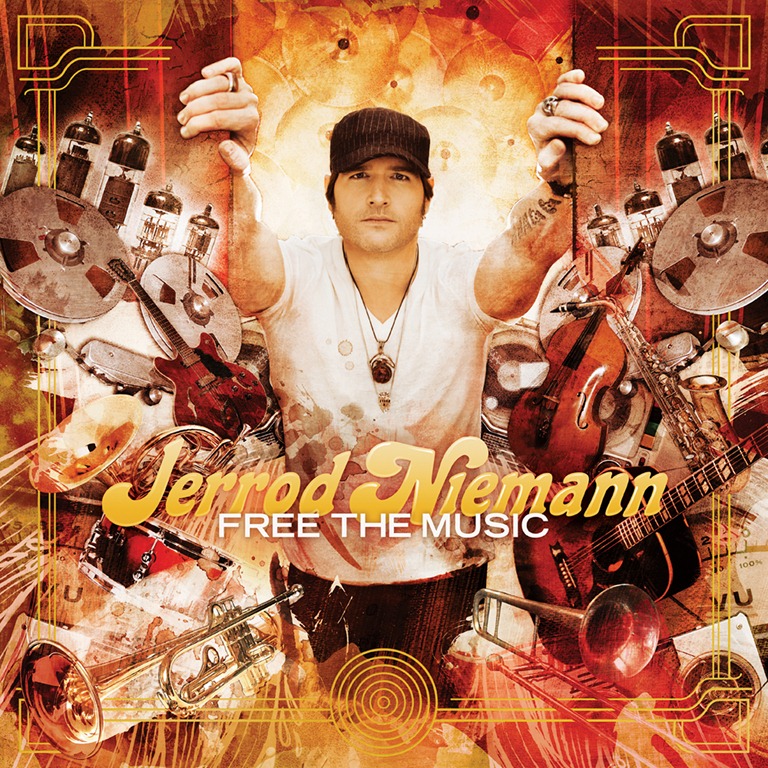 It’s no secret in the country music world, that Jerrod Niemann has found himself a lot of fans. His music can be a bit whimsical or even a bit nutty at times, and some is about as far from traditional country as you can get, but that didn’t stop him from putting a string of hits out on country radio. “Lover Lover,” “What Do You Want,” and “One More Drinking Song,” were all singles from Jerrod’s album, Judge Jerrod and the Hung Jury.
The Judge has now given us another CD, full of songs that are sure to please his ever-growing fan base. My personal favorite, “Shinin’ On Me,’ was his first single from the new album. It got into the Top 20, and I was really surprised that it didn’t climb a lot higher. That one is definitely a ‘feel good song.’ Every time I listen to this CD, I find myself going back to that song to listen to it again.
“Whiskey Kinda Way” and “I’ll Have to Kill the Pain” both have a traditional country sound, and give fans an opportunity to listen to the slower side of Jerrod. I could see either one of those songs released to country radio, and am really wondering why that hasn’t happened by now.
The second song from this album that Jerrod released to radio, was “Only God Could Love You More.” Jerrod co-wrote that one with Lee Brice and Jon Stone. It’s another slow one that gives Jerrod a great chance to show off his vocals.
“Honky Tonk Fever” puts me more in mind of what you might hear in a jazz club, or even a 1920s speakeasy. It’s really not country, but it really is good. It’s a fun song. The kind of song that makes you smile, but you really aren’t sure why. Jerrod wrote this one without any help from any of the great writers who co-wrote many of the other songs on this album.
Jerrod wrote or co-wrote every song on this album. I wouldn’t be surprised if we see Jerrod’s name in the ‘written by’ line on upcoming albums by some of country music’s best known entertainers. In addition to writing the music on this album, Jerrod also co-produced the CD.
Here is the track list, with authors: Free the Music, Jerrod Niemann; Whiskey Kind of Way, Jerrod Niemann, Randy Boudreaux; Get On Up, Jerrod Niemann, J.R. McCoy, Jesse Clingan; I’ll Have to Kill the Pain, Jerrod Niemann, J.R. McCoy, Arlos Smith; Only God Can Love You More, Jerrod Niemann, Jon Stone, Lee Brice; Shinin’ on Me, Jerrod Niemann, Rob Hatch, Lee Brice, Lance Miller; Honky Tonk Fever, Jerrod Niemann; Guessing Games, Jerrod Niemann, J.R. McCoy; It Won’t Matter Anymore, Jerrod Niemann, Rob Hatch, Lance Miller; I’m All About You (featuring Colbie Caillat), Jerrod Niemann, Richie Brown; Real Women Drink Beer, Jerrod Niemann, Houston Phillips; and Fraction of a Man, Jerrod Niemann.
“This album is my interpretation of how I feel about country right now,” Jerrod said. “It’s a project honoring many different layers and colors that have appeared in the country genre since recorded music began.” Jerrod also explained that the pedal steel guitar wasn’t always in the country music picture, even though it has since come to define the genre.
When Jerrod was first starting, he did one tour of U.S. radio stations that brought him to Bristol’s Steel Creek Park, where he put on a free show of a crowd of fans that showed up to enjoy his music, and meet the artist. As so many artists do when they first get a song out on country radio, Jerrod was eager to spend a little time with his fans, signing autographs, posing for pictures, sharing his music, and pretty much giving everyone a chance to get to know who he is and what he does.
To keep up with what’s going on in Jerrod’s world, including upcoming shows, new videos, and new music, visit his web site www.JerrodNiemannOfficial.com, and follow him on Twitter @jrodfromoz (that’s Jerrod from Oz, he’s from Kansas). This will tell you just a bit about Jerrod’s sense of humor, too. In addition to following him on twitter, you can follow his bus. And the bus will answer your tweets, too. Just go to Twitter, and follow JerrodsBus.
Be sure to check our web site, too, www.countryschatter.com, and follow us on Twitter @countryschatter.
(Music Charts Magazine Country Album Reviews are brought to you by CountrysChatter.com and MusicChartsMagazine.com)
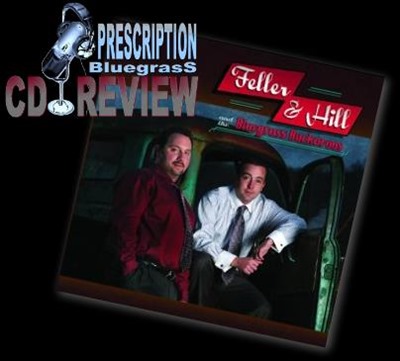 Feller and Hill and The Bluegrass Buckaroos
Released: February, 2013
Label: Blue Circle Records
Review by: W.J. Hallock
My buddy, Brian McNeal, and I, have been friends since the mid 70’s. Besides being friends, we have one other thing in common….. a love affair with that 60’s Bakersfield country music sound. Brian played all those Buck and Merle songs when he was a disc jockey for KNIX in Phoenix, which was owned by Buck Owens. My band “Cactus County,” and I were playing country music (yeah, LOTS of Buck and Merle!), for dance hall crowds in every honky-tonk and road house in the southwest, with Phoenix being home base.
That sound of Buck and Don Rich singing together, Bonnie Owens (Buck’s ex-wife) vocalizing on all of Merle Haggard’s hit records, and that famous chicken-pickin’ Telecaster guitar playing of Don, James Burton and Roy Nichols will forever be a special part of country music history that we’ll always love. So, now, when anything reminds us of that era, we’re all in and checkin’ it out!
A few months back, Brian sent me some songs to listen to by “Feller and Hill and the Bluegrass Buckaroos.” We both couldn’t believe how much Tom Feller and Chris Hill sounded like Buck and Don singing together! We were pretty excited to see just how this musical adventure was going to turn out, as the CD wasn’t finished and ready for release.
The completed project came last week, and it was all we had hoped it would be. To quote Brian, “Feller and Hill do the third best version of TOGETHER AGAIN ever recorded!”and I whole-heartedly agree. The original version by Buck Owens will always be #1.…. Emmylou Harris OWNS the #2 spot….. and, time will only tell for sure, but, in my humble opinion (AND Brian’s) Feller and Hill have made their version so personalized and passionate as to forever nail down that #3 slot. When you think of all the many artists who have recorded TOGETHER AGAIN, that’s a BIG deal! To re-do a song that defined a specific sound and musical era, and do it in such a way that it makes the song relevant to another generation of listeners, that is the epitome of successful communication skills.
Just so there’s no confusion, this CD is straight ahead bluegrass. Tom and Chris have spent years as sidemen for some of the best bluegrass bands around, and their credentials are exceptional. On this release, Tom plays acoustic and Pedal Steel guitars, mandolin and upright bass. Chris plays all the banjo tracks, and plays any style called for. Earl Scruggs would be proud of Chris’ proficiency in his style, especially with his use of Earl’s patented “Scruggs tuners.” Don Reno and Ralph Stanley’s styles are also in Chris’ arsenal. But what sets this CD apart from those of so many other bluegrass bands, is the way these two talented gentlemen sing together. The two of them have that cohesive magic that not every duo have, and they have taken all their vocal and studio/technical strengths and added layers of vocals to the entire CD to make it a total pleasure to hear.
The very first song on this musical trip kicks off with a bang. The old Delmore Brother’s standard, “Gonna Lay Down My Old Guitar,” leaps out of the speakers, complete with two part harmony, a Lester Flatt “G-run” guitar lick and Chris’ 5-string banjo just a cookin’! This song will make you smile, because it’s alive, traditional and as authentic as it gets. Especially notable on this tune is the lead guitar solo of Brian Blaylock. It just plain sizzles!
Read the rest here: http://prescriptionbluegrassreviews.blogspot.com/2013/03/prescription-bluegrass-cd-reviewfeller.html#more
( Music Charts Magazine Bluegrass Album Reviews are all done by Prescription Bluegrass – “Your Bluegrass Home” )
 Dave Adkins & Republik Steele Release New CD
Rural Rhythm Records announces an exciting new album release available today, THAT’S JUST THE WAY I ROLL, by Dave Adkins & Republik Steele.
“Snazzy stuff for real people that still want some music they can feel and believe in. Well done,” said Midwest Record in a new review for the album.
Dave Adkins not only impresses listeners with his powerful lead vocals, but he contributed three original songs on the album including “Heartstrings”, “Get ‘Em Up”and the impressive “Rio.”
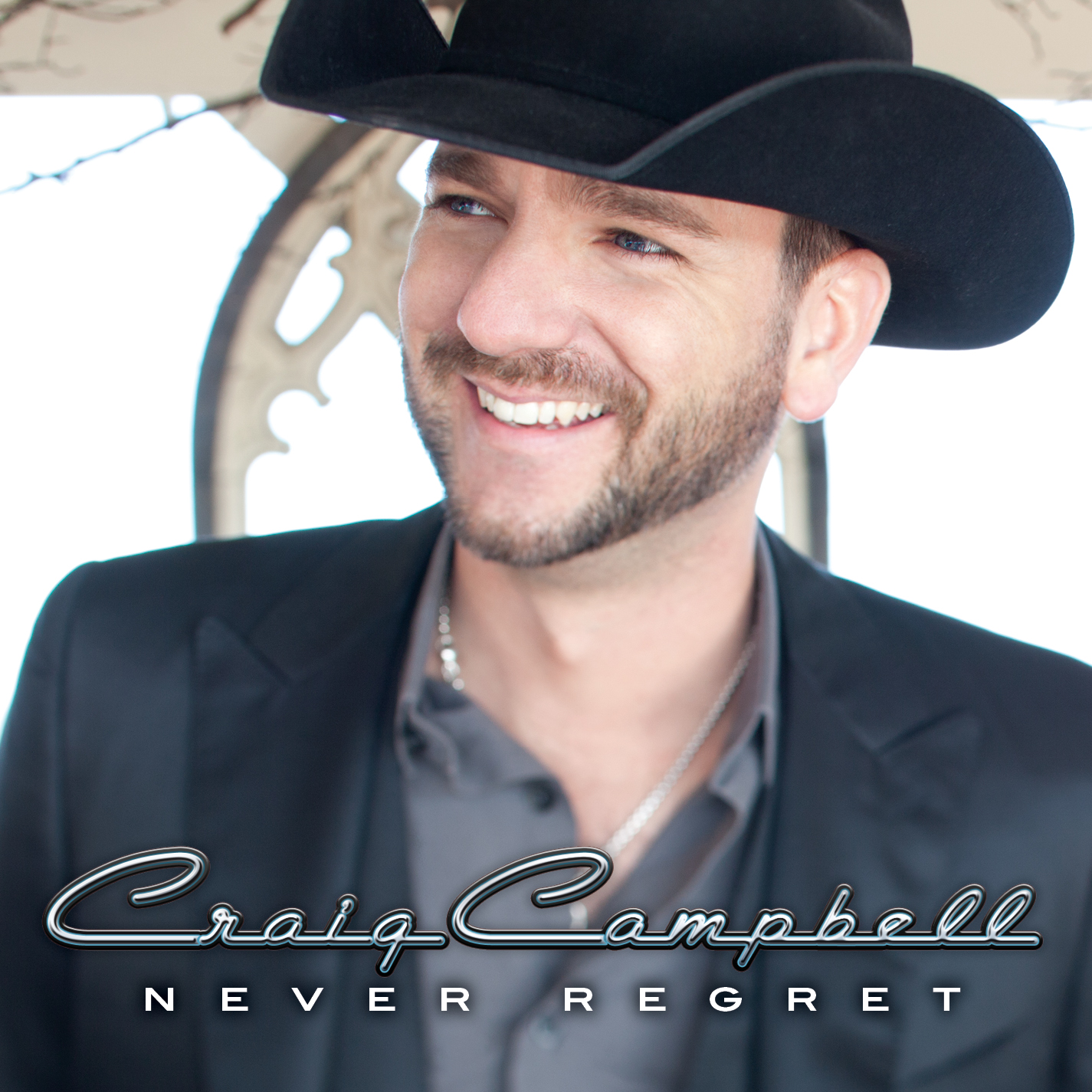 One of the reasons I enjoy what I do, is that I have the opportunity to hear new albums, before they are released to the public. Today, I listened to a great one. Craig Campbell’s sophomore album will hit stores on May 7. This is a CD that all country music fans are going to enjoy. And for those who have not heard a lot of Craig’s music, it is the perfect introduction.
“When She Grows Up” begins with daughter Preslee giving us a small sampling of her vocal talents, with “Jesus Loves Me,” then Dad takes over with a really inspiring song, all about our kids – what they are to us, and what we are to them. “What she sees in me, that’s what I want to be – when she grows up.” It’s one of those songs you won’t really want to sing along with, and your probably won’t want to dance to it, but you sure are going to want to listen to it. It is one of my favorite songs on the album.
If you have a front porch, you’ll be able to relate to “That’s Why God Made a Front Porch.” It’s one of the slow ones on the album. This one reminds me a lot of Craig Morgan’s “Almost Home.” One phrase seems to run right into the next, but you need ever one of those phrases to tell the story. While the song sounds a lot like “Almost Home,” it is a completely different story. This is a good song to put on when you want to sit back in a comfortable chair, and relax.
There are a lot of people out there who can relate to “When Ends Don’t Meet.” It pretty much tells us all what we already know about the economy, bills overdue, a leaky roof, and having someone to lean on in times of trouble.
Most of the songs on this album are slow to mid-tempo. Everyone of them is perfect for Craig, and while I have my favorite – I think he could just about release any of them to radio as his follow-up single to “Outta My Head”.
Here is your track listing, with authors: Truck-N-Roll, Craig Campbell, Brett Beavers, Chris Lindsey; Keep Them Kisses Comin’ Dallas Davidson, Ben Hayslip; When She Grows UP, Craig Campbell, Alex Dooley, Arlos Smith; Tomorrow is Gone, Tommy Conners, Kevin Denney, Phillip White; Never Regret, Craig Campbell, Jason Matthews, Jim McCormick; My Baby’s Daddy, Brandon Kinney, Cole Swindell; Topless, Craig Campbell, Mindy Ellis, Blair Daly; When Ends Don’t Meet, Jonathan Singleton, Tony Lane, Dan Isbell; Outta My Head, Brandon Kinney Michael Carter, Cole Swindell; That’s Why God Made a Front Porch, Craig Campbell, Lee Thomas Miller; You Can Come Over, Brandy Clark Jessie Jo Dillon, Mark Narmore; Lotta Good That Does Me Now, Craig Campbell, Michael White and Justin Wilson.
The CD was produced by Keith Stegall and Matt Rovey, and recorded at Sound Emporium Studios in Nashville.
 Date = 28 April 2013
Author Name = Paul de Barros
Genre = Jazz
Title = Shall We Play That One Together? The Life and Art of Jazz Piano Legend Marian McPartland
Publisher = St. Martin’s Press (2012)
One of the most famous jazz musicians, Marian McPartland is known less for her playing than for hosting the weekly NPR program Piano Jazz for more than three decades, beginning in 1978. Initially, each program featured McPartland and another pianist: the two performed selections together, but also solo. In time, the concept expanded to include guests other than pianists. The program was successful for several reasons, including McPartland’s engaging personality, articulateness, and British accent; the host and guests’ intelligent discussions; the quality of the music; and the hour-long format, which permitted the participants time to talk and play without rushing. Some of the shows were released on CD, and the show continues being broadcast in re-runs. For the title of his biography of McPartland, Paul de Barros borrowed a question the pianist often asked on her program.
Yet McPartland was a substantial pianist. (Though she is living, I use the past tense because she no longer plays.) Classically trained, she became enamored of and proficient in jazz, ultimately comfortable performing in traditional, modern, and even free modes. To me, her most rewarding decade was the 1950s, when she led a group with bassist Bill Crow and drummer Joe Morello, had a multi-year engagement at the Hickory House in New York, and recorded three appealing albums for Capitol in successive years, the first in 1954: At the Hickory House, After Dark, and The Marian McPartland Trio. (I am unfamiliar with her fourth Capitol album, With You in Mind [1957], which de Barros deems “bland” [178]). That decade, she matured as a musician by becoming harmonically sophisticated and apparently gaining confidence in her artistry, even though she occasionally struggled with tempo. In time, she became so sure of her abilities that she played comfortably with the likes of Cecil Taylor, perhaps the most assertive free improviser.
De Barros’s presentation of McPartland’s life and career is comprehensive, balanced, and well written. He details McPartland’s early years: from birth as Margaret Turner in England (1918), through her sometimes difficult family life, through lessons in classical music at the Guildhall School in London (1935-1938), through studying and then touring with Billy Mayerl (1938), through the most important event in her life, personally and professionally: marrying the American trumpeter Jimmy McPartland in 1946. The author credits him with introducing his wife to the American jazz scene, of which he was a part, and illustrates the opposite trajectories of the spouses’ careers: his waned as hers waxed. De Barros treats Jimmy especially deftly. When discussing the trumpeter’s alcoholism and its effect on the McPartlands’ marriage, he neither dwells on it nor passes judgment. A chronicler, he does not moralize, as may further be observed in his treatment of the spouses’ infidelities. During the marriage, Jimmy fathered a child with another woman; Marian had a long affair with Joe Morello. As neither McPartland was terribly upset about the other’s unfaithfulness, there is nothing salacious in the presentation of these adulteries. The couple divorced in 1967, but remarried in early 1991, fewer than three weeks before Jimmy’s death.
In a biography, the details of the subject’s life matter. Yet Marian McPartland’s life is significant not because of her upbringing and various relationships but because of her contributions to music. These include her piano playing, which was admired by such luminaries as Duke Ellington, who listened to her at the Hickory House, and the composer Alec Wilder. Largely because of Wilder and radio producer Dick Phipps, she was asked to host Piano Jazz, though this was not her first broadcasting effort: For two years in the 1960s she hosted A Delicate Balance, a weekly two-hour jazz show on WBAI in New York. She composed music (“Afterglow,” “Ambiance,” “Twilight World”). She and her husband established Unison Records in 1948; she started Halcyon Records forty years later. She wrote about music and jazz musicians in reviews and articles and, with difficulty, in the book All in Good Time (1987), which focuses on female musicians. She was an important jazz educator, conducting workshops for students from grade school through college. She occasionally discovered students who devoted their lives to music, such as bassist Jon Burr. She was adept at selecting sidemen for her trio, players who were not only good for her but who would have rewarding careers after leaving her; they include bassists Eddie Gomez and Steve Swallow and drummers Pete LaRoca and Joe Morello. She is a focal point in Art Kane’s famous 1958 photograph of fifty-seven jazz musicians known as A Great Day in Harlem. The author treats these aspects of McPartland’s career, and more.
De Barros’s book is thorough partly because the biographer had access to the pianist. He lived with her for months, talking with her about her life and career and researching in her extensive archive. Because of her involvement in the project, one might expect him to pull punches. He does not. Her concert performances of Grieg’s Piano Concerto in A Minor, for example, generated occasionally savage reviews, from which de Barros quotes. When he thinks that criticism is warranted, he identifies flaws, though never maliciously. He terms her album Willow Creek and Other Ballads “tepid” (329). In the chapter titled “Loss,” he documents that, beginning in the late 1950s, her “life and career slowly and inexorably fell apart, until, by 1968, she hit bottom” (191). He acknowledges that she could be controlling and bullying, and cruel.
I find de Barros’s judgment generally sound, though I do not always agree with his assessments. For example, in 1995 Life magazine staged a recreation of the Great Day in Harlempicture by photographing ten of the eleven surviving musicians positioned precisely where they stood in 1958. (Sonny Rollins was on tour at the time.) To me, the later image, which shows how few of the musicians were living thirty-seven years after the original, is poignant; de Barros considers it “an unfortunate stunt” (375), without explaining why he responds to it as he does.
De Barros is, to the best of my knowledge, almost always accurate. Among the errors are these: Pierre Salinger was President Kennedy’s press secretary, not secretary of state (197); the minister to the New York jazz community was John Gensel, not Peter Gensel (347); the institution of higher learning in Athens, Ohio, is Ohio University, not the University of Ohio (352). If the book requires a second edition, these mistakes should be corrected.
I find irritating the absence of page numbers from periodicals cited in the notes at the rear of the book. Why not provide page numbers so anyone wishing to read more of what the sources relate can do so easily, without having to search through a newspaper or magazine for a specific article? Perhaps the author honored house style.
Though subsequent articles and books might expand on events in McPartland’s life that de Barros mentions or focus on aspects of the pianist’s art that do not much concern him, this biography is probably definitive.
Author = Benjamin Franklin V
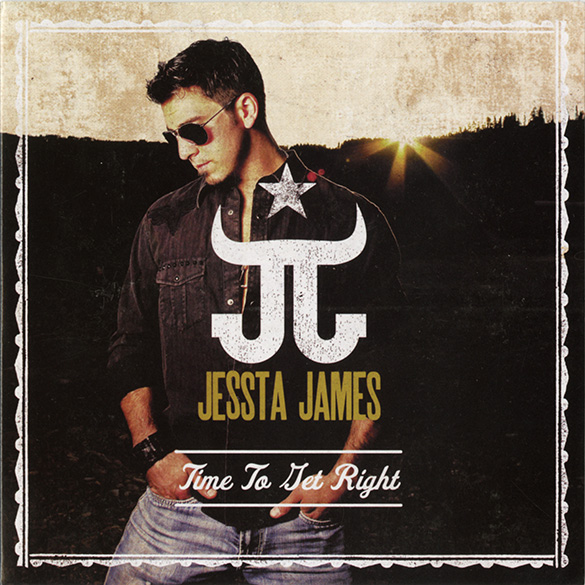 Artist = Jessta James
Album = Time To Get Right
Every day it becomes more and more apparent that country music just isn’t what it used to be. Some people refer to these changes as part of the ‘new wave of country music.’ I don’t care what they call it, I will never be able to even consider some of the newer sounds to be country.
Jessta James hails from North Dakota. The sound he is bringing to country music isn’t really new. And, while I believe it is his gimmick, or way of being noticed. It is no longer original. It has been done by Cowboy Troy, Colt Ford, Nappy Roots, The Lacs – and even country music superstars such as Jason Aldean, Luke Bryan and Blake Shelton. The sound I am talking about is rap music. They call it country/rap. I don’t believe you change the fact that it is rap music by putting the word country in front of it.
His bio tells us that his earliest musical influences were Willie Nelson, Waylon Jennings, Hank Williams Jr., and Johnny Cash. Somehow, I find that very hard to believe. If those were his musical influences, I would really like to ask him why the music he is putting out music that sounds more like he was influenced by MC Hammer, Eminem, and Snoop Dog.
The first song I listened to from Jessta was titled “If That Ain’t Country.” I don’t mind telling him, but that definitely ‘ain’t country’. Rap music is rap music. Country music is country music. That is the way it is, and that is the way it will always be.
Jessta’s debut album will be released on May 21. It’s called “Time To Get Right.” Given the path country music is taking these days, I am sure that Jessta will find himself with a lot of devoted fans, and a lot of people will be out there buying his album. I, however, will not be one of them. He is a good looking kid, with what seems to be a good singing voice. The biggest problem I have with him is that he isn’t using that voice to sing.
The second Jessta song I heard was called “Cowgirl Boots”. This one still had far too much rap for me, but there were parts where you actually do get to hear him sing. So now that we can tell he actually does know how to sing, I guess the question that remains is, why doesn’t he? The rap is obviously what has been opening doors for him, but I keep wondering why something that has been done before is still being accepted as new or original. It is not new or original, and above all, it is not country music.
I listened to “Ride On,” hoping that maybe I would find some real music somewhere in Jessta’s repertoire’. I didn’t. Still rap music. And, while I am sure there are a lot of people out there who will not agree with me, I just can’t understand how rap music is finding a place on country radio.
The only pleasant surprise I found was “Rock ‘n’ Roll Angel.” I don’t know who he is singing with on that song, but he needs to keep her. It is really a great duet. And, it is all singing. No rapping. Great vocals by both Jessta and his female duet partner. It is a good song, a good story, and was the only bright spot in my listening experience. This is probably the only Jessta James song I will remember, and is certainly the only one that I will listen to again.
Anyone interested in checking Jessta out, can listen to the songs I mentioned, along with “Better Man” and “Back in the Day,” by visiting his web site, http://www.jesstajames.com/, and clicking on the word ‘music’ at the top. His songs are available for purchase at iTunes and Amazon.
I’m not sure how many people think the way I do. I am a fan of traditional country music. I always will be. However, for those of you who enjoy everything that is coming out of Nashville today – there is your introduction to Jessta James.
Author = Country
Country of CountrysChatter.com & MusicChartsMagazine.com
Check out this month’s issue of Classic Drummer Magazine!
It is Volume 12, Issue 1. It has Doane Perry, drummer for Jethro Tull on the cover. Clifford Hughes’s article is located at the very back pages of the magazine.
Like Drums? Want to order a copy of Classic Drummer this month?
Go check them out at:
www.ClassicDrummer.com
Bucky Covington – Good Guys
Bucky Covington took the same path to country music that was taken by Carrie Underwood, Kellie Pickler , Scotty McCreery and Casey James. Bucky, like the others, started on the stage of American Idol. He finished in eighth place during season five.
The path he took, however, has not been a smooth one. Since Bucky released his first album back in 2007, he hit a few stumbling blocks. His single, “A Different World,” from the album of the same name, made it into the top 10 on the country charts. That album also gave us the singles “It’s Good to Be Us,” and “I’ll Walk.”
Things started out good for Bucky. He was recording for Lyric Street Records, and his debut album was produced by Mark Miller, lead singer for the band Sawyer Brown. But, before Bucky had a chance to get his second studio album on store shelves, Lyric Street Records closed their doors, leaving him without a label for several years.
Now on the roster of Entertainment One Music Group, he is recording for eOne Records, and released his sophomore album, “Good Guys,” this past September. His first single from the new CD, “I Wanna Be That Feeling,” didn’t do as well as the singer would have hoped, making it only to the number 57 spot on country music charts. There are a lot of really good songs on the new album, and hopefully, Bucky and his management team will find one that works for country radio.
The 12 songs on the “Good Guys” album are I Wanna Be That Feeling, I’m Alright, Hold a Woman, Drinkin’ Side of Country (a duet with Shooter Jennings), Only Got So Much Time, Mama Must Be Prayin’, Sail On, I Always Said You’d Be Back, Mexicoma, I Want My Life Back, Gotta Be Somebody, and A Father’s Love (The Only Way He Knew How).
The music on this album is a nice mix of 70s country music coupled with a contemporary radio-ready feel. This project for Bucky definitely puts the old with the new.
“I’m Alright” is slow, and it’s good – it tells a story. Bucky’s vocals seem to be just the right sound for this song. That one is followed by “Hold a Woman.” I’m not sure where that ‘raspy’ voice came from – this, too, is a great song for Bucky.
He pairs up with Shooter Jennings, son of legendary country Waylon Jennings, on the song “Drinkin’ Side of Country”. Kellie Pickler has a part in the music video for this song, which Bucky co-wrote with his brother/drummer, Rocky. “Drinkin’ Side of Country” sounds like so many of the songs we are hearing on country radio these days, so I’m really not sure why it didn’t the air time I feel it deserved.
“Only Got So Much Time” is pretty much the story of everyone’s life. It puts you in mind of songs like “You’re Gonna Miss This,” or “Don’t Miss your Life,” and even Tim McGraw’s “Live Like You Were Dying.” While the words and thoughts are definitely different from those other songs, the message is simple….life is short, we only have so much time, use it wisely.
“Mamma Must Be Praying, the sixth song on the album, is a fast song with a familiar melody. When I first heard it, I knew it reminded me of something else, but I have no idea what. It’s not one of my favorite songs on this CD, but I don’t dislike it either.
For people who like a sad and depressing song every now and then, Bucky has one of those for you with “Sail On.” It’s a typical country break-up song, but it’s a pretty song. He follows that one with “I Always Said You’d Be Back,” which will get you back in a happy mood. What Bucky did her was follow the break-up song with a ‘you’re back’ song. This one is fun to listen to.
“Mexicoma” starts with the feel of a mariachi band, a little brass, a little fun… a little bit of ‘this makes me want to jump on a plane and take a vacation.’ It’s a good song, it’s everything you might expect from a ‘let’s go to Mexico, sit on the beach, and drink Tequila’ song. That brings us to “I Want My Life Back.” and we’re back to slow, a little bit depressing, a little sad… but one of my absolute favorites on this album.
The 11th song is called “Gotta Be Somebody,” and you might remember hearing this song before. It was the first official single released by Nickelback from their sixth album, Dark Horse, back in 2008. All I have to say about this is I believe Bucky’s version of the song is much better. It ended up being one of my favorites on the CD.
You can keep up with Bucky, and listen to some of his music, by visiting his web site http://buckycovington.com/. And, you can keep up with everything country by visiting ours at www.countryschatter.com. Follow us on Twitter, too, @countryschatter.
MusicChartsMagazine.com (USA) – The Pulse of Music – Music News around the World!
– Coming soon: Music Charts Magazine Canada & Music Charts Magazine Europe