MCM Home
About Fred’s Country program:
Le program Fred’s Country: La musique Country de Tradition avec Frederic (Fred) Moreau. Le program Fred’s Country est diffusé sur 65 fréquences FM, 54 radios ou webradios.
Radio Show Host: Fred Moreau
Program Fred’s Country w41-13 – 11 octobre 2013 à 15:00
Music Charts Magazine is proud to be friends with Mr. Moreau and glad to now be one of the many to host Program Fred’s Country. ( French/English)
Radio Program “Fred’s Country” – Now at Music Charts Magazine!
Music Charts Magazine History
– Song for the month of October 2013:
Elvis Presley – “Jailhouse Rock“
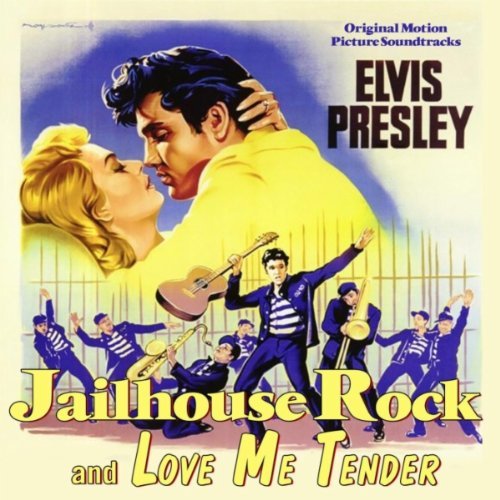
Listen to Elvis Presley’s song “Jailhouse Rock” here:
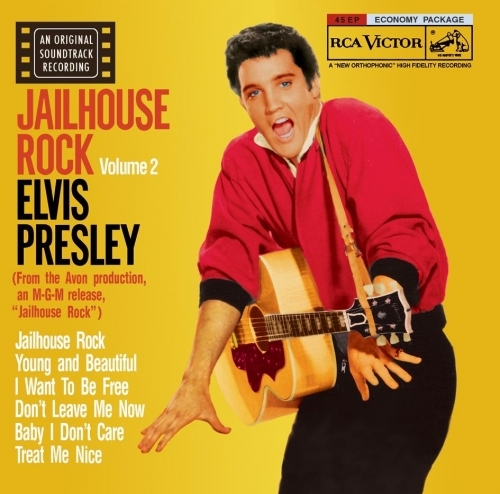 “Jailhouse Rock” is a song written by Jerry Leiber and Mike Stoller that first became a hit for Elvis Presley. The song was released as a 45rpm single on September 24, 1957, to coincide with the release of Presley’s motion picture, Jailhouse Rock.
The song as sung by Elvis Presley is #67 on Rolling Stone‘s list of The 500 Greatest Songs of All Time and was named one of The Rock and Roll Hall of Fame’s 500 Songs that Shaped Rock and Roll.
The single, with its B-side “Treat Me Nice,” was a US #1 hit for 7 weeks in the fall of 1957, and a UK #1 hit for three weeks early in 1958. In addition, “Jailhouse Rock” spent one week at the top of the country charts and reached the #2 position on the R&B charts.
Also in 1957, “Jailhouse Rock” was the lead song in an EP (extended play single), together with other songs from the film, namely “Young and Beautiful,” “I Want to be Free,” “Don’t Leave Me Now,” and “(You’re So Square) Baby I Don’t Care.” It topped the Billboard EP charts, eventually selling two million copies and earning a double-platinum RIAA certification.
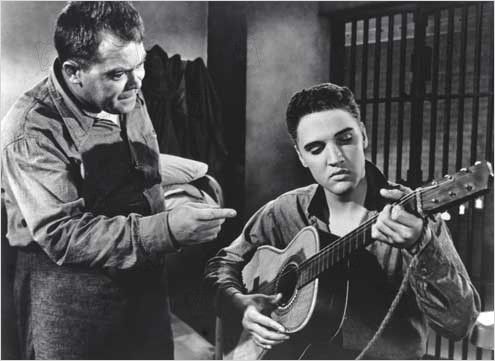 In 2005, the song was re-released in the UK and reached #1 for a single week. The song, which is an example of simple verse form, eventually received an additional double-platinum certification from the RIAA in 1992, representing shipments of 2 million copies of the single.
“Jailhouse Rock” was performed regularly in a medley along with many old rock and roll hits by Queen and was the opening song on Queen’s 1980 North American tour for The Game. It was the last song in the motion picture The Blues Brothers. This song was featured on American Idol when Season 5 contestant Taylor Hicks performed it on May 9, 2006 and when Season 7 contestant Danny Noriega performed it on February 20, 2008. The song was also featured in Disney’s animated film Lilo & Stitch during the ending credits. In an episode of Full House Jesse and Becky sing this song at their wedding reception. The song was included in the musical revue “Smokey Joe’s Cafe”.
The German rock band Spider Murphy Gang is named after one of the characters in the lyrics.
In Stephen King’s novel Christine, “J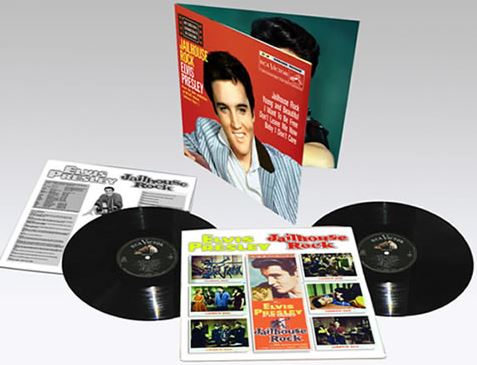 ailhouse Rock” is playing when the car runs down Buddy Repperton, one of the guys who smashed up the car at the garage.
American rock and roll revival act Sha Na Na performed “Jailhouse Rock” live at the Woodstock Festival in August 1969.
Westlife performed the song for the medley part of their Where the Dreams Come True Tour.
Chris Brown covered the song at the 2007 Movie’s Rock.
Scratch Track added this song to their live performance of “Love Someone.”
Dwayne Johnson performed a parody of the song that pokes fun at his Wrestlemania XXVIII opponent John Cena during the Rock Concert on an episode of WWE Raw in March 2012. WWE later released this version on iTunes as “Rock’s Concert”.
Scenes from the music video of the One Direction single Kiss You are based on the “Jailhouse Rock” production number from the Elvis film.
“Jailhouse Rock” has also been recorded by:
- The Residents
- The Cadets (AKA The Jacks)
- Jerry Lee Lewis
- Miranda Lambert
- Merle Haggard
- Mötley Crüe (This song was a live song only. This song was used as the 10th and final track on their 1987 album Girls, Girls, Girls.)
- Brownsville Station
- The Blues Brothers (This version was the ending song of the movie, performed with other musicians such as Ray Charles and Cab Calloway)
- Patti Smith
- ZZ Top
- The Animals
- Twisted Sister
- The Cramps
- Judy Nylon
- Looney Tunes
- John Cougar Mellencamp (This version was included in the soundtrack for Honeymoon in Vegas)
- Michael Bolton and Carl Perkins
- Jeff Beck Group (featuring Rod Stewart and Ronnie Wood)
- Billy “Crash” Craddock
- Adriano Celentano
- Cliff Richard – at concerts
- ABBA with Olivia Newton-John and Andy Gibb
- Queen
- Frankie Lymon
- Danny Noriega
- Enrique Guzmán (in Spanish)
- Micro Chips (In Spanish)
- Dean Carter (1967)
- Mind Garage recorded by Elvis Presley’s sound engineer Tom Pick and Recording technician Roy Shockley in RCA’s “Nashville Sound” studio, under the management of Chet Atkins.
- IBEX pre-Queen era band featuring Freddie Mercury on the recording Live In Liverpool
- Carl Perkins
- Eilert Pilarm
- Link Wray
- Marshall Chapman
Read more at: http://en.wikipedia.org/wiki/Jailhouse_Rock_(EP)
Date = 8 October 2013
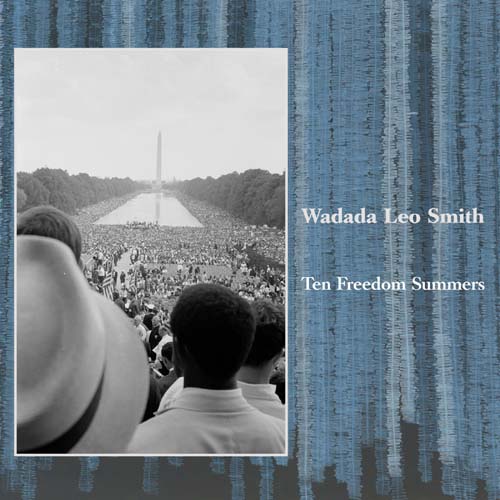
Musician’s Name = Wadada Leo Smith
Genre = Jazz/classical
Title = Ten Freedom Summers
Record Company: Cuneiform
Review = Wadada Leo Smith initially recorded in the late 1960s with the likes of the Art Ensemble of Chicago, Muhal Richard Abrams, Anthony Braxton, and other musicians associated with the Association for the Advancement of Creative Music (AACM). He has participated in more than a hundred recording sessions and has released over twenty albums as leader. Yet despite his decades of activity, the number of his recordings, and the awards he has won, including a Guggenheim, Smith is not widely known, possibly because his music is generally considered avant-garde, a mode that attracts few listeners. Ten Freedom Summers (2011) has increased his visibility. A four-CD set, it has been much touted in the jazz press. Largely as a result of this release, Musica Jazz (Milan) designated Smith the 2012 international jazz musician of the year.
Francis Davis has compared Ten Freedom Summers with John Coltrane’s A Love Supreme; Thom Jurek, with Duke Ellington’s Black, Brown, and Beige and Max Roach’s Freedom Now Suite. I think Wynton Marsalis’s Blood on the Field is the best comparison. Usually considered a jazz oratorio, Marsalis’s work, which focuses on the lives of two slaves, lasts for over three hours. Presumably offering musical interpretations or depictions of key events in the history of civil rights in the United States, Smith’s composition requires almost five hours to perform. (Its premiere in Los Angeles was spread over three evenings; recording it took three days.) In both pieces, writing is more important than soloing, though musicians improvise on both. Despite probably being technically ineligible for the award, Blood on the Field won the 1997 Pulitzer Prize for Music; a finalist for the 2013 Pulitzer, Ten Freedom Summers did not win the award. Yet it strikes me as more listenable and possibly more ambitious, though less jazzy, than Marsalis’s work. Divided into nineteen sections—each a discrete piece–Smith’s composition is performed by two groups: Southwest Chamber Music, a nonet conducted by Jeff von der Schmidt, and the Golden Quartet/Quintet (trumpet plus rhythm section, with a second drummer sometimes added), though members of the latter occasionally play with the chamber group.
Smith focuses mainly on events that occurred during the decade following the 1954 Supreme Court decision Brown v. Board of Education, but does not limit himself to this period: He ranges chronologically from Dred Scott v. Sandford (1857) to the 2001 terrorist attacks on the United States. Among the selections are “Emmett Till: Defiant, Fearless,” “Rosa Parks and the Montgomery Bus Boycott, 381 Days,” and “Martin Luther King, Jr.: Memphis, the Prophecy.” Smith advises that “none of these pieces are meant to simply be listened to.” Matthew Sumera, who wrote the notes to the CDs, interprets Smith’s comment as meaning that this music “is not intended for disinterested listening—it is a demand to America to fulfill its democratic promise.” What does this mean? What is America’s democratic promise? “Life, liberty, and the pursuit of happiness”? “Liberty and justice for all”? While these are fine, noble ideals, is attaining them within the realm of possibility? Will we know if the democratic ideal has been attained? And precisely how does Smith’s music demand fulfillment of this promise? What kind of action does it propose? Or does the nature of the action matter? Neither while listening to the music nor when pondering it later did I feel inspired to become a social activist or to assist people less fortunate than I more than I do already. Though I support everyone’s civil rights and at one time belonged to groups that also do, and though I am frequently moved by music, I am unmoved by the supposed call of Ten Freedom Summers for political action, probably because I do not comprehend such a call. Does this mean that Smith’s music has failed? Does it mean that I have not listened to it as I should? Both? Does Sumera interpret Smith’s words correctly?
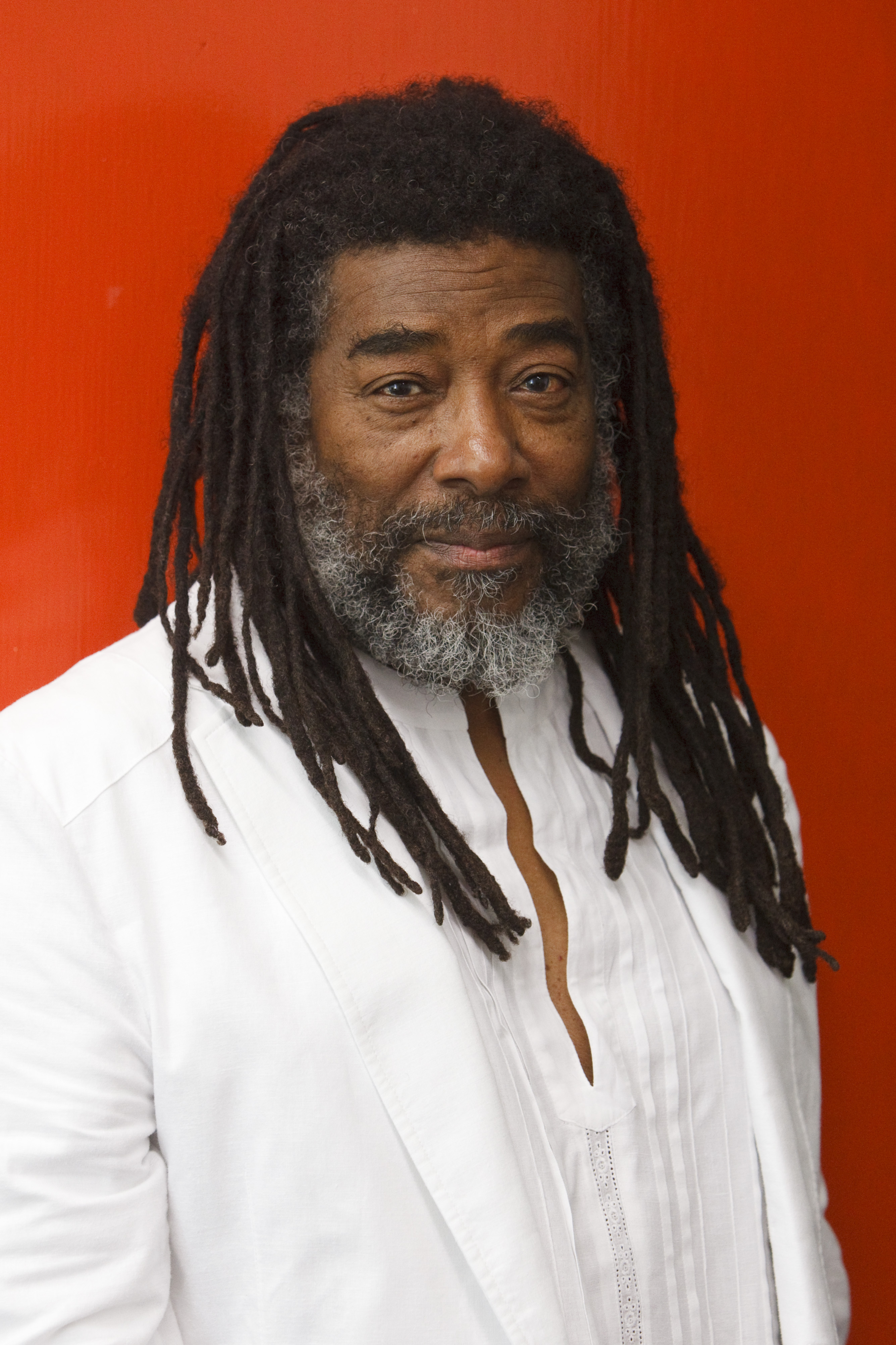 Smith explains his goal in other terms: “In composing Ten Freedom Summers, I tried to achieve a creative expression through music of the psychological impact of the Civil Rights movement on American society.” This statement—as much aesthetic as political–is different from demanding fulfillment of the democratic ideal. Though Smith correctly observes that the civil rights movement affected the America psyche profoundly—could anyone disagree?–I cannot say that this music reminds me of the civil rights movement generally or of any of its events, even though I recall many of the events vividly because I was sympathetic to the cause as an adult the 1960s. Yet the composer characterizes his ultimate goal as “creative expression.” Without question, he expresses himself creatively; but after listening to this music I perceive no connection between it and the civil rights movement or the movement’s impact on American society. Two selections illustrate the nature of his work.
“Black Church” surprises. I would characterize this piece played entirely by the Southwest Chamber Music string section as intellectual rather than emotional, though it is not without feeling. It is, as the name of the group indicates, chamber music. Totally absent from it is even a hint of raucousness, of foot stomping, of passion, of letting loose. The church depicted here is not sanctified. Instead, this selection apparently portrays a church that is subdued, reflective, and dignified, a place where a tambourine is not played. In popular culture, this schism between the unrestrained and the sedate black church is central to the plot of the movie St. Louis Blues(1958), for example. So what does Smith intend to suggest about the black church? Might he mean that there are many kinds of churches patronized by blacks and that in “Black Church” he characterizes one that values somberness and quiet reverence, one that is more passive than active? Does he imply that, to him, at least some black churches favor, say, Thomas A. Dorsey’s “Take My Hand, Precious Lord” or even Samuel Coleridge-Taylor’s cantata “The Atonement” rather than Edwin Hawkins’s “Oh, Happy Day”? I do not understand how this piece constitutes a call to political action, nor do I see how it reflects “the psychological impact of the Civil Rights movement.” Attractive music? Yes. Political music inspired by an institution or a historical event? Not that I can tell.
“The Freedom Riders Ride” also surprises, but not to the degree that “Black Church” does. Knowing the title and that freedom riders, black and white, rode interstate buses in 1961 to challenge Jim Crow laws in the South, one can imagine historical events while listening to it. About half this piece performed by the Golden Quartet is tranquil, especially for four minutes at the beginning. Does this seeming serenity suggest the activists’ mood at the start of the ride? I would expect these people to have been tense, even afraid. Do the somewhat hectic final four minutes represent confrontations between the riders and their adversaries, including beatings? How is one to know? Does knowing matter? As with “Black Church,” “The Freedom Riders Ride” does not move me to political action; without knowing what this piece is about, I would not have been able to identify the event the composer intended to commemorate, to sense that it concerns any aspect of civil rights, or to think that it has to do with anything at all.
If one listened to Ten Freedom Summers ignorant of its political context, it would please on a strictly musical level. It may be enjoyed in the same manner as A Love Supreme and Black, Brown, and Beige when the listener is unaware that Coltrane’s performance reflects his spiritual questing and that Ellington intended his composition to suggest aspects of blacks’ history in the United States. Response to Freedom Now Suite is necessarily different from that to these two pieces, though, because its beauty and meaning are inextricable, and the message is obvious because of the screaming of Abbey Lincoln and the words she sings. On a strictly musical level, I, unlike the Pulitzer committee, find Blood on the Field ponderous, all but unlistenable; it strikes me as an example of a political message explaining and conceivably redeeming uninspired music, of politics trumping aesthetics. Despite Smith’s comments about Ten Freedom Summers and Matthew Sumera’s explanation of them, this work may be enjoyed, as I appreciate it, as a composition of various parts mainly in the classical mode. If listeners find a correlation between it and extra-musical events, fine; if not, then also fine. Smith writes attractive music that at least in this case does not warrant the term avant-garde. It might not even warrant the term jazz, as traditionally defined, because it lacks such elements as a driving rhythm section, backbeats, soloists’ interplay, blues feeling, and so forth. What matters is the music, not the label attached to it. The music speaks for itself. Trust it, not the words of its creator or his interpreter.
Author = Benjamin Franklin V
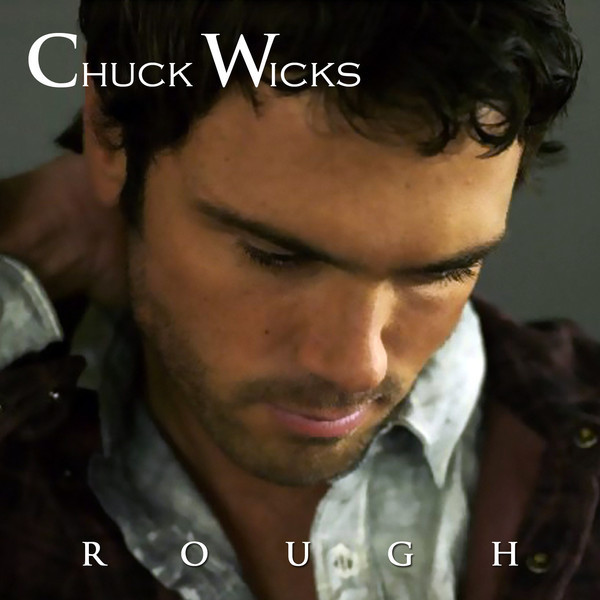 Things have not been easy for Chuck Wicks. The artist quickly rose to instant stardom with the release of his debut single, “Stealing Cinderella”, back in 2007. The song peaked at No. 5 on country charts, and the album it was from, “Starting Now”, rose to No. 7 on the Billboard Country chart back in 2008.
 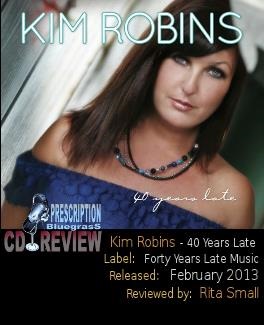 Kim Robins project, “40 Years Late”, is a breath of fresh air.
It appears that Kim has spent her time not only honing her craft, but also finding her voice and knowing exactly who she is as a singer.
You will not hear someone trying to imitate other female singers, or singing in the rafters, on this recording. Instead, you will hear a woman with a mid-range, bluesy, voice that puts you in the mood for some good traditional bluegrass and classic country.
Kim has surrounded herself with an ensemble of, to say the least, solid musicians. Appearing on the project are Don Brummett, Michael Cleveland, Mike Curtis, Jeff Guernsey, Nathan Livers, Lynn Manzenberger, Seth Mulder, Butch Robins, Mark Stonecipher, and Richard Torstrick. Providing harmony vocals throughout the project are fellow Indiana residents Misty Stevens, singer, songwriter, and leader of her own band, and Kent Todd, singer and fiddle player with Blue Mafia.
The title cut of this project, written by Kim, is so well penned that many listeners will easily relate to the song. The lyrics of this song are honest and will hit home with, not only singers that are chasing the dream of success later in life, but also everyone that has had to put their dreams on hold for other choices.
While I cannot pick one song to call my favorite, because I actually have quite a few on this project, I enjoy Kim’s upbeat tribute to Connie Smith with “I’ve Got My Baby On My Mind”. Kim states that she spent many hours trying to imitate Smith’s voice until her Dad told her to “sing like yourself”. Advice many singers should follow and advice I am glad Kim took.
Another song on the project that caught my attention is the duet “The Last Thing On My Mind” that Kim performs with Jeff Guernsey. While many artists have recorded this song, Kim and Jeff’s voices complement each other so well, that I found myself replaying this tune numerous times and just enjoying the harmony.
Read the rest of this CD review at Music Charts Magazine’s favorite Bluegrass website here: http://prescriptionbluegrassreviews.blogspot.com/2013/05/prescription-bluegrass-reviews-kim.html#more
 Second round of tour dates sold out immediately; More than 120,000 total tickets sold today

As previously announced, Strait will continue to record new music for longtime label home MCA Records and will perform select dates across the country after The Cowboy Rides Away Tour has wrapped. For more information, please visit www.georgestrait.com.
About Fred’s Country program:
Le program Fred’s Country: La musique Country de Tradition avec Frederic (Fred) Moreau. Le program Fred’s Country est diffusé sur 65 fréquences FM, 54 radios ou webradios.
Radio Show Host: Fred Moreau
Program Fred’s Country w40-13 – 4 octobre 2013 à 15:00
Music Charts Magazine is proud to be friends with Mr. Moreau and glad to now be one of the many to host Program Fred’s Country. ( French/English)
Radio Program “Fred’s Country” – Now at Music Charts Magazine!
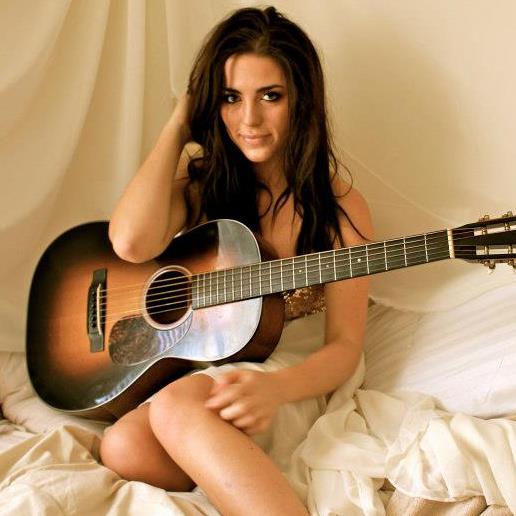 Music Charts Magazine Presents – “NEW DISCOVERY” – “Taylor Watson” – for the month of October 2013.
Looking for some “New” music to add to your player and can’t find anything that blows you away?
Check out this Music Charts Magazine “NEW DISCOVERY” Interview with singer/songwriter “Taylor Watson” and be prepared to be excited knowing there is still 100% awesome music out there that you still have not heard.
After you listen to this great interview showing you the ins and outs of Taylor Watson ( a girl that hails from the Denver, Colorado area and now lives in music city Nashville, Tennessee ), we are sure you will be glad you found this “New Discovery” to add to your music playlist.
For booking, interviews, or just to say Hi! Contact Taylor Watson at her Facebook site:
- http://
www.facebook.com/ taylorwatsonmusic - http://
www.reverbnation.com/ taylorwatson - http://
www.twitter.com/ taywatsonmusic - http://
www.instagram.com/ taylornwatson - http://
www.youtube.com/user/ TayWatsonMusic
Music Charts Magazine proudly presents “NEW DISCOVERY” for the month of October 2013 “Taylor Watson“
LISTEN to “NEW DISCOVERY” Interview with Taylor Watson HERE:
Music Charts Magazine Presents “New Discovery” Taylor Watson – Interview by Award winning DJ Big Al Weekley
Copyright © 2012 – 2013 Music Charts Magazine, INC – All Rights Reserved. Contents of this site including text and media may not be reproduced without prior written consent. Audio and video elements of this site are property of their respective owners and are used with permission.
|
OCTOBER 1, 2013
|
||||||||||||||||||||||||||||||||||||||||||||||||||||||||||||||||||||||||||||||||||||||||||||||||||||||||||||||||||||||||||||||||||||||||||||||||||||||||||||||||||||||||||||||||||||||||||||||||||||||||||||||||||||||||||||||||||||||||||||||||||||||||||||||||||||||||||||||||||||||||||||||||||||||||||||||||||||||||||||||||||||||||||||||||||||||||||||||||||||||||||||||||||||||||||||||||||||||||||||||||||||||||
|
Copyright © 2013, the Texas Music Chart. Used with permission from Best In Texas Music Marketing LLC, Houston, TX
|
LW |
TW |
Artist Title (Label) |
TW SPINS |
LW SPINS |
Weeks on Chart |
Spin +/- |
Stations |
|
|
2 |
1 |
Cody Johnson Ride With Me (CJB) |
1,259 |
1,078 |
9 |
+181 |
67 |
|
|
1 |
2 |
Josh Abbott Band She Will Be Free (Pretty Damn Tough Records) |
1,182 |
1,137 |
16 |
+45 |
71 |
|
|
5 |
3 |
Will Hoge Strong (WH) |
1,144 |
1,046 |
9 |
+98 |
72 |
|
|
6 |
4 |
Kyle Park Fit For The King (Indie/Thirty Tigers) |
1,105 |
974 |
10 |
+131 |
73 |
|
|
8 |
5 |
Green River Ordinance It Ain’t Love (GRO) |
1,082 |
958 |
15 |
+124 |
67 |
|
|
9 |
6 |
Mark McKinney Stolen Cash (Texas Evolution) |
970 |
931 |
11 |
+39 |
69 |
|
|
11 |
7 |
Reckless Kelly The Last Goodbye (No Big Deal) |
955 |
778 |
9 |
+177 |
68 |
|
|
4 |
8 |
Phil Hamilton Back of a ’73 (Winding Road) |
929 |
1,057 |
17 |
-128 |
60 |
|
|
12 |
9 |
Wade Bowen Songs About Trucks (AMP/Sea Gayle) |
850 |
729 |
5 |
+121 |
56 |
|
|
7 |
10 |
Josh Ward Promises (Buckshot Records) |
829 |
958 |
15 |
-129 |
55 |
|
|
16 |
11 |
Bri Bagwell Hound Dog (BB) |
827 |
680 |
12 |
+147 |
58 |
|
|
3 |
12 |
Aaron Watson Summertime Girl (Thirty Tigers) |
821 |
1,068 |
17 |
-247 |
55 |
|
|
13 |
13 |
No Justice Songs On The Radio (Carved Records) |
773 |
719 |
13 |
+54 |
61 |
|
|
15 |
14 |
John Slaughter Hasn’t Everyone (Winding Road) |
771 |
704 |
10 |
+67 |
52 |
|
|
10 |
15 |
Chapter 11 w/Aubrey Lynn England Whiskey and You (C11) |
713 |
928 |
15 |
-215 |
56 |
|
|
24 |
16 |
Kevin Fowler How Country Are Ya? (Kevin Fowler Records) |
677 |
512 |
3 |
+165 |
59 |
|
|
20 |
17 |
Jason Boland & the Stragglers Electric Bill (Proud Souls Ent.) |
657 |
576 |
3 |
+81 |
57 |
|
|
19 |
18 |
Rich O’Toole I Love You (PTO Records) |
653 |
617 |
10 |
+36 |
52 |
|
|
22 |
19 |
Bart Crow Loving You’s a Crime (Smith Ent.) |
640 |
549 |
10 |
+91 |
50 |
|
|
21 |
20 |
Randy Rogers Band Speak Of The Devil (MCA Nashville) |
635 |
574 |
4 |
+61 |
56 |
|
|
14 |
21 |
Curtis Grimes Home to Me (CG) |
633 |
715 |
20 |
-82 |
44 |
|
|
27 |
22 |
John David Kent Until We Turn Around (Blackland/Roustabout) |
618 |
490 |
9 |
+128 |
51 |
|
|
17 |
23 |
Zane Williams Overnight Success (ZW) |
599 |
678 |
19 |
-79 |
46 |
|
|
25 |
24 |
TJ Broscoff This is the Moment (BGM Records) |
560 |
508 |
8 |
+52 |
43 |
|
|
23 |
25 |
Turnpike Troubadours If You’re Gonna Play in Texas (Lightning Rod Records) |
557 |
517 |
3 |
+40 |
46 |
|
|
28 |
26 |
Clayton Gardner Something About You (CG) |
504 |
473 |
12 |
+31 |
46 |
|
|
18 |
27 |
Sam Riggs When The Lights Go Out (SR) |
502 |
656 |
17 |
-154 |
44 |
|
|
31 |
28 |
Matt Caldwell I Know Mexico (MC) |
493 |
448 |
11 |
+45 |
51 |
|
|
30 |
29 |
Six Market Blvd. Mailbox (Vision Ent.) |
490 |
453 |
7 |
+37 |
45 |
|
|
34 |
30 |
Mario Flores Let Your Lonesome End With Me (MF) |
456 |
397 |
5 |
+59 |
39 |
|
|
46 |
31 |
Granger Smith Miles and Mud Tires (GS) |
438 |
280 |
2 |
+158 |
45 |
|
|
32 |
32 |
The Statesboro Revue Huck Finn (Vision Ent./Shalley Records) |
438 |
433 |
3 |
+5 |
41 |
|
|
36 |
33 |
Brandon Jenkins Tattoo Tears (Smith Ent.) |
419 |
365 |
9 |
+54 |
40 |
|
|
33 |
34 |
Brandon Rhyder Pray The Night (Smith Ent.) |
418 |
400 |
5 |
+18 |
42 |
|
|
35 |
35 |
Shane Smith & The Saints Coast (SSS) |
396 |
382 |
6 |
+14 |
39 |
|
|
29 |
36 |
Thieving Birds In the Summer (TB) |
392 |
461 |
14 |
-69 |
36 |
|
|
37 |
37 |
Taylor Hodak Band Good Man (THB) |
383 |
365 |
8 |
+18 |
39 |
|
|
47 |
38 |
Chris Brazeal Band Sounds Like Home (CBB) |
370 |
271 |
2 |
+99 |
35 |
|
|
38 |
39 |
Rankin Twins Jezebel (RT) |
362 |
342 |
6 |
+20 |
44 |
|
|
44 |
40 |
Kylie Rae Harris Slide Over (KRH) |
350 |
313 |
12 |
+37 |
31 |
|
|
43 |
41 |
George Ducas White Lines and Road Signs (GD) |
349 |
314 |
3 |
+35 |
34 |
|
|
50 |
42 |
Mark Allan Atwood One Horse (MAA) |
348 |
261 |
4 |
+87 |
33 |
|
|
41 |
43 |
Deryl Dodd Loveletters (Smith Ent.) |
345 |
318 |
4 |
+27 |
38 |
|
|
N |
44 |
Cameran Nelson Reckless in Texas (CN) |
331 |
229 |
1 |
+102 |
34 |
|
|
N |
45 |
The Dusty Smirl Band Mine For The Mile (TDSB) |
310 |
244 |
1 |
+66 |
39 |
|
|
48 |
46 |
LiveWire Whiskey Sunday (Way Out West Records) |
309 |
269 |
5 |
+40 |
30 |
|
|
40 |
47 |
Callahan Divide Party on the River (CD) |
306 |
324 |
12 |
-18 |
28 |
|
|
42 |
48 |
Charlie Montague Beautiful Noise (CM) |
305 |
317 |
7 |
-12 |
36 |
|
|
N |
49 |
Jake Kellen Jesus and Hank (Horny Toad Records) |
302 |
251 |
1 |
+51 |
38 |
|
|
N |
50 |
Charlie Robison Brand New Me (Thirty Tigers/Jetwell, Inc.) |
261 |
201 |
1 |
+60 |
30 |
Copyright © 2013, the Texas Music Chart. Used with permission from Best In Texas Music Marketing LLC, Houston, TX