MCM Home
 This is an Exclusive Interview with Sheila Raye Charles and can only be heard here at MusicChartsMagazine.com
Raw, uncut and lasting over 40 minutes long. Sheila Raye Charles’s story will leave you with hope, love and peace knowing that there are reasons for everything. Sheila Raye Charles’s voice like her father Ray Charles has been and continues to be instrumental to so many lives.
Sheila Raye Charles has a story like most of us do and she wants to share hers with you in this exclusive interview that is now available for you to hear right
HERE:
Sheila Raye Charles has visited and continues to visit villages, towns and cities across the United States and the world spreading her message of how Jesus Christ saved her life.
(As seen on the 700 Club – Christian Broadcasting Network www.CBN.com)
Interviewee: Sheila Raye Charles
Interviewer: Big Al Weekley
This Exclusive Interview ( as well as all other audio interviews found at www.MusicChartsMagazine.com ) are owned by Music Charts Magazine Corporation and may “NOT” be copied, used or placed anywhere without permission of Music Charts Magazine in writing. Contact Music Charts Magazine at: Contact@MusicChartsMagazine.com
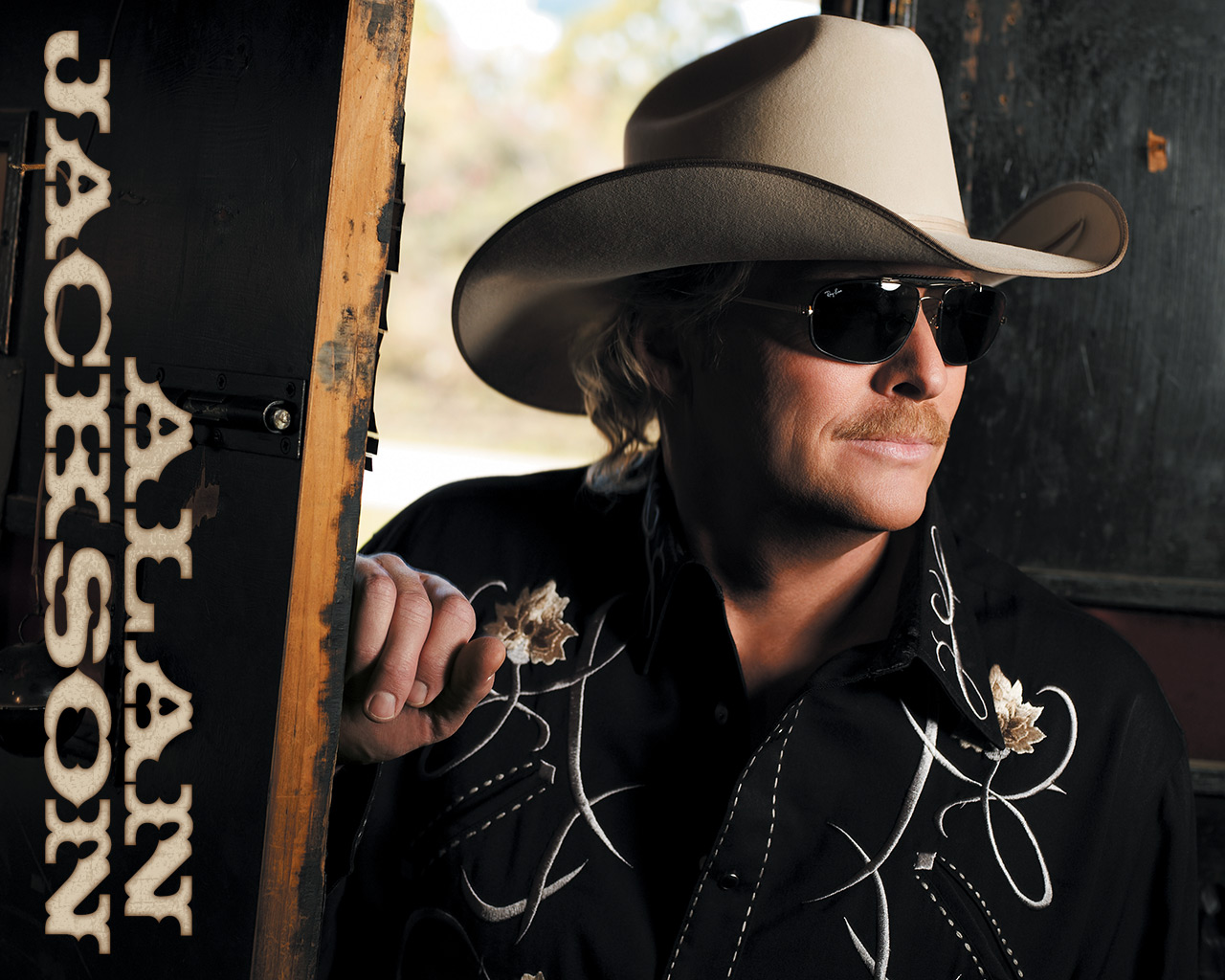 Country music mega-star Alan Jackson has been threatening to cut a bluegrass album for the past few years, dropping hints in interviews and tantalizing the substantial crossover between country and bluegrass fans.
When he brought Alison Krauss in to produce his 2006 project, Like Red On A Rose, there was speculation that the CD might take a grassy turn. But despite including a fine version of Wait A Minute, famously tagged by Seldom Scene, both that track and the whole album were firmly in the contemporary country camp.
This year, however, it finally came to pass. Jackson assembled an all-star cast of bluegrass pickers and singers in April, and tracked a new all-acoustic record at The Castle outside of Nashville. In the studio were Sammy Shelor on banjo, Adam Steffey on mandolin, Tim Crouch on fiddle, Tim Dishman on bass, Rob Ickes on reso-guitar, and Scott Coney on guitar. Ronnie Bowman and Don Rigsby were on hand to provide harmony vocals, with Keith Stegall and Adam Wright producing.
Titled simply, The Bluegrass Album, it will be released September 24 on Jackson’s ACR label, distributed by EMI Records Nashville. Eight of the tracks are Jackson originals, along with covers of The Dillards’ There Is A Time, John Anderson’s Wild And Blue, and a slow, 3/4 time version of Blue Moon Of Kentucky.
We caught up yesterday with Sammy Shelor, who said that they tracked all the rhythms and most of the vocals in five sessions over two days. The band sat in a circle with half dividers between them so that everyone could see each other, with Alan and the backup singers tracking live with the band.
“The most we did on any song was three takes; we got most of them the first time. We worked from charts, but Alan knew what he wanted on every song before we started.”
Bluegrass fans may not recognize the name of session guitarist Scott Coney, who also plays guitar, fiddle and banjo in Jackson’s country band. Sammy says that he is also a super bluegrass guitarist, both lead and rhythm.
Studio band, producers and engineers with Alan Jackson in the studio for The Bluegrass Album sessions“Coney is the biggest Rice nut in the world.
He has hours of live Rice recordings, a lot of them with me playing on the show. That’s how he found out about me.
Alan told Scott to put a band together for this record, but that he didn’t want it to ‘sound like all the other bluegrass albums country artists cut in this town.’
“There’s a good variety of styles and tempos among the songs. Shelor said that there are some slower ballads, but also a number of “punchy, drivey, mid-tempo pieces,” and a couple of fast ones.
Sammy expects this record to be warmly embraced by bluegrass fans.
“Alan’s voice lends itself perfectly to bluegrass, in my opinion. If you like Ronnie Bowman or Marty Raybon singing bluegrass, you’ll love Alan Jackson doing it.
I’m extremely blessed and happy to be a part of this project. It’s a great bluegrass record, and its Alan Jackson singing. What more could you ask?”
Current plans suggest that Jackson will do some television and selected live shows to promote The Bluegrass Album around the release date, with a likelihood of further touring to follow. They hope to hit a number of major bluegrass festivals next year as well, using the same musicians who appear on the album.
We’ll report back as further details are announced.
John Lawless | July 12, 2013
 MusicChartsMagazine.com now is proudly flying the WSM Radio logo!
ABOUT WSM:
650 AM WSM is the most famed country music station in the world. Each day, the station shares country, bluegrass, and Americana as well as the excitement of Music City with friends in Middle Tennessee and listeners around the world.
WSM debuted on Oct. 5, 1925, and less than two months later, the show would birth its most famous show (and the show that would make country music famous), the Grand Ole Opry. The Opry was the first of WSM’s shows to develop such an excited audience that fans would visit live studio broadcasts. That tradition continues today not only with the Opry, but with other signature programming including “An Intimate Evening with Eddie Stubbs”, “Station Inn Sessions”, and more. In 1928, WSM was given the frequency of 650 kilohertz and admission to an elite group of maximum power, Class 1-A clear-channel broadcasters. In 1932, the station’s new 50,000-watt transmitter made it a nation-spanning giant. At the heart of this expansion was a diamond-shaped vertical antenna located just South of Nashville, the tallest tower in the nation at the time. The station today still spans the nation with its AM signal, of course, while also circling the globe online.
WSM has gone on to become a broadcasting giant and a friend to hundreds of thousands of fans. The station has won hundreds of broadcasting awards and was named Country Radio Station of the Century by “Radio & Records” in 2000. WSM’s personalities are nationally recognized figures in country music, and its listeners range from U.S. Presidents to Country Music Hall of Famers, to artists climbing the charts toward their first number one hit. You never know when a famous listener might drop in for a visit or to take the studio’s reigns for a while.
 Coming Monday July 15th, 2013

– An insider exclusive, Raw and Uncut! –
“The complete life story of Sheila Raye Charles”
( the daughter of music legend Ray Charles )
– brought to you by MusicChartsMagazine.com
MusicChartsMagazine.com – brings to you all-access passes to music around the world. It is, has been, and will continue to be, a mission of Music Charts Magazine to shed light on those whom have had lifelong careers in the music industry and deserve recognition for their great accomplishments.
 Lead Single from Iconic Male Country Vocalist’s Forthcoming 2013 Album
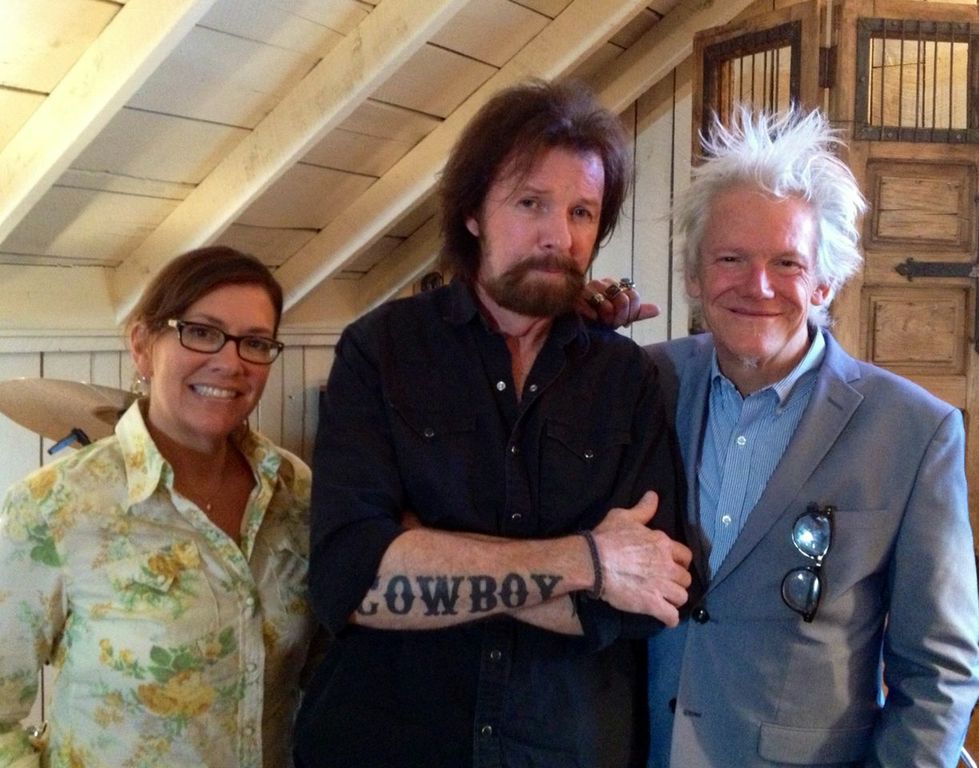
 DJ Jimmy Jay’s radio “Rewind Show” – ( Remembering the life of Marshall Lytle – PART 2 – band member of Rock n Roll’s 1st, Bill Haley and The Comets ) at MusicChartsMagazine.com
Go through time with legendary DJ Jimmy Jay “Rewind” as he speaks with multiple celebrities in this special radio show remembering the great Marshall Lytle. Including special guest appearances from James Marvell of Mercy, Al Jardine of The Beach Boys, Paul Revere of The Raiders, Charlie Thomas of The Drifters, Diamond Dave Summerville of The Diamonds and so many more celebrity names we all know and love.
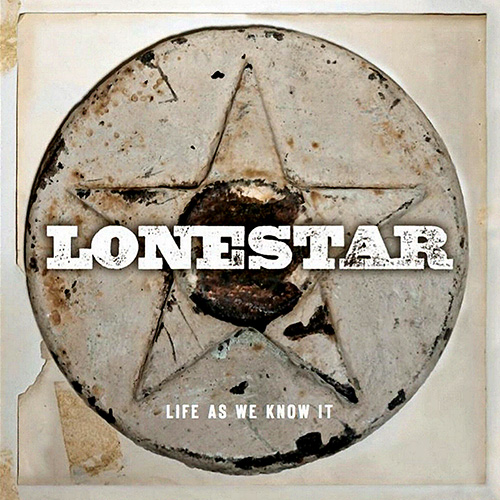 It has been more than 20 years since Lonestar released “Amazed,” and landed in the No. 1 position on country music charts for 16 consecutive weeks. Since then, Richie McDonald left the group to work on a few solo projects . Richie has returned to the band, and is part of the new album “Life As We Know It,” which released on June 4.
I don’t think anyone can hear the name Lonestar without remembering their hit song “Amazed.” And, while that song definitely brought them the most success, it was not their only number one hit. “Smile,” ”Come Cryin’ to Me,” “No News, ” “What About Now,” “Tell Her,” “I’m Already there,” “My Front Porch Looking In,” and “Mr. Mom” all took their turn at the top spot.
Back to its original four members, with Richie McDonald, Dean Sams, Keech Rainwater and Michael Britt, have put together this new album that showcase Lonestar’s talent, both as a band and as songwriters.
The band wrote all but three songs on this album, that gives us The Countdown, Maybe Someday, How Can She Be Everywhere, Pretty Good Day, With My Eyes Open, Party All Day, Life as We Know It, If It Wasn’t for You, I Miss When, I Did it for the Girl, Just the Rain, and Oh Yeah.
Music titles can sometimes confuse the listener. This isn’t the first time “Life As We Know It” has been on the cover of an album. The last time, it was on vinyl, and the album was by REO Speedwagon. That was back in 1987. More recently Greg Bates did a country song called “Did It For The Girl,” and Lonestar has a song on this album with almost the same title, “I Did It For The Girl.”
I wasn’t really impressed with the title track, “Life As We Know It,” and I can’t imagine that one doing very well if released as a single. “Countdown,” the first song on the album, is a good song, and I’m not surprised they put that in the lead-off position.
I only had to listen to the album once to pick a favorite song. For me, “Just the Rain” was the one I wanted to hear again and again. It reminds me of Lonestar 20 years ago. Those of us who were fans then will remain fans, as long as the group keeps putting out this kind of music. It’s a slow, emotional song, well sung, and allows the band to showcase the harmony they’ve always been known for.
As much as I like “Just the Rain,” I’m not sure that one will do well as a single. But there are some that will. I think a great single for this group would be “How Can She Be Everywhere.” Radio might also enjoy sharing songs like “If It Wasn’t For You” and “I Miss When,” with listeners. “Pretty Good Day” is another one that I would imagine people will call and request if it is released as a single. It is an uptempo, feel good song.
The whole album is good, and I think the ballads are the best. “I Miss When,” “Just Rain” and “Maybe Someday” are great songs. But, in today’s Top 40 country market, if those ballads were released to radio, I’m not sure they would get the air time some of the faster songs would.
Keep up with Lonestar by visiting their website, www.lonestarnow.com. Follow them on Twitter @lonestarband. To find out everything going on in country music, visit www.countryschatter.com, and follow us on Twitter @countryschatter.
Music Charts Magazine History
– Song for the month of July 2013:
Stompin’ Tom Connors – “Bud The Spud“

Listen to Stompin’ Tom Connors song “Bud The Spud” here:
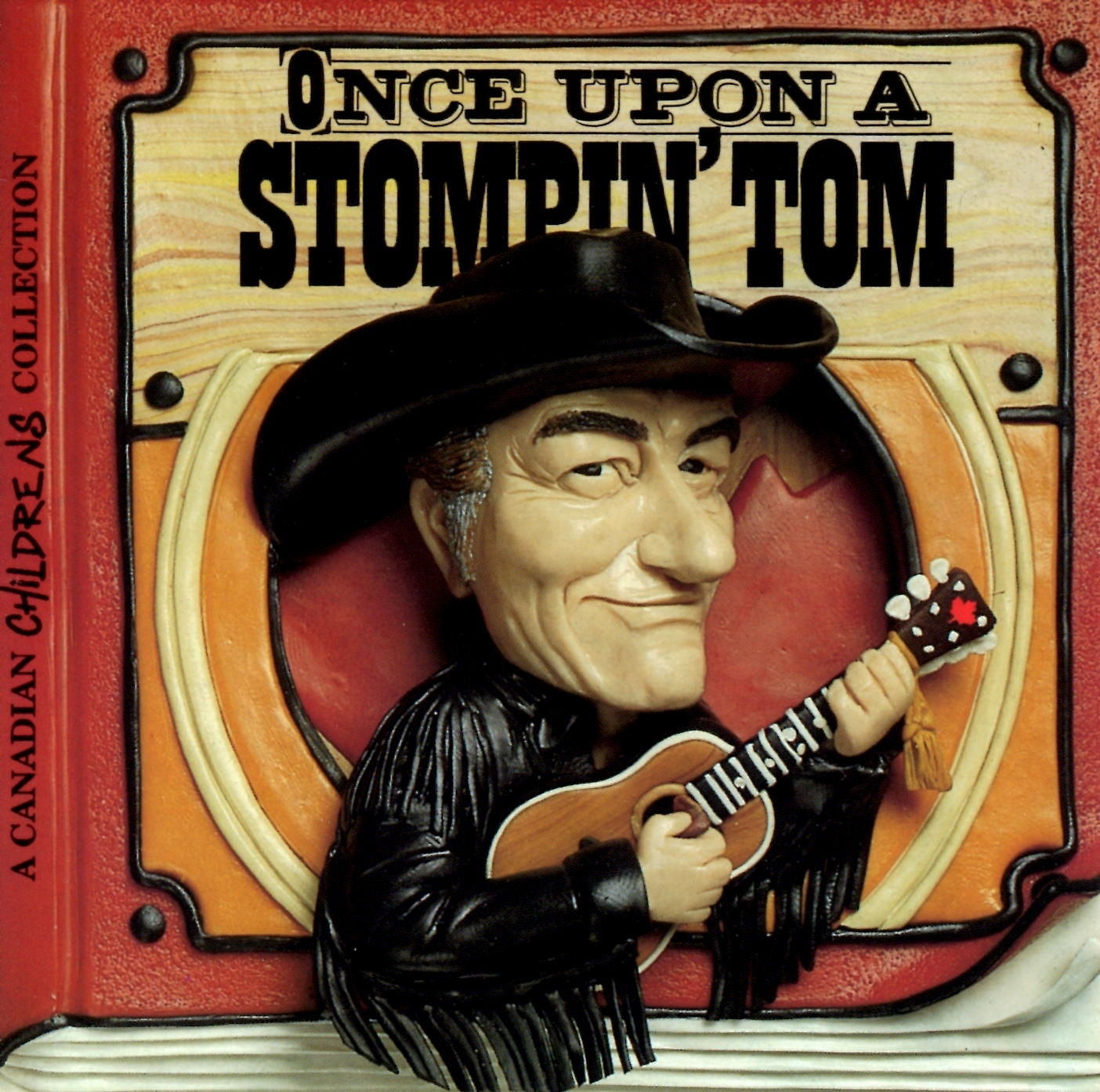 Thomas Charles “Stompin’ Tom” Connors, OC (February 9, 1936 – March 6, 2013) was one of Canada’s most prolific and well-known country and folk singer-songwriters. Focusing his career exclusively on his native Canada, Connors is credited with writing more than 300 songs and has released four dozen albums, with total sales of nearly 4 million copies. Connors died at age 77 in his home in Ballinafad, Ontario.
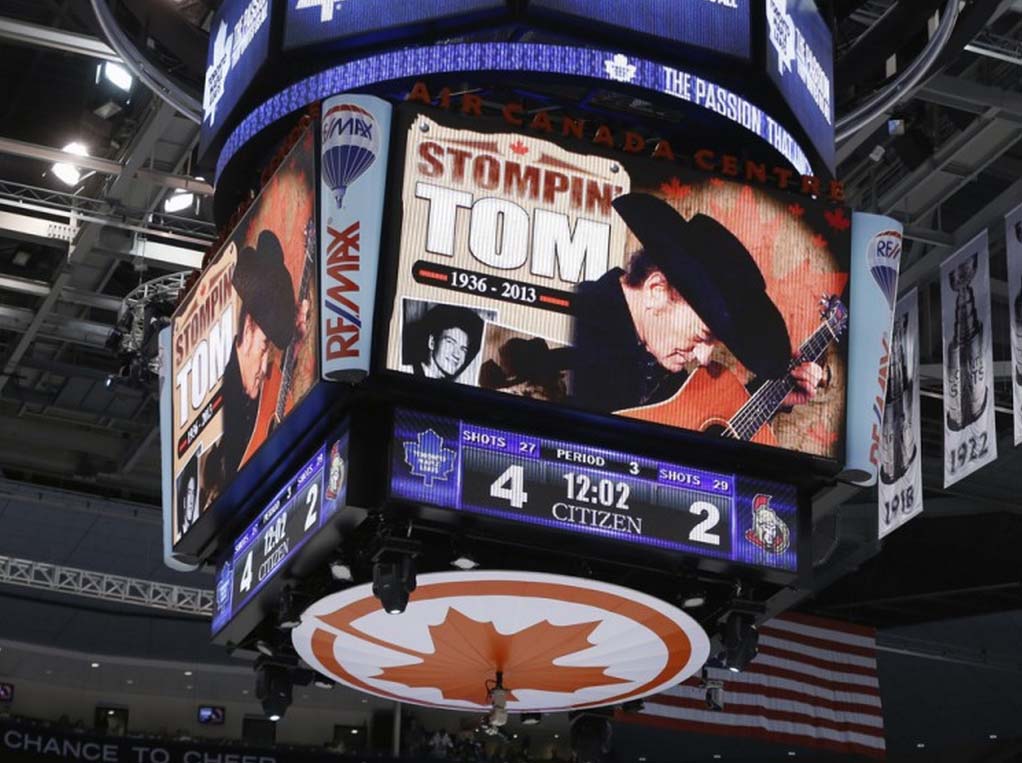
His songs have become part of the Canadian cultural landscape. Three of his best-known songs — Sudbury Saturday Night, Bud the Spud and The Hockey Song — play at every home game of the Toronto Maple Leafs hockey team. The Hockey Song is played at games throughout the National Hockey League.
He was born Charles Thomas Connors in Saint John, New Brunswick to the teenaged Isabel Connors and her boyfriend Thomas Joseph Sullivan at midnight February 9, 1936 at the General Hospital in Saint John, New Brunswick. Isabel’s family were Protestant, and his maternal grandfather, John Connors was a sea captain from Boston, Massachusetts who had died before Stompin’ Tom was born. Stompin’ Tom’s father was a Catholic of Irish and French ancestry, and “may have been Métis or … Micmac.” Isabel Connors and Thomas Joseph Sullivan didn’t wed until 30 years later, probably because Sullivan’s family were devout Catholics and didn’t want him marrying a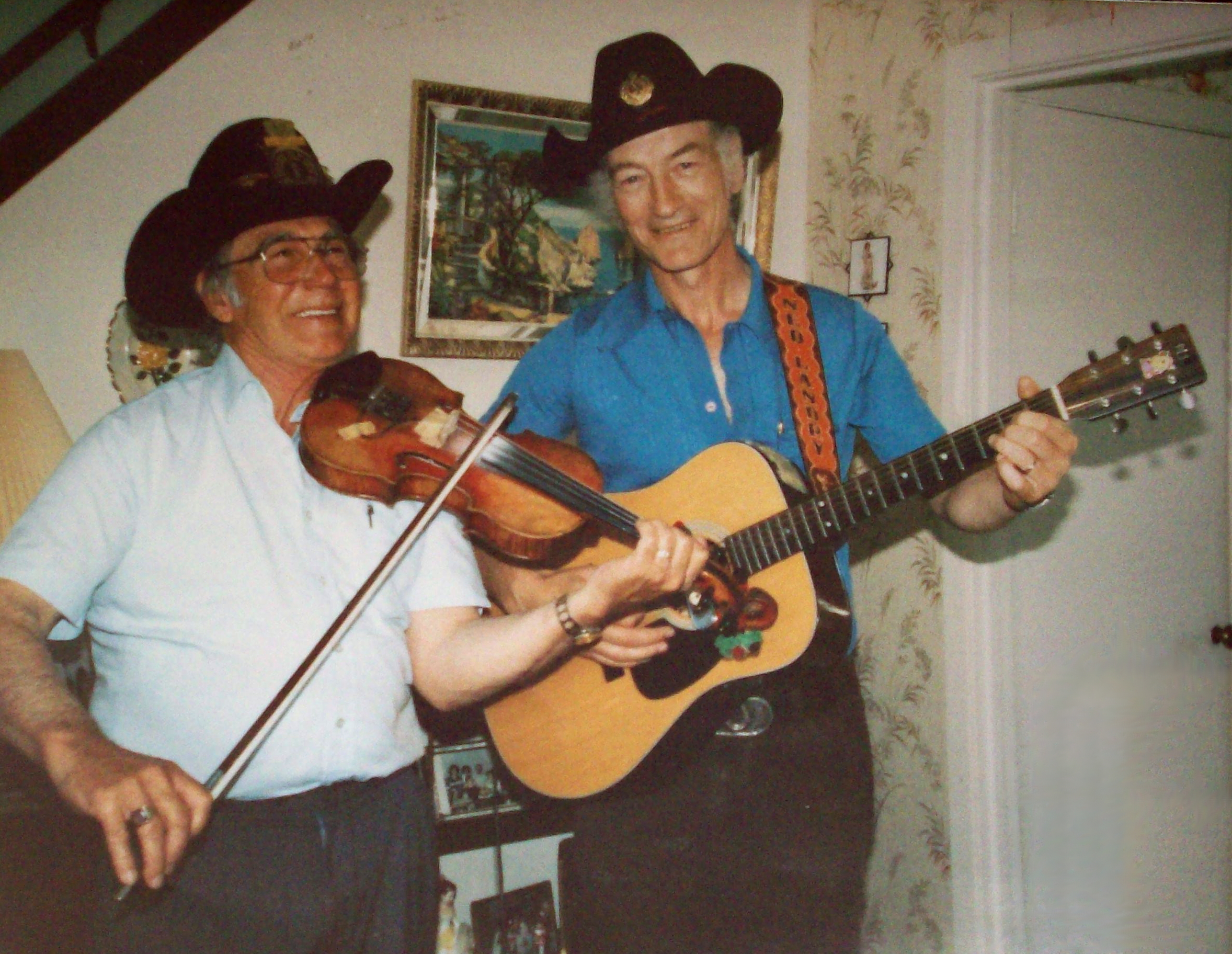 Protestant; they later divorced. Sullivan’s mother gave him $10, and was told to leave home. Connors was also cousin of New Brunswick fiddling sensation, Ned Landry.
Connors spent a short time living with his mother in a low-security women’s penitentiary before he was seized by Children’s Aid Society and was later adopted by Cora and Russell Aylward in Skinners Pond, Prince Edward Island.
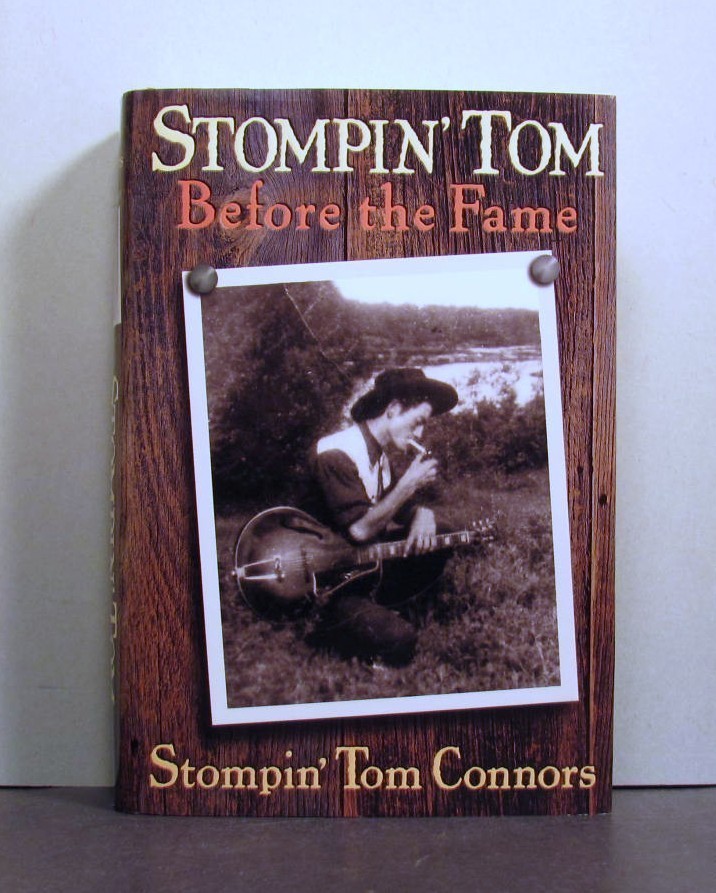
At the age of 15 he left his adoptive family to hitchhike across Canada, a journey that consumed the next 13 years of his life as he travelled between various part-time jobs while writing songs on his guitar, literally singing for his supper. He worked in the mines and rode in boxcars, and, in the coldest part of winter, he welcomed vagrancy arrests in order to have a warm place to sleep. At his last stop in Timmins, Ontario, which may also have been his big “break”, he found himself a nickel short of a beer at the city’s Maple Leaf Hotel. The bartender, Gaëtan Lepine, agreed to give Tom a beer if he would play a few songs. These few songs turned into a 13-month contract to play at 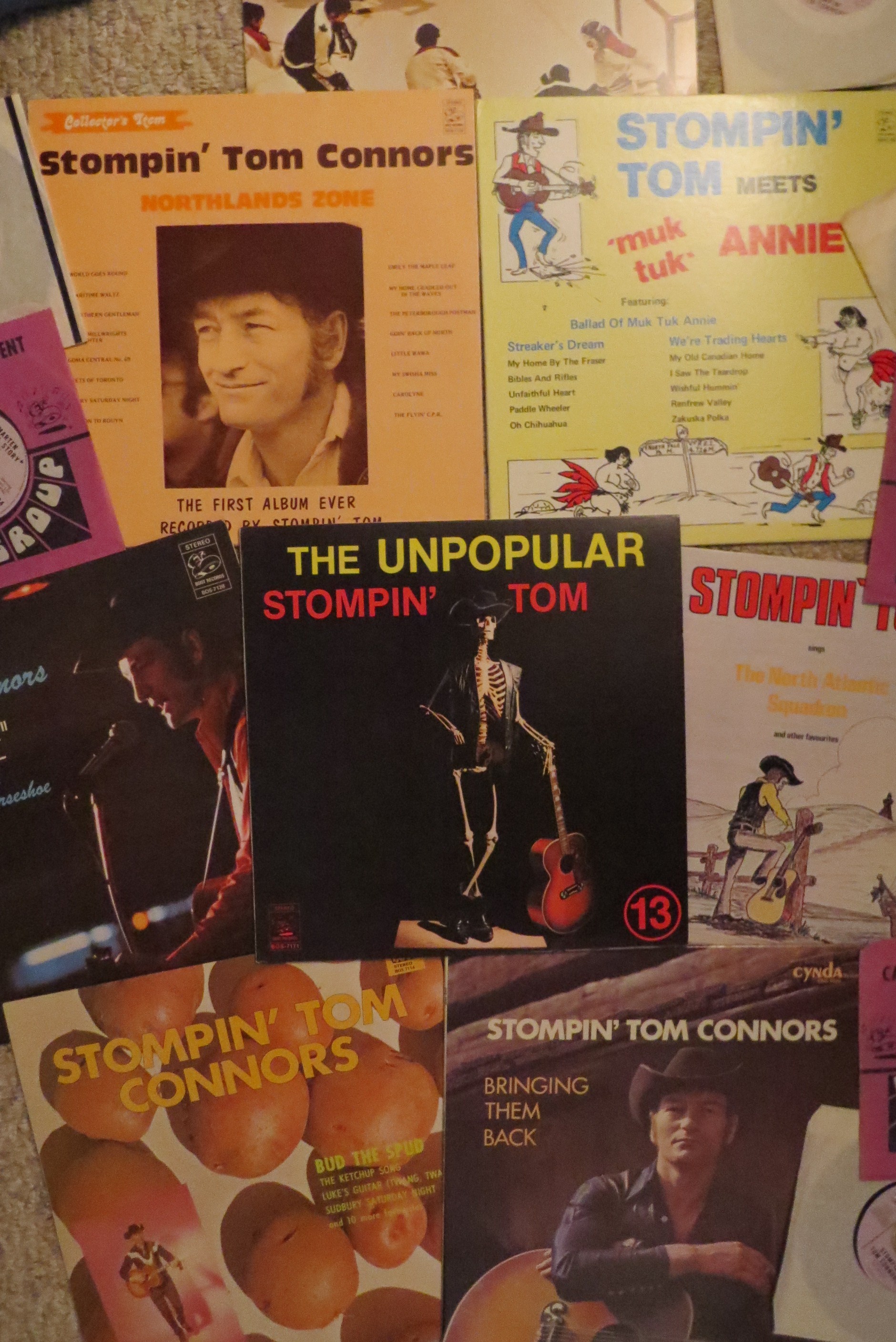 the hotel, a weekly spot on CKGB in Timmins, eight 45-RPM recordings, and the end of the beginning for Tom Connors.
Connors’ marriage to Lena Welsh took place on November 2, 1973, being broadcast live on Elwood Glover’s Luncheon Date on CBC Television. They chose to get married on television in order, he said during an interview on the show, to share the happiest moment with his fans across the country, whose support had rescued him from a difficult life before show business.
Connors was never part of the Canadian musical establishment, and his style was quite different from other Canadian icons such as Leonard Cohen or Gordon Lightfoot. He could, however, be characterized as a passionist poet within Canadian culture, similar to Milton Acorn and Stan Rogers.
Typically writing about Canadian lore and history, some of Connors’ better-known songs include “Bud the Spud”, “Big Joe Mufferaw”, “The Black Donnellys”, “The Martin Hartwell Story”, “Reesor Crossing Tragedy”, “Sudbury Saturday Night” and “The Hockey Song” (often incorrectly referred to as “The Good Old Hockey Game”); the last is frequently played over sound systems at National Hockey League (NHL) games.
Connors’ habit of stomping the heel of his left boot to keep rhythm earned him the nickname “that stompin’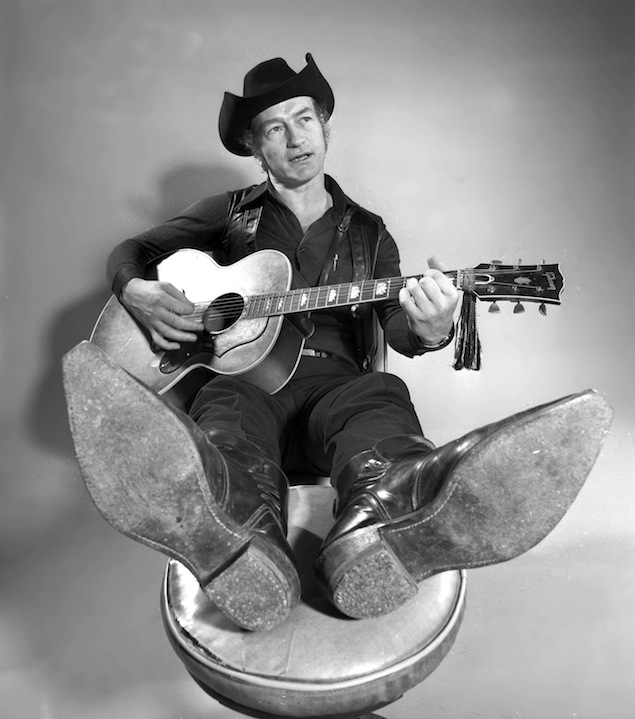 guy”, or “Stomper”. It wasn’t until Canada’s 100th birthday, July 1, 1967, that the name “Stompin” Tom Connors was first used, when Boyd MacDonald, a waiter at the King George Tavern in Peterborough, Ontario introduced Tom on stage. Based on an enthused audience reaction to it, Tom had it officially registered in Ontario as Stompin’ Tom Ltd. the following week. Various
  stories have circulated about the origin of the foot stomping, but it’s generally accepted that he did this to keep a strong tempo for his guitar playing — especially in the noisy bars and beer joints where he frequently performed. After numerous complaints about damaged stage floors, Tom began to carry a piece of plywood that he stomped even more vigorously than before. The “stompin’ “ board has since become one of his trademarks. After stomping a hole in the wood, he would pick it up and show it to the audience (accompanied by a joke about the quality of the local lumber) before calling for a new one. It was reported that when asked about his “stompin’ board”, Tom replied, “it’s just a stage I’m going through”. Stompin’ Tom periodically auctioned off his “stompin’ boards” for charity, with one board selling for $15,000 in July, 2011.
Connors always wore his black Stetson in public, and refused to remove it for any reason, even when meeting Queen 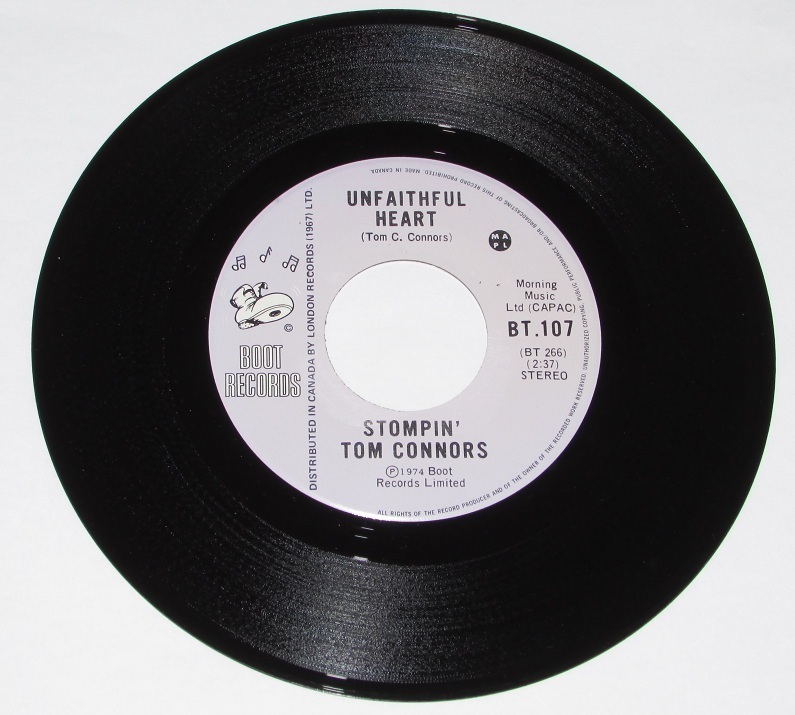 Elizabeth II at a dinner in Ottawa in October 2002. Buckingham Palace smoothed the way by likening Mr. Connors’s hat to a religious headdress such as a nun’s habit or a Sikh’s turban.
From the Juno Awards, Country Male Vocalist of the Year (1971–1975) and Country Album of the Year (1974, for To It And At It) — all subsequently returned in 1978. He left instructions that the Junos were not to celebrate him after his death.
In 2009, a SOCAN award for Lifetime Achievement.
In 1993, he declined to be inducted into the Canadian Country Music Hall of Fame.
In The Greatest Canadian list, Stompin’ Tom Connors ranked thirteenth, the highest placing for any artist on the list. Connors was one of four musicians pictured on the second series of the Canadian Recording Artist Series issued by Canada Post stamps on July 2, 2009.
 Connors’ music is rarely heard outside Canada, with the possible exception of his anthemic The Hockey Song which has been recorded by many artists. It has been suggested that Connors refused to allow foreign release of his material, although a more likely reason is that the very Canadian-specific subject matter of many of his folk songs has resulted in limited demand in foreign markets. When Late Night with Conan O’Brien taped a week’s worth of shows in Canada in 2004, Connors was one of the guests of honor, leading the Toronto audience in a rendition of “The Hockey Song”; this was one of the few times Connors performed on American television.
 Another Canadian-taped installment of Late Night featured a segment in which Triumph the Insult Comic Dog visited Quebec; a parody of Connors’ “Canada Day, Up Canada Way” is heard during the segment.
His character was rough but genuine.
Stompin’ Tom Connors was to Canada what Johnny Cash was to the United States. Stompin’ Tom Connors is known as the Canadian Troubadour of Folk and Country Music.
Read more at: http://en.wikipedia.org/wiki/Stompin’_Tom
 JEKYLL ISLAND, Ga. – (Monday, July 1, 2013) Enjoy a weekend of music, food and fun on Jekyll Island this August for Rodney Atkins’ America’s Heroes Celebration Weekend. Dedicated to the brave men and women who serve in our nation’s military, this weekend celebration will bring together families and friends for several exciting events including a spotlight for one of the biggest names in country music.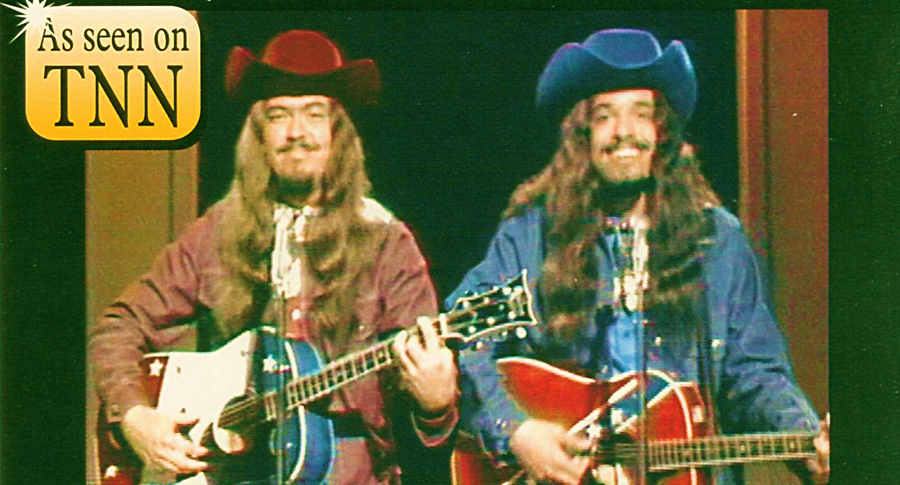
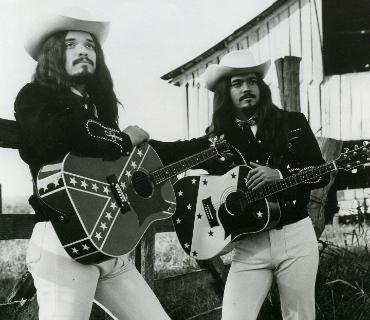
James Marvell and Buddy Good.
The band – “The Country Cavaleers”
Click the red play button below to listen to a Music Charts Magazine Celebrity Interview with:
“James Marvell” of “The Country Cavaleers”:
Long hair, an anti-drug message, two well-known guys in the music industry, and the decade is the 70’s. Who would have thought that two young men by the names of James Marvell and Buddy Good would 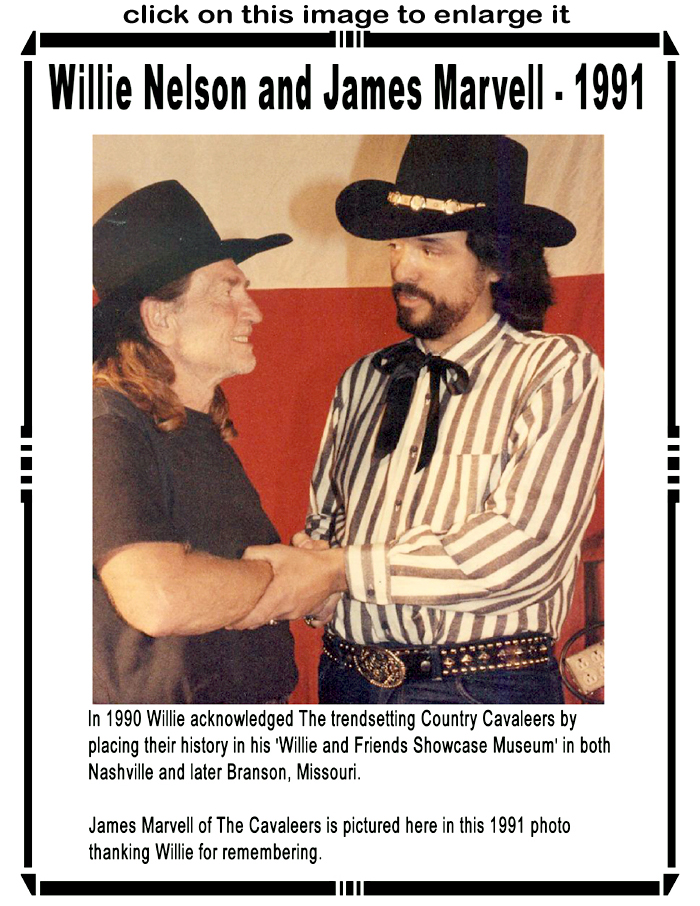 became the original outlaws of country music?
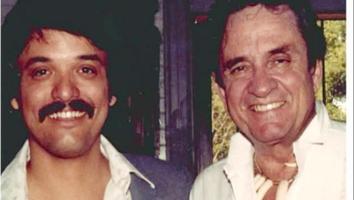 James Marvell and Buddy Good appeared in concerts with Dolly Parton, Conway Twitty, Freddy Fender, Loretta Lynn, Jack Green, Johnny Cash and multiple other country music legends. Country Cavaleer’s early recordings were on Cutlas and CSA Records. Later, the duo was picked up by MGM Records.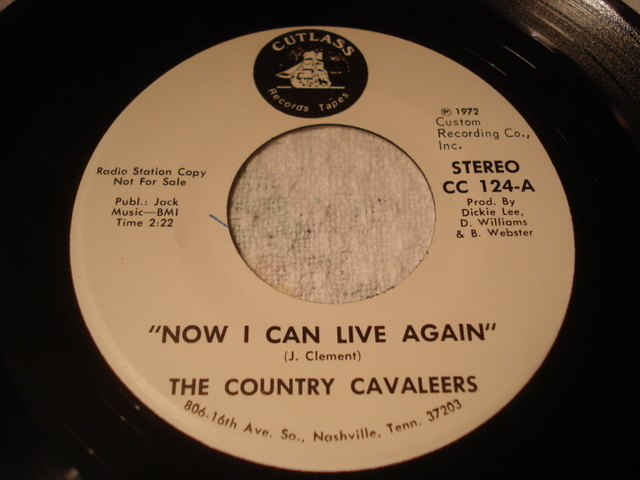
James Marvell sang lead and Buddy Good sang harmony. Both James and Buddy played acoustic guitars that were given to them by Grand Ole Opry Legend Billy Grammer. During their career, Hank Williams Sr.’s band “The Original Drifting Cowboys”, with Jerry Rivers on the fiddle, backed up some of The Country Cavaleer’s concerts.
How they got there:
James Marvell and Buddy Good started out as a garage band in the 60’s and ended up as the band calling themselves “The Skopes”. The Skopes were on USA Records, the same record label as the well-known band “The Buckinghams”. “The Skopes” had a big song written by their manager John Centinaro and James Marvell titled 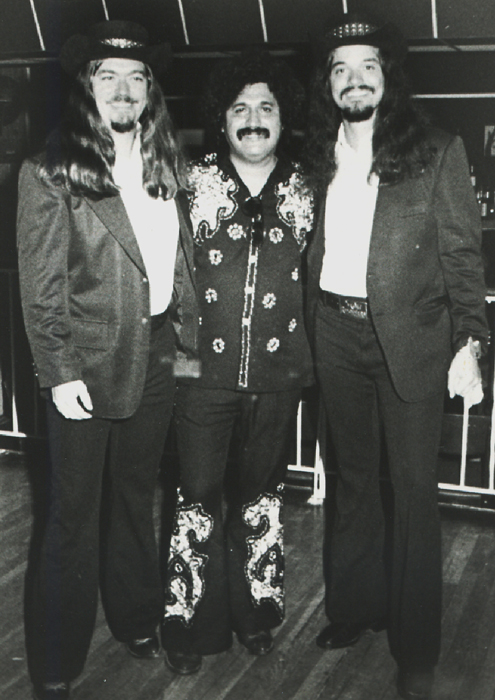 “She’s Got Bad Breath” which was a success as well as the demise of the group since a mouth rinse company with a similar name put a stop to it.
From there, James Marvell and Buddy Good joined the mega hit band “Mercy” which not long afterwards skyrocketed up the charts in Billboard, Cash Box and Record World Magazine to number 2 with the million seller hit song “Love Can Make You Happy”. “Love Can Make You Happy” was written by Jack Sigler Jr. and became the number 2 song under “The Beatles” number 1 song “Get Back”. The year was 1969.
After leaving the band Mercy in 1970 James Marvell and Buddy Good went on to become known by many as the original country music outlaws, a decade ahead of their time. An unlikely duo who’s odds were not high had a 3rd time success come to them as their new band “Country Cavaleers” was formed.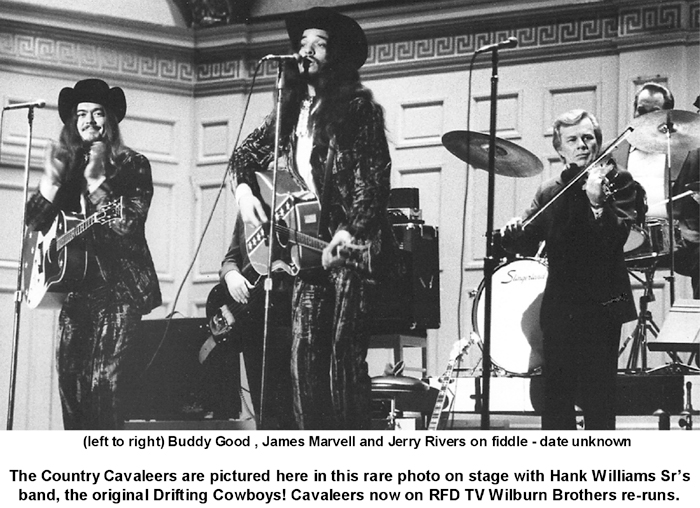
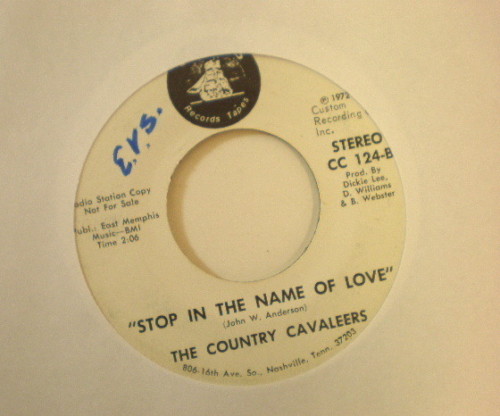
Country Cavaleers were known for their turntable hits singing songs throughout the 70’s like the “Stop In The Name Of Love”, the 1973 hit song “Humming Bird “and the 1976 hit song “Te Quiero (I Love You in Many Ways)” which were both charting songs. Some other Country Cavaleer songs you may know or may have forgotten are “Sweet Yesterdays“, “I’ve Got My Mind Satisfied“, “Everett The Evergreen“, “Call Back Operator” and the Jack Clement original “Now I Can Live Again.”
The Country Cavaleers sang and played guitar on the Wilburn Brothers TV program in the 70’s which is currently in reruns on RFDTV.
James Marvell, former lead singer of the duo, is still at it today. He recently won two rounds of The Texaco Country Showdown this 2013. What will James do next? It’s hard to tell. One thing is for sure. James Marvell has lived and is part of country music history.
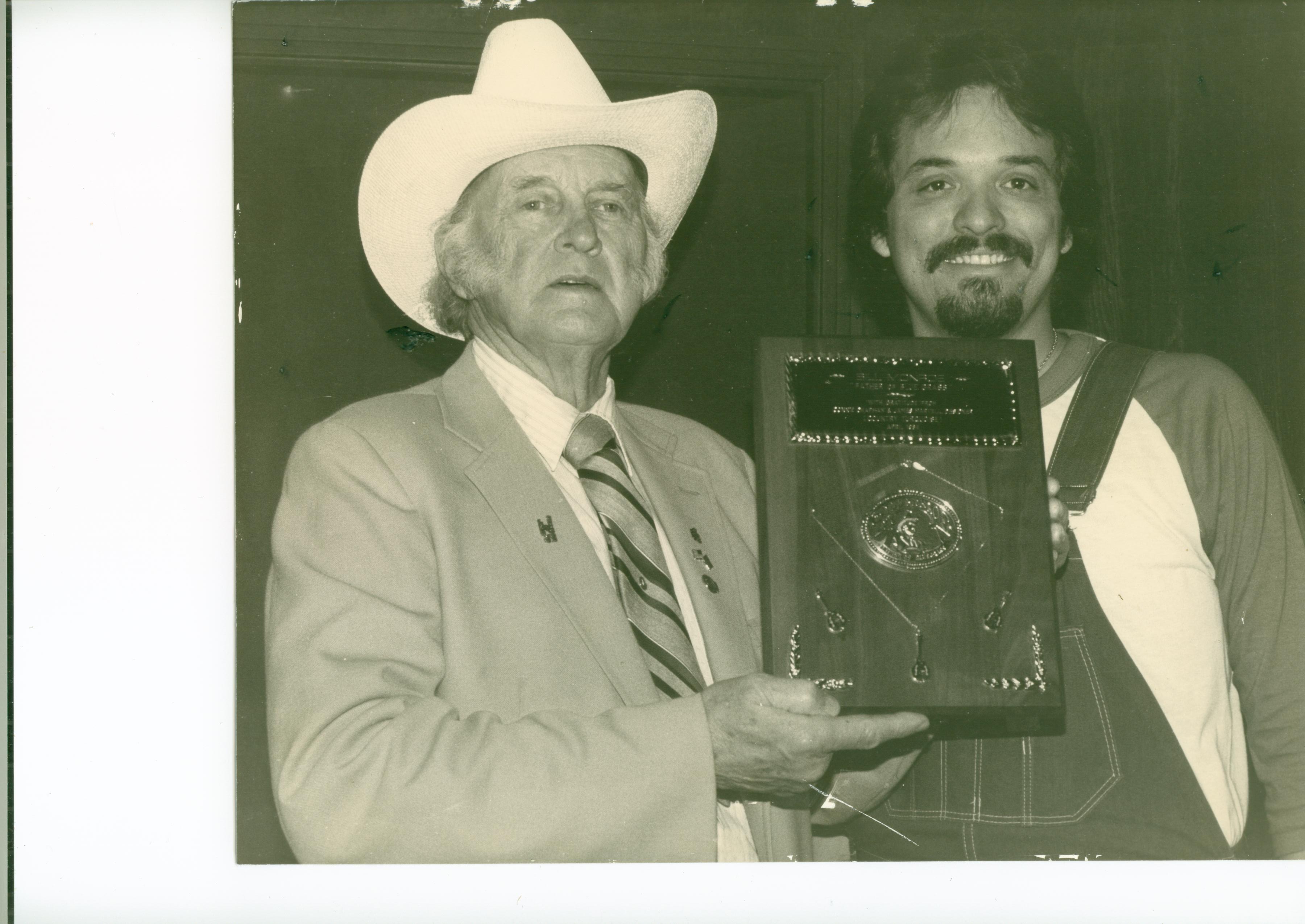
The Father of Bluegrass Bill Monroe and James Marvell of the “original country outlaws” the 70’s band “Country Cavaleers” – James Marvell – Music Charts Magazine Celebrity Interview with James Marvell of The Country Cavaleers